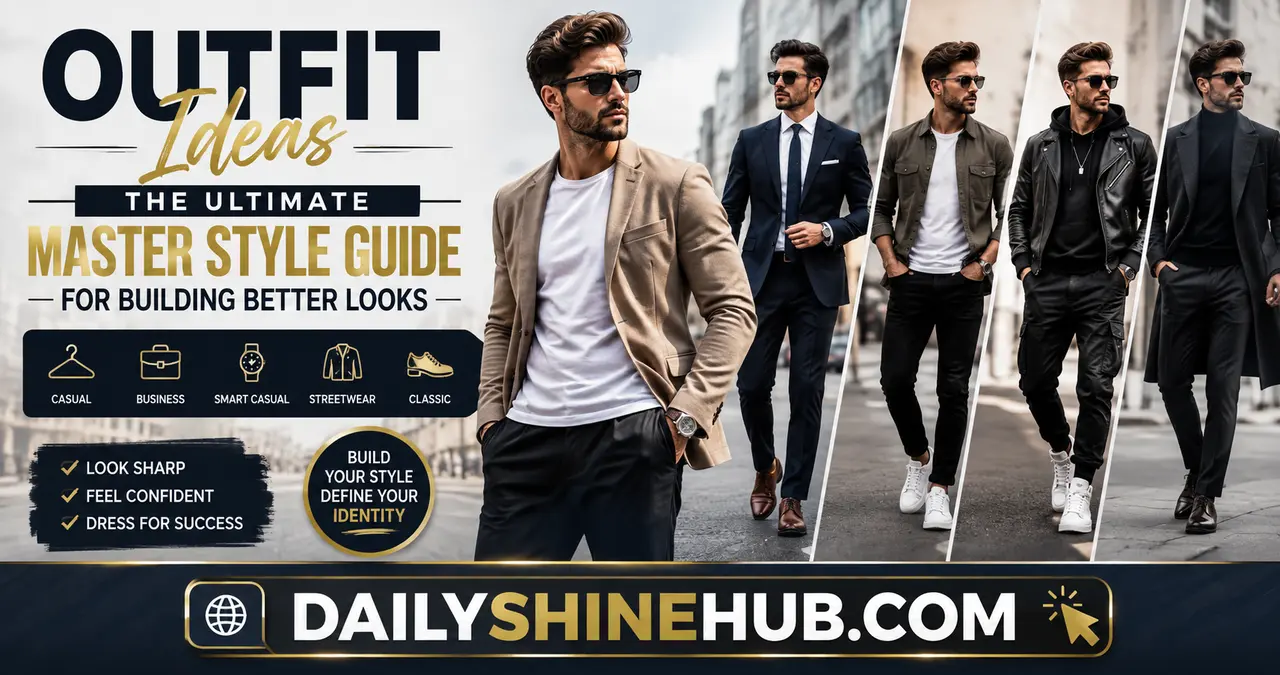
Getting dressed well is not simply about owning expensive clothes or following every fashion trend. The best outfit ideas come from understanding how individual pieces work together, choosing clothing that suits the occasion, balancing colors and proportions, and developing a personal style that feels natural.
Whether you are getting ready for work, a date, a casual day out, a special event, or simply trying to make better use of your existing wardrobe, having a simple styling system can make getting dressed much easier.
This guide covers practical outfit ideas for different occasions, seasons, style personalities, and everyday situations, along with simple rules for color coordination, layering, proportions, footwear, accessories, and wardrobe planning.
Quick Outfit Formula
If you need a simple formula for creating a good outfit, follow these five steps:
Choose the occasion → Pick a foundation → Add one structured layer → Balance proportions → Finish with footwear and accessories.
For example, a casual outfit could be a basic T-shirt + straight-leg jeans + overshirt + sneakers + watch.
The goal is not to follow rigid fashion rules. It is to create combinations that look intentional, feel comfortable, and suit your lifestyle.
The Master Style Formula: Start With the Occasion
The first question should never be, “What looks trendy?”
The better question is, “Where am I going, and what impression do I want to create?”
An outfit for a coffee date should not have the same visual language as an outfit for a business meeting. Likewise, weekend clothing can be relaxed while still looking intentional.
Everyday Casual Outfit Ideas
For everyday situations, prioritize comfort without allowing the outfit to look careless.
A simple combination such as a clean T-shirt, straight-leg jeans, minimalist sneakers, and an overshirt can create a polished casual appearance.
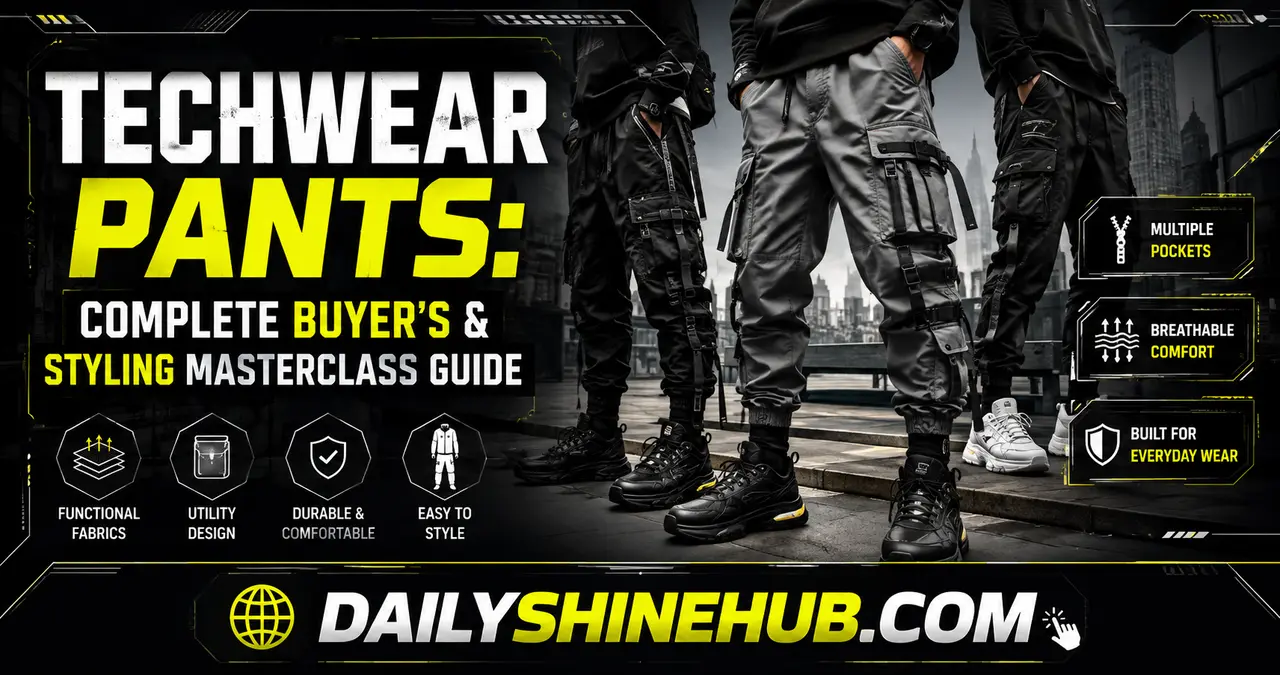
If you want a functional alternative to classic denim, utility-focused techwear pants offer great mobility and subtle cargo detailing for daily routines.
For warmer weather, substitute the jeans with tailored shorts or lightweight trousers.
Smart Casual Outfit Ideas
Smart casual is one of the most versatile dressing categories.
Try combining a button-down shirt with chinos and loafers.
Another option is a fitted knit top, dark jeans, a structured jacket, and clean leather sneakers.
The secret is combining relaxed pieces with one or two refined elements.
Business and Professional Outfit Ideas
Professional outfits benefit from structure and consistency.
A tailored blazer, well-fitted trousers, a crisp shirt, and appropriate footwear create a dependable foundation.
You do not need complicated patterns.
Neutral colors such as navy, charcoal, black, white, beige, and gray make professional wardrobes easier to coordinate.
Evening and Date-Night Outfit Ideas
Evening outfits can be more expressive.
A dark monochromatic combination, a textured jacket, statement footwear, or subtle jewelry can immediately make an outfit feel more intentional.
The goal is not to wear everything interesting at once.
Choose one focal point and let the rest of the outfit support it.
Build Outfits Around Three Core Elements
One of the easiest ways to create better outfit combinations is to think in layers of importance.
1. The Foundation
The foundation consists of your basic clothing pieces.
Examples include:
- Plain T-shirts
- Shirts
- Jeans
- Trousers
- Neutral skirts
- Basic dresses
- Simple sweaters
- Classic sneakers
- Everyday loafers
These pieces should be easy to combine.
2. The Structure
Structure gives an outfit its personality and shape.
Think about:
- Blazers
- Overshirts
- Jackets
- Cardigans
- Coats
- Vests
- Structured handbags
- Belts
Adding one structured piece can transform a basic outfit into something significantly more polished.
3. The Finishing Touch
Accessories complete the visual story.
A watch, sunglasses, necklace, scarf, belt, handbag, hat, or carefully selected shoes can make a simple outfit look deliberate.
You do not need many accessories.
You need the right accessories.
Outfit Ideas by Style Personality
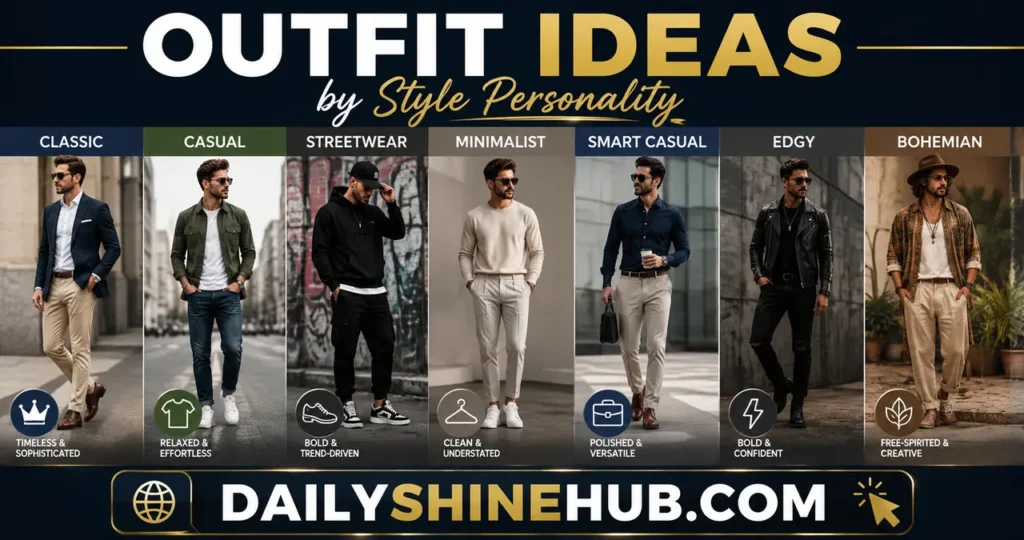
Your wardrobe should reflect your lifestyle rather than someone else’s social-media aesthetic.
The Minimalist
Minimalist dressing focuses on clean silhouettes, restrained colors, and uncomplicated combinations.
Try a white or black top with straight trousers, minimal sneakers, and a structured outer layer.
Monochromatic outfits are particularly effective for this style.
A black top, charcoal trousers, black shoes, and a gray coat can look sophisticated without requiring complicated styling.
The Classic Dresser
Classic style relies on pieces that remain useful season after season.
Think button-down shirts, tailored trousers, dark denim, trench coats, leather shoes, simple sweaters, and neutral outerwear.
The advantage of classic dressing is versatility.
A single navy blazer can work with jeans for a casual appearance or tailored trousers for a professional setting.
The Streetwear Enthusiast
Streetwear is built around relaxed proportions and statement pieces.
Fashion publications such as Vogue highlight how modern streetwear often blends oversized silhouettes with functional, everyday styling.
Try oversized shirts with straight or wide-leg trousers, sneakers, a cap, and a lightweight jacket.
The most important principle is proportion.
If the top is oversized, consider whether the bottom should also be relaxed or provide contrast with a cleaner silhouette.
The Trend-Conscious Dresser
Following trends can be fun, but incorporating every trend into one outfit often creates visual confusion.
Instead, choose one current element.
For example, pair a timeless outfit with a trending bag, modern sneaker silhouette, fashionable color, or distinctive jacket.
This approach allows your wardrobe to feel current without becoming disposable.
Outfit Ideas for Different Seasons
The best outfit strategy changes with the weather.
Spring Outfit Ideas
Spring is ideal for lightweight layering.
Try a basic T-shirt with straight-leg trousers, sneakers, and a lightweight jacket.
Another combination is a knit top, midi skirt, loafers, and a light cardigan.
Use lighter shades and breathable fabrics as temperatures rise.
Summer Outfit Ideas
Summer dressing should emphasize airflow, comfort, and lighter materials.
Linen shirts, cotton T-shirts, relaxed trousers, tailored shorts, lightweight dresses, and breathable footwear are excellent foundations.
A simple summer formula is:
Light top + relaxed bottom + clean footwear + minimal accessories.
Avoid adding unnecessary layers simply for visual interest.
Fall Outfit Ideas
Fall offers some of the best opportunities for creative styling because layering becomes practical.
Try:
T-shirt + overshirt + jeans + sneakers
Or:
Knit sweater + tailored trousers + boots + structured coat
Textures such as wool, suede, corduroy, denim, and knitwear add depth.
Winter Outfit Ideas
Winter outfits should balance warmth and appearance.
Start with a functional base layer.
Then add knitwear, trousers or denim, and a substantial coat.
Boots, scarves, gloves, and structured bags can provide both practicality and visual interest.
The key is to avoid creating unnecessary bulk.
Outfit Ideas for Work, Dates & Everyday Wear
Different situations call for different combinations, but you do not need a completely separate wardrobe for each one.
For Work
Build around dependable basics such as tailored trousers, button-down shirts, knitwear, blazers, loafers, and clean dress shoes.
Use neutral colors as the foundation and introduce personality through subtle textures or accessories.
For Dates
A date-night outfit should feel polished without looking overly calculated.
Dark denim, a fitted or well-proportioned top, a clean jacket, and appropriate footwear can create an easy foundation.
For a more formal setting, replace casual pieces with tailored trousers, a refined shirt, blazer, or dress.
For Everyday Activities
For errands, coffee runs, shopping, or casual meetups, focus on comfortable pieces that still have structure.
Straight-leg jeans or relaxed trousers paired with a clean T-shirt, overshirt, and sneakers can work in many situations.
The important thing is to keep the clothing clean, well-fitting, and appropriate for the activity.
The Color Coordination System
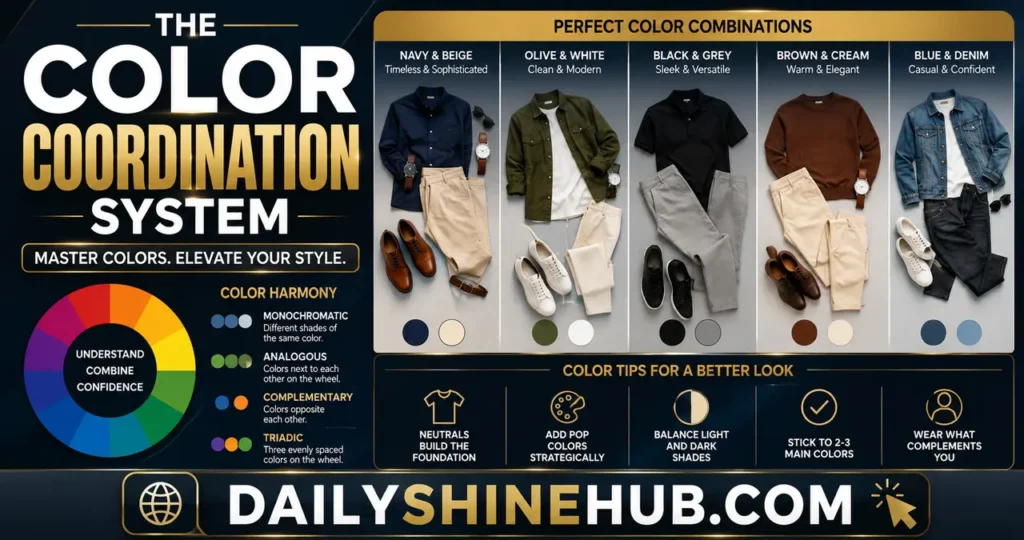
Color is one of the fastest ways to improve outfit combinations.
You do not need advanced fashion theory.
Start with a simple three-color rule.
The Three-Color Rule
Choose a maximum of three major colors in an outfit.
For example:
Navy + white + brown
Black + gray + burgundy
Beige + cream + olive
White + denim blue + tan
This creates visual organization.
Accessories can repeat one of the existing colors rather than introducing another competing shade.
Neutral Colors Are Your Wardrobe’s Foundation
Neutral colors are valuable because they work with almost everything.
Useful wardrobe neutrals include:
- Black
- White
- Gray
- Navy
- Beige
- Cream
- Brown
- Olive
Once these colors dominate your basic wardrobe, adding brighter shades becomes easier.
A bright red sweater, for example, becomes much easier to style when paired with neutral trousers and simple footwear.
A Practical Outfit Formula Table
| Style Goal | Top | Bottom | Layer | Footwear | Finishing Touch |
|---|---|---|---|---|---|
| Everyday Casual | Basic T-shirt | Jeans | Overshirt | Sneakers | Watch |
| Smart Casual | Button-down | Chinos | Blazer | Loafers | Leather belt |
| Minimalist | Neutral knit | Straight trousers | Long coat | Minimal sneakers | Simple bag |
| Streetwear | Oversized tee | Relaxed trousers | Bomber jacket | Sneakers | Cap |
| Date Night | Fitted shirt/top | Dark trousers | Statement jacket | Boots/loafers | Jewelry |
| Summer | Linen shirt | Lightweight trousers | Optional cardigan | Loafers/sandals | Sunglasses |
| Winter | Knit sweater | Wool trousers | Structured coat | Boots | Scarf |
| Professional | Crisp shirt | Tailored trousers | Blazer | Dress shoes | Watch |
Master the Art of Proportion
A great outfit can look completely different depending on how clothing fits the body.
Fit does not necessarily mean tight.
It means the clothing has the right relationship to your proportions.
Balance Oversized Pieces
If you prefer oversized clothing, create intentional balance.
An oversized sweatshirt with relaxed trousers creates a deliberately casual silhouette.
An oversized shirt with slimmer trousers creates contrast.
Both can work.
The important part is making the proportions look intentional rather than accidental.
Pay Attention to Trouser Length
Trousers that are excessively long can make an otherwise polished outfit look messy.
Likewise, extremely short trousers may change the visual balance of the outfit.
The ideal length depends on the trouser style, footwear, and desired silhouette.
Don’t Ignore Sleeve Length
Sleeves are another small detail with a major effect.
A sleeve that extends too far over the hands can make a jacket or shirt look oversized in the wrong way.
Small alterations can sometimes improve an outfit more than buying new clothing.
Learn the Power of Layering
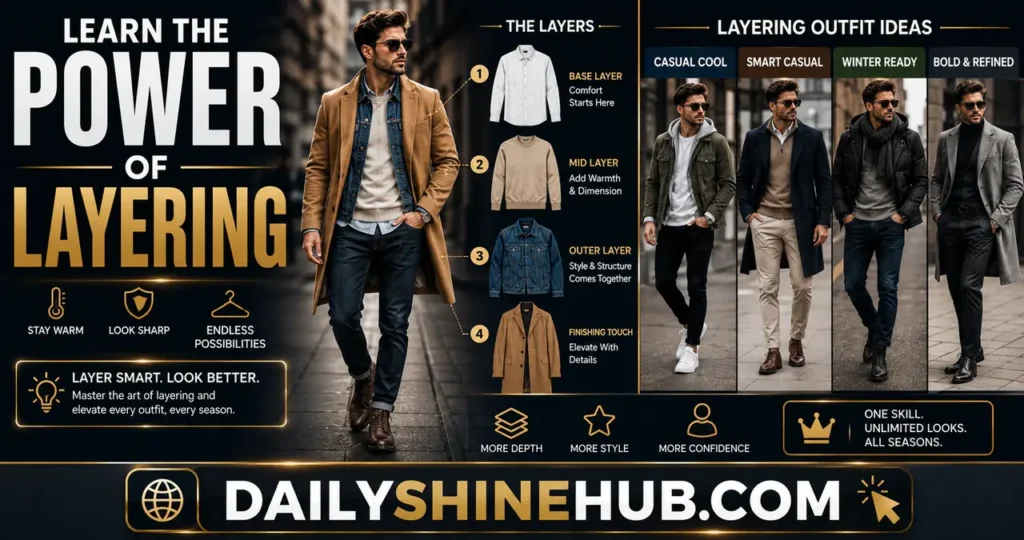
Layering is not just about staying warm.
It creates depth.
A simple three-layer combination might include:
Base: T-shirt
Middle: Overshirt or cardigan
Outer: Jacket or coat
Each layer should contribute something different.
For example, the base can provide color, the middle layer can provide texture, and the outer layer can provide structure.
Avoid layering pieces that all have identical visual weight.
Shoes Can Change the Entire Outfit
Many people build an outfit carefully and treat footwear as an afterthought.
That is a mistake.
Shoes influence the overall personality of an outfit.
Sneakers usually make clothing feel more casual.
Loafers can make a similar combination feel smarter.
Boots add weight and structure.
Sandals create a relaxed warm-weather impression.
Build a Versatile Shoe Rotation
A practical wardrobe does not require dozens of pairs.
A versatile collection might include clean everyday sneakers, loafers or dress shoes, boots, and warm-weather footwear.
The exact choices should depend on your lifestyle.
If you rarely attend formal events, buying several pairs of formal shoes makes less sense than investing in high-quality everyday footwear.
Accessorizing Without Overdoing It
Accessories should enhance an outfit rather than compete with it.
A simple outfit can benefit from a watch, belt, sunglasses, or bag.
If your clothing already contains a bold pattern or statement piece, reduce the number of accessories.
Use Repetition
One of the easiest styling tricks is repeating a color.
If your shoes are brown, consider a brown belt or bag.
If your jacket has silver hardware, a silver watch or jewelry can subtly connect the elements.
These details create cohesion without being obvious.
How to Create More Outfits From Fewer Clothes
You do not necessarily need a larger wardrobe.
You may simply need a more versatile wardrobe.
Start by identifying your most useful pieces.
For example, one neutral blazer can be paired with jeans, chinos, tailored trousers, or even certain skirts and dresses.
A white shirt can work for professional outfits, smart-casual looks, evening combinations, and layered weekend outfits.
The goal is to purchase pieces that create multiple combinations.
Use the 1-to-3 Rule
Before buying a new item, ask:
Can I create at least three outfits with this piece using clothing I already own?
If the answer is no, think carefully before purchasing it.
This simple rule can reduce impulse shopping while improving wardrobe flexibility.
Common Outfit Mistakes to Avoid
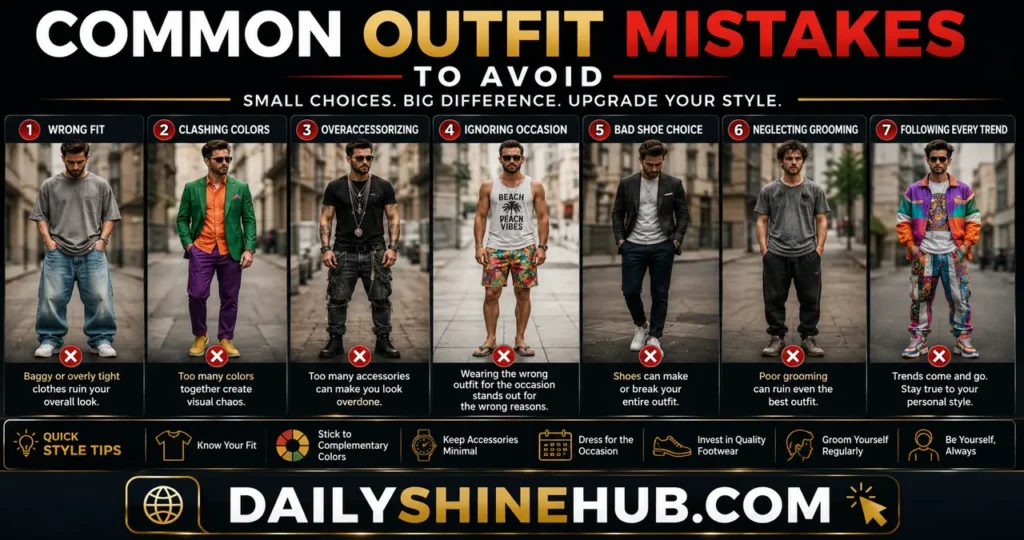
Wearing Trends Without Considering Your Style
A trend may look excellent on someone else but feel uncomfortable or unnatural on you.
Use trends selectively.
Ignoring the Occasion
A beautiful outfit can still be inappropriate if it does not match the setting.
Always consider the dress code, location, weather, and activities.
Using Too Many Statement Pieces
Multiple bold elements compete for attention.
Choose one primary statement piece and keep the surrounding items relatively controlled.
Sacrificing Comfort Completely
Style becomes difficult to maintain when an outfit is uncomfortable.
Choose fabrics, footwear, and silhouettes that allow you to move naturally.
Buying Before Planning
Shopping without understanding your existing wardrobe often creates duplicate pieces that do not coordinate.
Identify the gaps first.
Then shop with a purpose.
Create Your Personal Style Uniform
One of the most powerful style strategies is developing a personal uniform.
A personal uniform is not literally wearing the same outfit every day.
It means identifying combinations that consistently work for you.
For example, your formula might be:
Straight trousers + fitted top + structured jacket + minimal sneakers.
Another person’s formula might be:
Relaxed denim + oversized shirt + boots + statement accessories.
Once you know your formula, getting dressed becomes faster.
You can change colors, fabrics, accessories, and seasonal layers while maintaining the same basic structure.
A Simple Weekly Outfit Planning Strategy
Planning outfits at the beginning of the week can save time and reduce wardrobe frustration.
Start by checking your schedule.
Identify workdays, casual days, social events, formal occasions, and outdoor activities.
Then choose outfits according to the demands of each day.
Prepare footwear and accessories at the same time.
This prevents the common situation of selecting clothing first and realizing later that the appropriate shoes or accessories are unavailable.
How to Develop Better Style Over Time
Personal style does not appear overnight.
It develops through experimentation.
Take photos of outfits you like.
Notice which colors you repeatedly choose.
Identify silhouettes that make you feel confident.
Pay attention to which pieces you actually wear rather than the pieces you theoretically like.
Over time, patterns will emerge.
Those patterns are valuable because they reveal your authentic style.
Final Style Rules to Remember
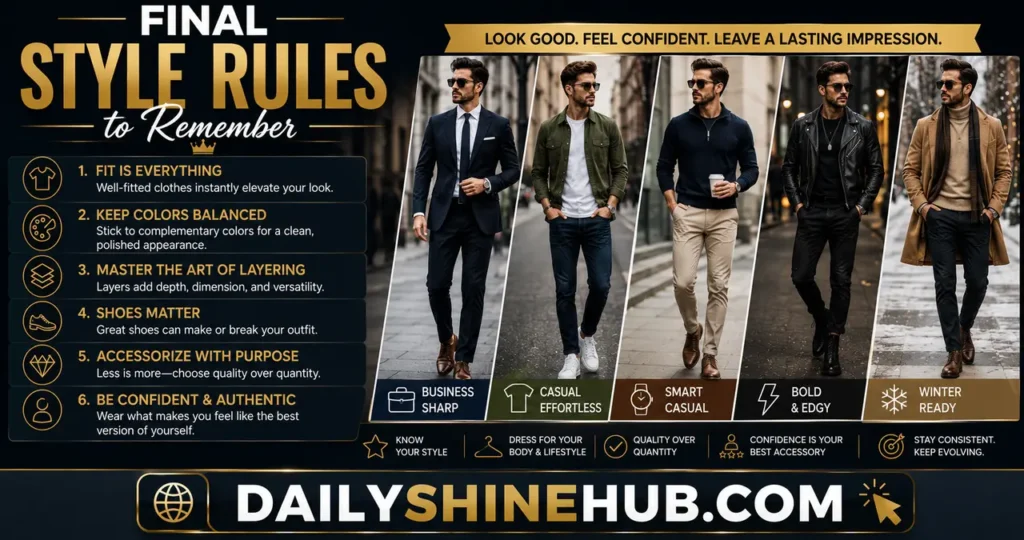
If you want a simple master guide to follow, remember these principles:
Dress for the occasion first.
Prioritize fit and proportion.
Build your wardrobe around versatile foundations.
Use neutral colors to make coordination easier.
Choose one focal point instead of several competing ones.
Treat footwear as part of the outfit, not an afterthought.
Use accessories to create cohesion.
Layer for both function and visual depth.
Buy pieces that work with what you already own.
Wear trends selectively rather than automatically.
Most importantly, remember that great style is not about following a rigid set of rules.
It is about understanding the rules well enough to make confident choices.
The best outfit ideas are the ones that match your personality, lifestyle, comfort level, body proportions, environment, and occasion.
Once you understand those fundamentals, you can turn even a relatively small wardrobe into dozens of stylish combinations.
FAQs About Outfit Ideas and Personal Style
1. How do I find outfit ideas that actually suit my personal style?
Start by identifying the clothing silhouettes, colors, and footwear you naturally prefer.
Save outfits that genuinely appeal to you, then look for patterns.
If you repeatedly choose neutral colors, relaxed trousers, sneakers, and structured jackets, those preferences can become the foundation of your personal style.
2. How many colors should I wear in one outfit?
A simple starting point is the three-color rule.
Using two or three coordinated colors generally makes an outfit easier to balance.
However, this is a guideline rather than an absolute rule.
Experienced dressers can intentionally use more colors when the shades and proportions work together.
3. How can I make basic clothes look more stylish?
Focus on fit, proportion, layering, footwear, and accessories.
A basic T-shirt and jeans can look significantly more polished with clean sneakers, a structured jacket, a coordinated belt, and a simple watch.
Styling often matters more than the price of the individual clothing pieces.
4. Should I follow fashion trends when creating outfits?
Follow trends selectively.
Instead of rebuilding your entire wardrobe around every new trend, introduce one contemporary element into an otherwise timeless outfit.
This keeps your appearance current while maintaining a recognizable personal style.
5. What is the most important rule for creating a great outfit?
The most important rule is intentionality.
Your outfit should look as though every major element was chosen for a reason.
Consider the occasion, fit, proportions, colors, footwear, and accessories.
When these elements work together, even a simple outfit can look exceptionally stylish.

Ethan Shine is a passionate content strategist, tech enthusiast, and digital media contributor at DailyShineHub. With over 5 years of experience in blogging and search engine optimization, Ethan specializes in breaking down complex topics into clear, actionable insights. When he isn’t researching the latest industry trends, he enjoys exploring global news, digital tools, and modern lifestyle concepts.