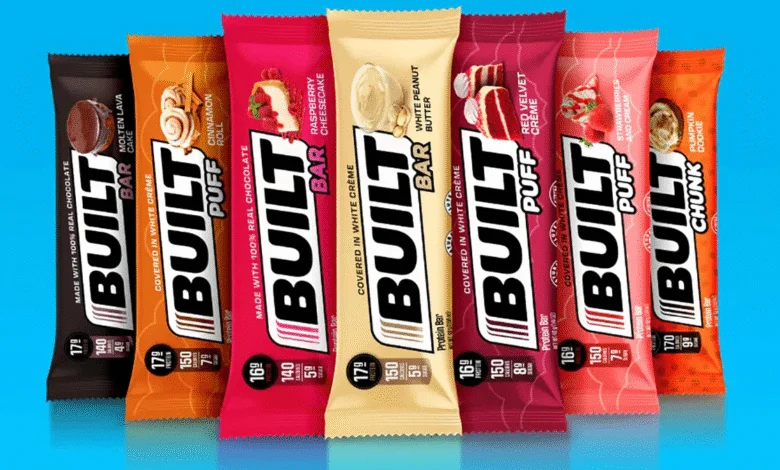
The Built Bar controversy has attracted attention because the popular protein-bar company has faced several very different issues over the years, ranging from a food-safety recall to lawsuits challenging the accuracy of protein-content claims. Built Bar, produced by Built Brands, grew from a Utah startup into a widely distributed protein-snack company, making questions about its products particularly relevant to consumers. Reuters reported in 2025 that the brand had expanded into major retailers and was exploring a potential sale that could value the company at more than $1 billion.
However, the phrase Built Bar controversy does not describe one single scandal. Instead, it is commonly used to refer to multiple disputes and consumer concerns surrounding Built Brands, including allegations about protein labeling and an FDA-documented product recall.
| Key Detail | What We Know |
|---|---|
| Brand | Built / Built Bar |
| Company | Built Brands LLC |
| Industry | Protein bars and fitness snacks |
| Founded | 2018 |
| Headquarters | American Fork, Utah |
| Major legal issue | Allegations concerning advertised protein content |
| Food-safety issue | 2022 recall involving Banana Cream Pie Puffs |
| Current legal attention | Federal litigation involving Built Brands |
| Important distinction | Allegations in lawsuits are not automatically proven facts |
What Is the Built Bar Controversy About?
At its core, the Built Bar controversy involves questions about product labeling, consumer expectations, and how much protein certain products actually contain. A proposed federal class action filed by Sean Sullivan alleges that Built’s Protein Bars and Puffs were advertised with protein amounts ranging from 15 to 19 grams per serving but allegedly contained less protein than stated.
That allegation is important, but it should not be presented as an established finding that every Built product is inaccurately labeled. Court records describe the claims as allegations made by the plaintiff, while the litigation itself remains a legal proceeding.
The controversy can therefore be understood through several separate developments:
- Protein-content labeling lawsuits.
- A 2022 FDA-documented recall involving a Built Puffs product.
- Broader consumer discussions about protein-bar nutrition and labeling.
- Litigation involving Built Brands and competitors.
- Continued expansion of the company despite these disputes.
This distinction matters because online discussions sometimes combine unrelated incidents into one larger narrative.
Built Bar Controversy and the Protein Labeling Lawsuit
One of the most significant recent developments involves Sullivan v. Built Brands LLC, a federal case in the Northern District of California. According to the court’s order, Sullivan alleges that Built misrepresented the amount of protein in its Built Protein Bars and Built Puffs. The complaint relies on third-party laboratory testing that allegedly found lower protein levels than the amounts represented on the products.
The case has gone through important procedural developments.
In October 2025, the court granted Built’s motion to dismiss in part while allowing the plaintiff to amend the complaint. Later, in an August 24, 2026 order, Judge Jon S. Tigar denied Built Brands’ renewed motion to dismiss. The court stated that Sullivan’s amended complaint alleges that labels overstated the protein content of Built Protein Bars and Built Puffs.
The legal significance is worth understanding:
- A court allowing a case to proceed does not mean the plaintiff has won.
- The allegations still need to be established through litigation.
- Built Brands has contested the claims.
- The case illustrates why accurate nutrition labeling matters to consumers.
- The litigation remains separate from the company’s 2022 product recall.
For anyone researching the Built Bar controversy, this protein-labeling litigation is currently one of the most important developments to follow.
Built Bar Controversy: The 2022 Product Recall
Another event frequently associated with the Built Bar controversy was a 2022 recall involving Built Brands’ Banana Cream Pie Puffs Protein Bar.
The U.S. Food and Drug Administration reported that Built Brands voluntarily recalled the product after accredited third-party laboratory testing detected the presence of E. coli. The affected product was sold in a 40-gram package with lot number D22151011. According to the FDA, 1,049 potential customers received the recalled product through mail orders.
The FDA notice also stated that no illnesses had been reported at the time of the recall.
The agency advised consumers not to eat the affected product because pathogenic E. coli can cause symptoms including:
- Diarrhea
- Severe stomach cramps
- Vomiting
- In some cases, more serious illness
Built Brands offered refunds or replacements to affected customers, according to the FDA notice. The company also indicated that testing of additional products did not show the same issue and described the contamination as an isolated incident likely connected to a failure to follow good manufacturing practices.
Consumers looking for the authoritative record should rely on the FDA recall notice rather than social-media posts or unsourced claims.
Why the Built Bar Controversy Became So Widely Discussed
Protein bars occupy an unusual position in the food market. They are marketed as convenient snacks, workout foods, meal supplements, and sources of substantial protein. Because consumers often compare products according to grams of protein per serving, the accuracy of those numbers is especially important.
The Built Bar controversy gained additional attention because Built had already established a strong identity in the fitness and nutrition market.
Several factors help explain the public interest:
- Protein is a central selling point. Consumers may pay more for products specifically because of their stated protein content.
- Nutrition labels influence purchasing decisions. A difference between advertised and actual nutritional values can affect how shoppers compare brands.
- Social media amplifies disputes. Product complaints can spread much faster online than traditional consumer complaints.
- Legal allegations attract headlines. A class-action lawsuit can make an issue appear larger before a court has reached a final determination.
- The brand has substantial visibility. Built products are available through online channels and major retailers, increasing public awareness.
The combination makes the story more complicated than a simple “good brand versus bad brand” narrative.
Built Brands’ Business Growth Despite the Controversy
The legal disputes did not prevent Built from becoming a major player in the protein-snack industry.
Reuters reported in October 2025 that Built Bar had grown from a company launched in an American Fork, Utah, garage in 2018 into a brand sold online and through retailers including Costco and CVS. Reuters also reported that the company was exploring a sale that could value the business at more than $1 billion.
That growth provides useful context when considering the Built Bar controversy.
A company can face lawsuits or recalls without those events automatically destroying its business. Large consumer brands regularly encounter legal claims, recalls, labeling disputes, or individual product problems while continuing to operate.
Important business developments include:
- Rapid expansion of retail distribution.
- Growth in the protein-snack category.
- Expansion beyond traditional protein bars.
- Strong consumer recognition of the Built brand.
- Continued corporate activity despite litigation.
The company’s commercial success, however, does not determine the truth or falsity of individual legal allegations.
Built Bar Controversy vs. Other Built Brands Legal Disputes
Another reason online searches can become confusing is that Built Brands has been involved in more than one legal dispute.
For example, Built Brands sued Utah startup Blue Unicorn in a case involving allegations related to intellectual property and trade secrets. Blue Unicorn disputed Built’s claims and argued that its products were developed independently.
This dispute is different from the consumer protein-labeling lawsuit.
That distinction is essential:
- Protein-labeling litigation: concerns allegations about protein amounts represented on products.
- 2022 recall: involved potential E. coli contamination in a specific product lot.
- Blue Unicorn litigation: involved a business dispute concerning alleged intellectual-property and trade-secret issues.
- COVID-era workplace litigation: involved allegations concerning workplace safety at a Utah food manufacturer.
These incidents should not be merged together as though they were one case.
What Consumers Should Know About Built Protein Bars
For consumers researching the Built Bar controversy, the best approach is to separate documented information from internet speculation.
A sensible evaluation should include:
- Check the product’s current nutrition label.
- Look for the serving size rather than relying only on the headline protein number.
- Pay attention to recalls affecting specific products or lot numbers.
- Use FDA announcements for food-safety information.
- Distinguish lawsuits from final court judgments.
- Consider independent nutritional testing carefully and understand its methodology.
- Avoid assuming that allegations concerning one product automatically apply to the entire product line.
Consumers should also remember that nutrition labels are regulated and that product formulations can change. A legal complaint may concern particular products, batches, formulations, or representations rather than every item sold under a brand.
Is Built Bar Safe to Eat?
The answer depends on the specific product and the relevant date.
The 2022 FDA recall applied to a specific Banana Cream Pie Puffs product and lot. The FDA stated that other similar products tested by Built were not affected by the contamination identified in that recall.
That means consumers should not interpret the recall as proof that every Built product was contaminated.
At the same time, anyone who wants the latest safety information should check current FDA recall information and the company’s own product notices before consuming a recalled item.
The distinction is particularly important because food recalls are generally targeted at specific products, lots, or production periods.
What the Built Bar Controversy Means for the Brand
The long-term impact of the Built Bar controversy will depend partly on how the pending legal claims are resolved and how effectively the company maintains consumer trust.
For a protein-focused brand, credibility is especially valuable. Customers expect the nutrition information printed on a package to provide a dependable basis for comparing products.
The broader lessons are significant:
- Transparency matters: Clear labeling helps maintain consumer confidence.
- Testing matters: Independent testing can become important when nutritional claims are challenged.
- Quality control matters: Food manufacturers need effective systems to identify contamination risks.
- Legal outcomes matter: Allegations should not be treated as final judgments.
- Consumer trust matters: Even when a company survives a controversy, repeated disputes can influence purchasing decisions.
Built’s continued presence in major retail channels demonstrates that controversy alone does not necessarily end a consumer brand’s growth.
Built Bar Controversy: What Is Confirmed and What Is Alleged?
One of the easiest ways to misunderstand the Built Bar controversy is to treat every claim found online as established fact.
Confirmed by public records
- Built Brands experienced a product recall in 2022 involving a specific Banana Cream Pie Puffs product.
- A federal lawsuit alleges that certain Built products overstated their protein content.
- The protein-labeling litigation has continued through 2026.
- Built Brands has been involved in separate litigation involving Blue Unicorn.
- Reuters reported that Built was exploring a potential sale in 2025.
Still allegations or matters in litigation
- Claims that Built’s products consistently contained less protein than advertised.
- Claims concerning whether particular labeling practices violated consumer-protection laws.
- Allegations in separate business litigation involving competitors.
This distinction is crucial for responsible reporting and for anyone trying to understand the story without exaggeration.
Frequently Asked Questions
1. What is the Built Bar controversy?
The Built Bar controversy refers to several separate issues involving Built Brands, most notably lawsuits alleging that certain protein products overstated their protein content and a 2022 recall involving potential E. coli contamination in a specific Built Puffs product.
2. Was Built Bar recalled?
A specific Built Brands product, Banana Cream Pie Puffs Protein Bar, was voluntarily recalled in 2022 after testing detected E. coli. The FDA stated that 1,049 potential customers received the affected product and that no illnesses had been reported at the time.
3. Is Built being sued over protein content?
Yes. Sean Sullivan brought a proposed class action alleging that certain Built Protein Bars and Built Puffs contained less protein than represented on their labels. The litigation has continued in federal court.
4. Did Built Bar lose the protein lawsuit?
No final conclusion should be implied from the available procedural rulings. In August 2026, the court denied Built Brands’ motion to dismiss, allowing the case to continue. That is not the same as a final judgment for the plaintiff.
5. Should consumers avoid Built products?
There is no basis from the cited recall alone to conclude that every Built product is unsafe. The FDA recall concerned a particular product and lot. Consumers should check current recall notices and product-specific information when making purchasing or consumption decisions.
Related: Read our detailed guide on Timothy Bliefnick
Conclusion
The Built Bar controversy is better understood as a collection of separate events rather than one giant scandal. The most important issues include the 2022 FDA-documented recall of a specific Built Puffs product and ongoing litigation alleging that certain Built products overstated their protein content. At the same time, Built Brands has continued to operate and expand its commercial presence.
For consumers, the key takeaway is simple: distinguish verified recalls and court records from online speculation. The protein-labeling allegations remain matters for the legal process, while the 2022 recall provides a documented example of a specific product-safety issue. Following authoritative sources rather than viral claims is the most reliable way to understand the Built Bar controversy.
DailyShineHub

Ethan Shine is a passionate content strategist, tech enthusiast, and digital media contributor at DailyShineHub. With over 5 years of experience in blogging and search engine optimization, Ethan specializes in breaking down complex topics into clear, actionable insights. When he isn’t researching the latest industry trends, he enjoys exploring global news, digital tools, and modern lifestyle concepts.