
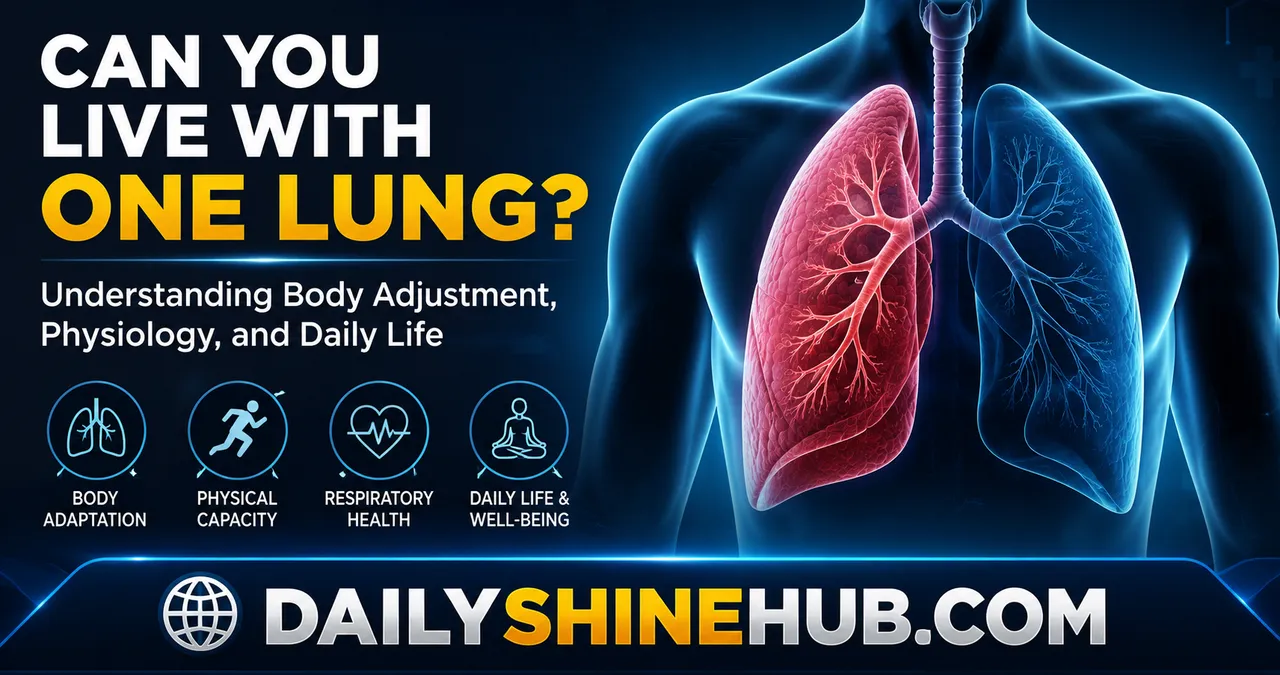
Many people are surprised to learn that living with one lung is entirely possible. When one lung is removed or permanently stops functioning, the body gradually adapts by relying more heavily on the remaining healthy lung. Many individuals are able to breathe independently, carry out everyday activities, work, exercise, and maintain a good quality of life.
The adjustment isn’t the same for everyone. Recovery and long-term function depend on factors such as the health of the remaining lung, age, physical fitness, the reason for lung removal, and other medical conditions.
Understanding how these adaptations work can make the recovery process less intimidating. This guide explains how the body compensates, what daily life may look like, and what to expect from exercise, work, and long-term living with one lung.
Can You Really Live With One Lung?
For many people, the answer is yes. Although losing a lung reduces overall breathing capacity, the body can adapt remarkably well when the remaining lung is healthy.
A surgical procedure called a pneumonectomy removes an entire lung. Doctors may recommend it for certain serious conditions, including some lung cancers, severe lung damage, or other diseases affecting one lung.
During everyday activities, most people use only a portion of their lungs’ full capacity. That reserve allows the remaining lung to meet many of the body’s oxygen needs after the other lung has been removed.
Individual outcomes can vary considerably. Someone whose remaining lung is healthy may function surprisingly well, while a person with chronic lung disease may experience significant limitations.
The Remaining Lung Does More Work
When one lung is lost, the remaining lung becomes the primary organ responsible for exchanging oxygen and carbon dioxide.
Over time, the remaining lung can accommodate the increased demand. The available lung tissue may expand within the chest cavity, and blood flow through the remaining lung changes to support gas exchange.
Rather than replacing the missing lung, the body becomes more efficient at using the remaining lung and adjusting circulation to meet the body’s oxygen needs.
How the Body Adjusts to One Lung
The ability to survive with one lung depends on several coordinated changes involving the lungs, heart, blood vessels, muscles, and nervous system.
1. Increased Work by the Remaining Lung
The remaining lung takes responsibility for oxygenating blood and removing carbon dioxide.
At rest, many people with a healthy remaining lung notice little difference in their breathing. During exercise, however, oxygen demand increases, requiring both the lungs and heart to work harder.
2. Changes Inside the Chest
After a pneumonectomy, the empty space left by the removed lung does not simply remain unchanged.
The remaining lung can expand within the chest, while other structures shift to accommodate the change.
This is part of the body’s natural adaptation and helps the remaining lung occupy more of the available thoracic space.
3. Cardiovascular Compensation
The heart and circulatory system also contribute to adaptation.
Blood returning to the lungs must pass through the remaining lung. Blood vessels can adjust to changes in pulmonary blood flow, allowing the remaining lung to participate more extensively in oxygen exchange.
This is one reason why cardiovascular fitness can be important for people living with reduced lung capacity.
4. Breathing Muscles Become Important
The diaphragm and other respiratory muscles play an essential role in maintaining ventilation.
After recovery, breathing may feel different because the total available lung volume is reduced. Strong respiratory muscles and overall physical conditioning can help a person use their remaining capacity efficiently.
What Is Daily Life Like With One Lung?
For many people, daily life eventually becomes manageable and predictable after recovery.
Simple activities such as walking around the home, preparing meals, bathing, shopping, and working at a desk may become routine again.
The major difference may become noticeable during activities requiring sustained physical effort.
For example, a person might walk comfortably at a normal pace but become short of breath sooner when climbing several flights of stairs or walking uphill.
Everyday Activities
The following activities may be possible for many people with one healthy lung:
- Walking
- Household chores
- Shopping
- Driving
- Working
- Cooking
- Social activities
- Traveling
- Moderate physical activity
The amount of effort a person can tolerate varies considerably.
One-Lung Lifestyle: What Changes?
Living with one lung does not necessarily require giving up an active lifestyle, but it often means becoming more aware of respiratory health.
Activity May Need to Be Paced
Someone who previously completed strenuous activities without thinking about breathing may need to slow down or take breaks.
Pacing can be particularly helpful during:
- Long walks
- Stair climbing
- Hiking
- Yard work
- Heavy household chores
- Recreational sports
Instead of viewing this as a complete restriction, it can be useful to think of it as managing a smaller respiratory reserve.
Exercise Can Still Matter
Physical activity is generally an important component of maintaining overall fitness, but exercise plans should be individualized.
After medical clearance, activities such as walking, cycling, swimming, or appropriately supervised aerobic exercise may help improve endurance.
People recovering from lung surgery may benefit from pulmonary rehabilitation, where exercise, breathing strategies, education, and monitoring are combined.
Can Someone With One Lung Exercise?

Yes, many people with one lung can exercise.
What matters most is how much physical activity an individual can safely tolerate. That varies according to overall health, recovery, and the condition of the remaining lung.
Exercise increases the body’s demand for oxygen. With only one functioning lung, the respiratory system may reach its limit sooner than it would with two healthy lungs.
A person might therefore experience:
- Faster breathing
- Shortness of breath
- Earlier fatigue
- Reduced endurance
- Longer recovery after strenuous activity
These symptoms do not automatically mean that exercise is dangerous. However, new, severe, or worsening breathlessness should be discussed with a healthcare professional.
Building Endurance Gradually
A gradual approach is generally more practical than suddenly attempting intense exercise.
For example, someone might begin with short walks and gradually increase duration as tolerated.
The appropriate intensity depends on the person’s medical condition and recovery status.
One Lung and Work Life
Many people can return to employment after recovering from lung surgery.
The type of work makes a significant difference.
Jobs With Lower Physical Demands
Desk-based or sedentary work may be easier to resume because it requires relatively little sustained oxygen demand.
Physically Demanding Jobs
Jobs involving heavy lifting, prolonged walking, climbing, extreme temperatures, or strenuous physical labor may be more challenging.
A worker may need modified duties, additional breaks, or a gradual return-to-work plan.
Occupational requirements should be evaluated individually rather than assuming that one lung automatically prevents someone from working.
Quality of Life With One Lung
Quality of life is influenced by much more than the number of lungs.
A person with one healthy lung may have a better daily experience than someone with two lungs affected by significant chronic disease.
Important factors include:
- Health of the remaining lung
- Cardiovascular fitness
- Age
- Smoking history
- Presence of asthma or COPD
- Previous infections
- Cause of lung removal
- Physical conditioning
- Recovery after surgery
- Emotional well-being
The Psychological Adjustment
A major operation can also create emotional challenges.
Some people become anxious about breathlessness or worry that normal physical sensations indicate a serious problem.
Learning what is normal for one’s own body can make everyday life easier. Follow-up appointments and rehabilitation can also provide reassurance and practical guidance.
Factors That Determine How Well Someone Adapts
There is no single answer that applies equally to everyone.
| Factor | Why It Matters When Living With One Lung |
|---|---|
| Remaining lung health | A healthy remaining lung can usually compensate more effectively. |
| Age | Physical reserve and recovery capacity vary with age |
| Fitness level | Better conditioning may support daily endurance |
| Smoking history | Smoking can damage the remaining lung and reduce reserve |
| Heart health | The cardiovascular system helps deliver oxygen throughout the body |
| Cause of lung loss | Cancer, trauma, infection, and other causes can affect recovery differently |
| Pulmonary rehabilitation | Structured rehabilitation may improve functional capacity |
| Other medical conditions | Heart or respiratory conditions can make adaptation harder |
Protecting the Remaining Lung
When someone has only one functioning lung, protecting that lung becomes especially important.
Avoid Smoking
Smoking can damage lung tissue and increase the risk of serious respiratory disease.
For someone relying on a single lung, avoiding tobacco smoke is particularly important.
Secondhand smoke and other inhaled pollutants should also be minimized whenever possible.
Prevent Respiratory Infections
Good hygiene, appropriate vaccinations, and avoiding unnecessary exposure to contagious respiratory illnesses can help reduce the risk of infections.
People with specific medical conditions should ask their healthcare professionals which vaccinations are appropriate for them.
Maintain Physical Fitness
Regular, appropriately prescribed physical activity can help maintain cardiovascular and muscular fitness.
The goal is not necessarily to achieve elite athletic performance. Instead, maintaining functional endurance can make everyday activities easier.
Follow Medical Monitoring
Regular medical follow-up is important, particularly when lung removal was performed because of cancer or another serious disease.
Doctors may monitor breathing capacity, symptoms, imaging results, and other indicators depending on the individual’s condition.
Warning Signs That Should Not Be Ignored
Someone living with one lung should not automatically assume that every episode of breathlessness is simply part of their condition.
Medical evaluation may be necessary if symptoms are new, severe, or worsening.
Potential warning signs include:
- Sudden or severe shortness of breath
- Chest pain
- Fainting or severe dizziness
- Blue or gray coloration around the lips
- Coughing up significant amounts of blood
- New persistent cough
- Unexplained decline in exercise tolerance
- Fever accompanied by significant respiratory symptoms
Emergency symptoms require urgent medical attention.
Can Life Return to Normal After Lung Removal?
Many people eventually regain a routine that feels normal, although daily life may look a little different after recovery.
A person may return to work, maintain relationships, travel, exercise, and enjoy hobbies.
The adjustment is often gradual rather than immediate. Early recovery following pneumonectomy can involve considerable fatigue and reduced physical capacity. As healing progresses, endurance may improve.
The long-term result depends heavily on the condition of the remaining lung and the individual’s overall health.
Living Well With One Lung
Living with one lung doesn’t automatically prevent someone from remaining active or independent. Many people continue to work, travel, exercise, and enjoy everyday life after recovering from lung removal.
The body has several ways of adapting to reduced respiratory capacity. The remaining lung, cardiovascular system, breathing muscles, and physical conditioning all contribute to maintaining function.
At the same time, people should avoid comparing themselves with someone else who has undergone the same operation. Two individuals can have very different experiences because their underlying health, age, fitness, and medical history are different.
A sensible long-term approach includes protecting the remaining lung, staying physically active within medically appropriate limits, attending follow-up appointments, and seeking professional advice when symptoms change.
It is also important to rely on verified facts rather than speculation regarding health. For example, celebrity health rumors—such as those surrounding Sam Elliott—show how easily unverified information can spread online. Always distinguish between confirmed medical diagnoses and internet hearsay.
Final Thoughts
Living with one lung presents challenges, but it doesn’t automatically prevent someone from leading a full and independent life. Many people return to work, stay physically active, travel, and continue enjoying their usual routines after recovery.
Long-term outcomes depend largely on the health of the remaining lung, overall fitness, and proper medical care. Protecting respiratory health, following medical advice, and staying active within appropriate limits can make a meaningful difference over time.
Because every person’s situation is unique, recovery and physical ability can vary considerably. With realistic expectations, healthy habits, and regular follow-up care, many people successfully adapt to life with one functioning lung.
Frequently Asked Questions
1. Can a person live a normal life with one lung?
Many people can live independently and maintain a good quality of life with one healthy lung. Physical capacity varies, and strenuous activities may become more difficult.
2. Does the remaining lung grow after one lung is removed?
The remaining lung can expand within the chest and adapt to increased functional demands. This is better described as physiological adaptation rather than the creation of a completely new lung.
3. Can you exercise with one lung?
Yes. Many people with one lung can participate in physical activity after appropriate recovery and medical clearance. Exercise tolerance depends on overall health and remaining lung function.
4. Is living with one lung dangerous?
Having one lung does not automatically mean that a person is in constant danger. However, the remaining lung becomes especially important, so protecting respiratory health and managing other medical conditions are essential.
5. How long can someone live with one lung?
There is no universal lifespan for someone living with one lung. Long-term outlook depends on factors such as the health of the remaining lung, cardiovascular health, age, underlying disease, lifestyle, and reason for losing the lung.

Ethan Shine is a passionate content strategist, tech enthusiast, and digital media contributor at DailyShineHub. With over 5 years of experience in blogging and search engine optimization, Ethan specializes in breaking down complex topics into clear, actionable insights. When he isn’t researching the latest industry trends, he enjoys exploring global news, digital tools, and modern lifestyle concepts.