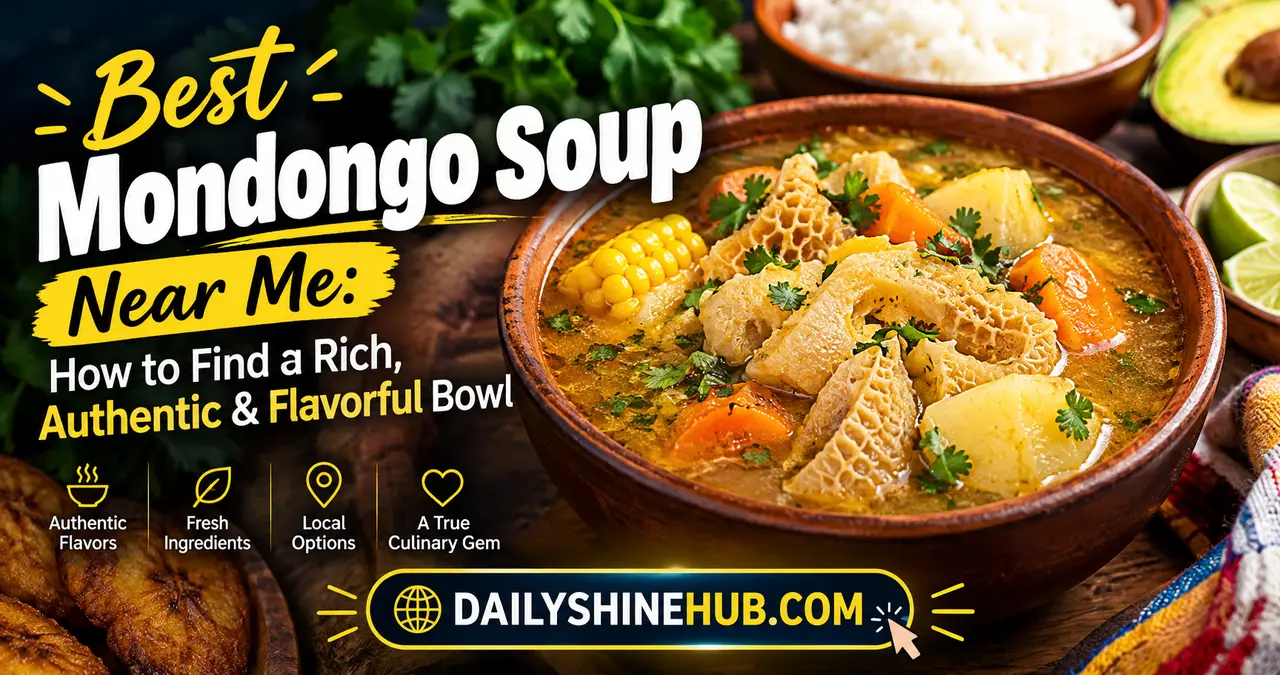
Searching for the Best Mondongo Soup Near Me usually means you want more than an ordinary bowl of soup. You are looking for something hearty, slow-cooked, deeply seasoned, and authentic enough to capture the traditional character of Latin American cuisine. Mondongo is known for its tender beef tripe, vegetables, herbs, and flavorful broth, with recipes varying considerably from one country and family to another.
Whether you are discovering mondongo for the first time or already know exactly what you like, finding a great bowl comes down to freshness, cooking technique, seasoning, texture, and authenticity. A good restaurant should serve mondongo that is comforting and substantial without allowing the tripe’s texture or aroma to overwhelm the dish.
| Feature | What to Expect |
|---|---|
| Main ingredient | Beef tripe |
| Cuisine | Latin American and Caribbean |
| Typical texture | Tender, soft, slightly chewy |
| Broth | Rich, savory, herb-seasoned |
| Common additions | Potatoes, carrots, corn, yuca, plantain, vegetables |
| Serving style | Hot, often with rice, avocado, lime, or bread |
| Best for | Hearty lunches, dinners, and traditional-food lovers |
| Flavor profile | Savory, aromatic, comforting, and sometimes mildly spicy |
What Is Mondongo Soup?
Mondongo is a traditional soup or stew prepared primarily with beef tripe. Depending on the regional recipe, it can include vegetables such as potatoes, carrots, corn, cassava, plantains, peppers, onions, and herbs. Some versions are thick and stew-like, while others have a more pronounced broth.
The dish has strong culinary roots throughout Latin America and the Caribbean, where variations have developed according to local ingredients and cooking traditions. The word “mondongo” is commonly associated with tripe-based dishes, although the exact recipe differs from place to place.
When searching for the Best Mondongo Soup Near Me, understanding these regional differences can help you choose a restaurant that matches your preferred style.
- Colombian-style mondongo: Often features tripe, potatoes, carrots, cassava, and herbs.
- Venezuelan-style mondongo: Can be especially hearty, with vegetables, tubers, and regional seasonings.
- Puerto Rican and Caribbean variations: May have their own combination of root vegetables, herbs, and seasonings.
- Ecuadorian and other Andean versions: Frequently reflect local ingredients and traditional preparation methods.
Best Mondongo Soup Near Me: What Makes a Bowl Truly Good?
Not every restaurant prepares mondongo in the same way. Because tripe requires careful cleaning and extended cooking, preparation quality can make a dramatic difference.
If you are evaluating the Best Mondongo Soup Near Me, look for these characteristics:
- Tender tripe: The tripe should be soft enough to chew comfortably while retaining some texture.
- Well-balanced broth: The soup should taste savory and aromatic rather than excessively salty.
- Fresh vegetables: Potatoes, carrots, corn, yuca, or other vegetables should be cooked through without becoming completely mushy.
- Good seasoning: Garlic, onion, herbs, peppers, cumin, cilantro, and other seasonings should complement the broth.
- Proper temperature: Mondongo is best served piping hot.
- Fresh garnishes: Lime, cilantro, avocado, rice, or other accompaniments can add contrast.
- Clean preparation: The soup should have a pleasant aroma without an overpowering off-putting smell.
A restaurant that specializes in traditional Latin American food may have an advantage because staff are generally familiar with the long cooking process required for this dish.
How to Search for the Best Mondongo Soup Near Me
The easiest way to locate a good bowl is to combine online searches with practical restaurant research. Instead of relying on a single review or ranking, compare menus, photographs, customer comments, and recent information.
Try searches such as:
- “authentic mondongo soup near me”
- “Colombian mondongo soup near me”
- “Latin American tripe soup nearby”
- “traditional mondongo restaurant”
- “best beef tripe soup in my area”
Google Maps and other local-search platforms can be particularly useful because they allow you to examine menus and recent customer photographs. Look specifically for photos of the soup itself rather than relying only on a restaurant’s overall rating.
When reading reviews, pay attention to repeated comments about:
- Flavor and seasoning
- Tenderness of the tripe
- Portion size
- Freshness
- Authenticity
- Service
- Consistency between visits
One review may be subjective, but a recurring pattern across many recent reviews can provide much stronger evidence.
Why Mondongo Takes Time to Prepare
One of the defining characteristics of traditional mondongo is its cooking time. Beef tripe can be naturally firm, so it generally requires careful cleaning and prolonged cooking to reach the desired tenderness.
A traditional preparation may involve several stages:
- Cleaning the tripe: The ingredient is thoroughly cleaned before cooking.
- Initial preparation: Depending on the recipe, the tripe may be parboiled or prepared separately.
- Slow cooking: The tripe is simmered until it becomes tender.
- Adding vegetables: Root vegetables and other ingredients are incorporated according to the recipe.
- Seasoning: Herbs, aromatics, peppers, garlic, and spices develop the final flavor.
- Final simmer: The ingredients cook together so their flavors blend into the broth.
This lengthy process is one reason an authentic bowl can taste substantially different from a quick soup made with shortcuts.
For additional background on tripe and its culinary history, you can consult the Wikipedia overview of tripe for broader context about this traditional ingredient.
What Does Mondongo Soup Taste Like?
For people who have never tried it, the biggest question is often what mondongo actually tastes like.
The tripe itself has a relatively mild flavor when properly cleaned and prepared. Much of the final character comes from the broth, vegetables, aromatics, herbs, and cooking process.
A well-prepared bowl can offer:
- A rich but not necessarily heavy broth
- Savory beef-like depth
- Aromatic herbs and vegetables
- Mild earthiness from root vegetables
- A distinctive but manageable tripe texture
- Brightness from lime or fresh herbs
The texture is often more noticeable than the flavor of the tripe. It can be pleasantly chewy and tender at the same time. If you prefer very soft meat, ask the restaurant how tender its tripe is before ordering.
Best Side Dishes to Order With Mondongo
The right accompaniments can turn a bowl of mondongo into a complete meal. Restaurants may offer different sides depending on their regional style.
Popular choices include:
- White rice: Excellent for soaking up flavorful broth.
- Avocado: Adds creaminess and freshness.
- Lime: Brightens the savory soup.
- Plantains: Provide a subtle sweetness that contrasts with the broth.
- Yuca: A hearty root vegetable that works naturally with the soup.
- Corn: Adds texture and mild sweetness.
- Fresh cilantro: Gives the dish a bright herbal finish.
- Bread or arepas: Useful for dipping into the broth.
If the restaurant offers several accompaniments, choose at least one fresh component and one hearty side. The contrast can make the meal much more enjoyable.
How to Tell If a Restaurant Serves Authentic Mondongo
Authenticity does not necessarily mean there is only one correct recipe. Mondongo has numerous regional interpretations, and family recipes can vary significantly.
Instead, look for signs that the restaurant understands the dish:
- It identifies the regional style on the menu.
- The soup is made with properly prepared tripe.
- The restaurant describes its ingredients clearly.
- Customers repeatedly mention traditional flavor.
- The dish appears regularly on the menu rather than being an unexplained specialty.
- Photos show substantial tripe and vegetables rather than mostly broth.
- Staff can explain the preparation or regional variation.
A restaurant does not need to follow one rigid recipe to make excellent mondongo. In fact, regional differences are part of what makes this dish interesting.
Ordering Tips for Your First Bowl
If you are new to tripe-based soups, ordering can feel slightly unfamiliar. A few simple questions can make the experience easier.
Before ordering, ask:
- Is the tripe very tender?
- Is the broth spicy?
- What vegetables are included?
- Does the soup come with rice or other sides?
- Is lime served with it?
- What regional style is the recipe?
- Is the portion suitable for one person?
If you are unsure about the texture, ordering a smaller portion or sharing a bowl can be a good introduction.
For experienced mondongo fans, consider asking whether the restaurant has a house specialty version. Some establishments prepare particularly rich broths or regional recipes that are not obvious from the menu description.
Best Time to Enjoy Mondongo
Mondongo is especially appealing when you want a substantial, comforting meal. Because it is hearty, many diners prefer it for lunch or dinner rather than as a light snack.
It can be particularly satisfying when:
- The weather is cool
- You want a filling traditional meal
- You are exploring Latin American cuisine
- You enjoy soups with substantial ingredients
- You want a slow-cooked dish rather than fast food
Some restaurants prepare large batches, so asking about daily availability can be worthwhile. If mondongo is not offered every day, calling ahead can prevent a wasted trip.
Common Mistakes When Choosing Mondongo
Even when a restaurant has good reviews, the particular bowl you order may not meet your expectations. Avoid choosing solely on the basis of the restaurant’s overall rating.
Watch for these potential issues:
- Very salty broth: Excessive salt can hide the underlying flavors.
- Rubbery tripe: This can indicate insufficient cooking.
- Overcooked vegetables: Vegetables should generally retain some structure.
- Weak seasoning: A bland broth may make the dish feel unfinished.
- Overly greasy soup: Some richness is normal, but excessive fat can overwhelm the other ingredients.
- Lack of freshness: Garnishes and vegetables should taste fresh.
- Inconsistent reviews: If customers repeatedly mention poor preparation, consider another option.
A strong restaurant should produce a bowl where the tripe, broth, vegetables, and seasonings work together rather than competing with one another.
Best Mondongo Soup Near Me: A Simple Restaurant Checklist
Before choosing a restaurant, use this quick checklist:
- Mondongo appears on the current menu.
- Recent customer reviews mention the dish positively.
- Photos show a substantial serving.
- The restaurant specializes in or regularly serves Latin American food.
- The tripe is described as tender.
- Fresh garnishes or sides are available.
- The restaurant has consistent recent reviews.
- The price fits your budget.
- The location and opening hours work for your schedule.
This approach is much more reliable than simply selecting the first result for “mondongo soup.”
What to Expect From a Restaurant-Quality Bowl
A satisfying bowl should feel like a complete dish rather than just a broth containing tripe. You should see a reasonable balance between meat, vegetables, and liquid.
The ideal experience often includes:
- Tender pieces of tripe
- A fragrant broth
- Properly cooked vegetables
- Balanced salt and seasoning
- Fresh herbs or citrus
- Generous but reasonable portion size
- Traditional accompaniments
Presentation matters too. A bowl garnished with fresh herbs, vegetables, avocado, or lime can look more appetizing and provide useful flavor contrasts.
Related: Read our detailed guide on Best Pasticho Venezuelan Lasagna Near Me
Frequently Asked Questions
1. What is mondongo soup made of?
Mondongo is primarily made with beef tripe and commonly includes vegetables, herbs, aromatics, and a flavorful broth. Exact ingredients vary by country, region, and family recipe.
2. Is mondongo soup spicy?
Not necessarily. Many versions are savory and aromatic without being hot. However, individual restaurants may add peppers, chili, or spicy sauces, so it is worth asking before ordering.
3. What should good mondongo taste like?
Good mondongo should have a rich, savory broth with balanced herbs and seasonings. The tripe should be tender rather than rubbery, while vegetables should complement rather than overpower the soup.
4. What should I order with mondongo?
Rice, avocado, lime, plantains, yuca, corn, cilantro, bread, or arepas are popular accompaniments. The best combination depends on the restaurant’s regional style.
5. How do I find the Best Mondongo Soup Near Me?
Search local maps and restaurant platforms using terms such as “authentic mondongo,” “Colombian mondongo,” or “Latin American tripe soup.” Compare recent reviews, menus, photographs, availability, and comments specifically about the soup.
Conclusion
Finding the Best Mondongo Soup Near Me is less about choosing the restaurant with the highest overall rating and more about identifying a place that takes the dish seriously. Look for tender tripe, a well-seasoned broth, fresh vegetables, traditional accompaniments, and consistent customer feedback.
Mondongo’s appeal comes from its slow-cooked character and regional diversity. Whether you prefer a Colombian-style bowl loaded with vegetables, a Caribbean interpretation, or a family-inspired recipe, exploring different versions can be part of the fun. Take a little time to check the menu, read recent reviews, and ask about preparation, and you will have a much better chance of finding a bowl worth returning for.
DailyShineHUb

Ethan Shine is a passionate content strategist, tech enthusiast, and digital media contributor at DailyShineHub. With over 5 years of experience in blogging and search engine optimization, Ethan specializes in breaking down complex topics into clear, actionable insights. When he isn’t researching the latest industry trends, he enjoys exploring global news, digital tools, and modern lifestyle concepts.