When your home furnace stops heating properly, the first question is often, “Do I need a repair technician, or is this something I can safely fix myself?” That decision matters because some furnace problems are simple maintenance issues, while others involve gas, electricity, combustion, or complex mechanical components.
A smart homeowner does not need to become an HVAC technician. Instead, you need to know how to recognize symptoms, perform safe basic checks, identify when professional help is necessary, and hire the right furnace repair contractor.
This ultimate homeowner’s diagnostic and hiring guide walks you through the process from the first sign of trouble to choosing a qualified professional.
Start With the Symptoms: What Is Your Furnace Doing?
Before touching the furnace, pay attention to what it is actually doing. The symptom can provide valuable clues about the possible problem.
Common furnace complaints include:
- The furnace will not turn on.
- The furnace runs but produces no warm air.
- The furnace turns on and off repeatedly.
- The blower runs continuously.
- Some rooms are warm while others remain cold.
- The furnace makes unusual noises.
- The thermostat shows a heating call, but nothing happens.
- The furnace produces an unusual smell.
- Heating bills suddenly increase.
Writing down when the problem occurs and what you observe can help a technician diagnose the issue faster.
Furnace Won’t Turn On
If the furnace appears completely inactive, start with simple possibilities. Check whether the thermostat is set to heating mode and whether the desired temperature is higher than the current room temperature.
Next, check the furnace power switch and the electrical breaker. A tripped breaker can interrupt furnace operation.
If the furnace still does not respond, avoid repeatedly resetting breakers or opening electrical panels. A persistent electrical problem requires professional diagnosis.
Furnace Runs but the House Stays Cold
A furnace that runs without adequately heating the home may have an airflow, ignition, thermostat, ductwork, or mechanical problem.
Start with the air filter. A heavily clogged filter can restrict airflow and cause performance problems. Replacing a disposable filter with the correct size and type is generally a straightforward maintenance task.
Also check whether supply vents are open and unobstructed. If only certain rooms remain cold, the issue may involve ductwork or airflow balancing rather than the furnace itself.
Related HVAC Maintenance: Seasonal shifts often bring different HVAC challenges. If you’re experiencing cooling issues during warmer months, check out our diagnostic guide on home air conditioner repair to troubleshoot common AC problems.
Perform These Safe Homeowner Checks
Homeowners can perform several basic observations without dismantling the furnace.
Check the Thermostat
Confirm that:
- The thermostat is set to Heat.
- The temperature setting is above the current room temperature.
- The thermostat has power or fresh batteries, if applicable.
- The display is functioning normally.
If the thermostat is blank, the problem may involve batteries, power, wiring, or the HVAC system.
Inspect the Air Filter
A dirty filter is one of the easiest furnace problems to overlook.
A restricted filter can reduce airflow and make the furnace work harder. Depending on the system and household conditions, filters may need replacement more frequently than homeowners expect.
Do not assume that the thickest or most restrictive filter is automatically the best choice. Use the filter size and specifications recommended for your system.
Check the Circuit Breaker
Look at the electrical panel for a furnace-related breaker that has tripped.
If it is clearly tripped, you can generally reset it once. However, if it trips again, leave it off and contact a qualified HVAC professional.
Repeated breaker trips can indicate an electrical or equipment problem that should not be ignored.
Look at the Furnace’s Exterior
Check for obvious warning signs such as:
- Water around the furnace
- Damaged wiring
- Burn marks
- Excessive rust
- Unusual odors
- Visible soot
- Strange sounds
- Obstructions around the equipment
Do not remove covers or reach into the furnace to investigate internal components.
If you’re planning broader home improvements beyond HVAC maintenance, our guide to kitchen remodel ideas covers planning, budgeting, and renovation tips.
Know Which Furnace Problems Require a Professional
The most important part of furnace troubleshooting is knowing where DIY diagnosis ends.
Gas furnaces involve combustion and potentially dangerous gases. Electrical furnaces can involve high-voltage components. Both systems can contain components that require specialized training and equipment.
Call a qualified professional when you suspect problems involving:
- Gas leaks
- Carbon monoxide concerns
- Ignition systems
- Burners
- Heat exchangers
- Gas valves
- Electrical controls
- Blower motors
- Capacitors
- Control boards
- Internal wiring
- Repeated safety shutdowns
Never attempt to bypass a furnace safety switch or modify combustion controls to make the system operate.
Treat Gas or Carbon Monoxide Concerns as Emergencies
A furnace should never produce a persistent gas smell or create conditions that make you suspect carbon monoxide exposure.
If you smell gas, leave the area and follow your local emergency procedures. Do not operate electrical switches or attempt to locate the leak yourself.
If a carbon monoxide alarm sounds, move to a safe location and seek appropriate emergency assistance. Do not simply silence the alarm and continue using the furnace.
Understand Furnace Repair Costs Before Hiring
Furnace repair pricing can vary substantially depending on the diagnosis, equipment type, replacement parts, labor rates, accessibility, and location.
A homeowner should focus less on finding the absolute cheapest quote and more on understanding what the quote includes.
| Furnace Issue | Typical Diagnostic Clues | DIY Check | Professional Repair Likely? |
|---|---|---|---|
| Dirty air filter | Weak airflow, reduced heating | Inspect and replace filter | Sometimes |
| Thermostat problem | Furnace does not respond | Check settings/batteries | Sometimes |
| Tripped breaker | Furnace has no power | Check panel | Sometimes |
| Ignition failure | Furnace attempts to start but fails | Observe symptoms only | Yes |
| Blower problem | Little or no airflow | Check vents/filter | Yes |
| Electrical fault | Breaker trips repeatedly | Observe only | Yes |
| Gas-related issue | No ignition, unusual odor | Do not investigate internally | Yes |
| Heat exchanger concern | Unusual operation or safety shutdown | No internal inspection | Yes |
These categories are diagnostic guides rather than guaranteed diagnoses. Two furnaces with identical symptoms can have completely different underlying causes.
How to Find a Qualified Furnace Repair Contractor
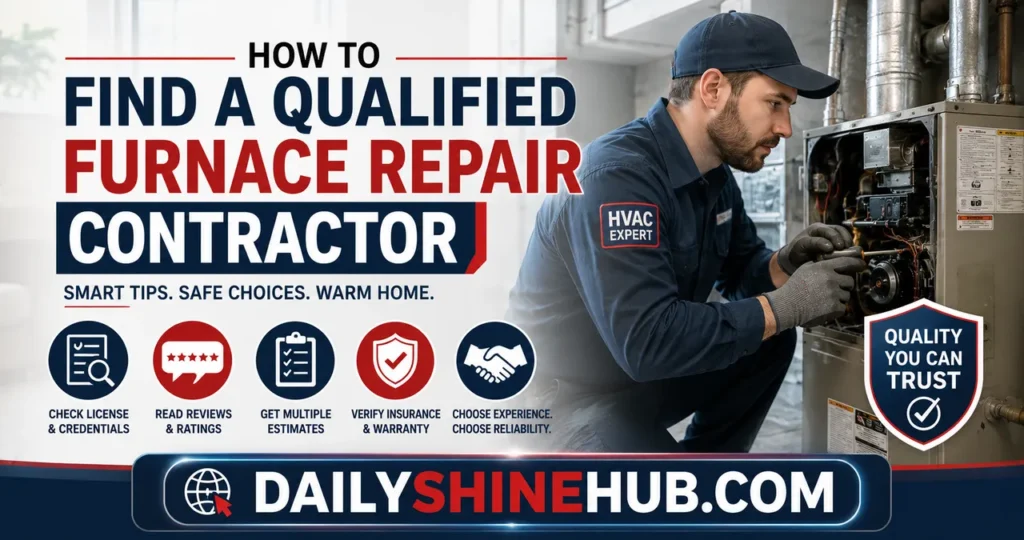
Once you determine professional service is necessary, hiring becomes the next challenge.
Do not choose a contractor solely because the company appears first in an online search or offers the lowest initial price.
Look for Relevant HVAC Experience
Ask whether the contractor regularly services your type of furnace.
A company experienced with gas furnaces may have different expertise from one primarily focused on other HVAC equipment. Ask about experience with your furnace’s manufacturer, model, and specific problem.
Verify Licensing and Insurance
Requirements vary by location, so homeowners should check applicable local and regional requirements.
Ask the contractor for evidence of required licensing and insurance. A legitimate professional should be comfortable answering these questions.
Insurance is particularly important because HVAC work involves electrical, mechanical, and sometimes gas-related risks.
Read Reviews Carefully
Online reviews can provide useful information, but do not judge a contractor from the star rating alone.
Look for repeated comments about:
- Communication
- Arrival times
- Diagnostic accuracy
- Workmanship
- Pricing transparency
- Cleanliness
- Warranty support
- Follow-up service
A handful of detailed reviews can be more informative than hundreds of vague ratings.
Questions to Ask Before Approving Furnace Repairs
A professional diagnosis should give you enough information to make an informed decision.
Ask:
What exactly failed?
The technician should be able to explain the problem in understandable language.
What caused the failure?
The immediate failed component may not always explain why the problem occurred.
Is the repair temporary or long-term?
Some repairs restore operation but may not address an underlying issue.
What parts are being replaced?
Ask for the part name and whether it is new, manufacturer-approved, or otherwise appropriate for the system.
What is included in the total price?
Clarify labor, parts, diagnostic fees, disposal fees, service charges, and applicable taxes.
Is the repair covered by a warranty?
Get warranty terms in writing whenever possible.
Get a Written Estimate
A written estimate protects both homeowner and contractor by establishing expectations before work begins.
The estimate should identify the diagnosed problem, recommended repair, parts, labor, total cost, and relevant warranty information.
Be cautious if a contractor refuses to explain the work or insists that you authorize an expensive repair without providing basic details.
Be Careful With High-Pressure Sales Tactics
A technician may legitimately recommend furnace replacement if the equipment is old, unsafe, severely damaged, or uneconomical to repair.
However, homeowners should be cautious when a technician immediately declares the entire furnace “bad” without explaining the diagnosis.
Ask whether repair is possible and what the expected lifespan and reliability would be after repair.
For an expensive replacement decision, getting a second opinion can be worthwhile.
Repair or Replace? Use More Than One Factor
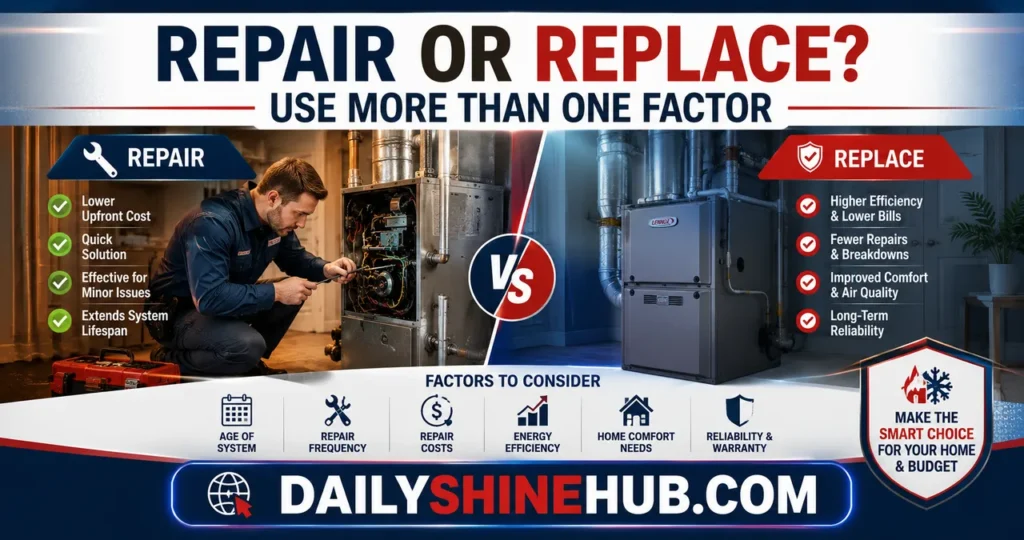
The age of the furnace is only one consideration.
Think about:
- Repair cost
- Furnace age
- Frequency of previous repairs
- Energy efficiency
- Availability of replacement parts
- Safety concerns
- Expected remaining service life
- Comfort problems
- Long-term operating costs
A relatively inexpensive repair on a dependable furnace may make sense. Repeatedly repairing an aging system can be less attractive when major components are failing.
The goal is not simply to spend the least money today. The goal is to choose the most sensible option over the expected life of the equipment.
How to Avoid Future Furnace Problems
Good maintenance can reduce avoidable problems and help identify developing issues.
Replace Filters Regularly
Follow the manufacturer’s recommendations and inspect the filter periodically. Homes with pets, renovations, allergies, or unusually dusty conditions may require more frequent attention.
Keep the Furnace Area Clear
Do not store boxes, cleaning supplies, clothing, or other combustible materials around heating equipment.
Maintain appropriate clearance according to the manufacturer’s requirements.
Schedule Professional Maintenance
A qualified HVAC professional can inspect components that homeowners should not service themselves.
Professional maintenance may include checking system operation, electrical connections, combustion-related components, airflow, and safety controls as appropriate for the furnace.
Your Homeowner Furnace Repair Decision Process
When your furnace malfunctions, avoid jumping straight from “It isn’t working” to “I need a new furnace.”
Instead, follow this sequence:
Step 1: Identify the symptom.
Determine whether the furnace is completely inactive, running without heating, cycling frequently, making noise, or showing another abnormal behavior.
Step 2: Perform safe basic checks.
Check the thermostat, filter, vents, and electrical breaker without opening the equipment or interfering with internal components.
Step 3: Look for safety concerns.
Gas odors, carbon monoxide alarms, burning smells, damaged wiring, or other serious warning signs require immediate professional attention.
Step 4: Contact qualified contractors.
Describe the symptoms accurately and provide the furnace make and model if available.
Step 5: Compare diagnoses and estimates.
For significant repairs, consider more than one professional opinion.
Step 6: Approve the repair in writing.
Understand exactly what will be repaired, how much it will cost, and what warranty applies.
Step 7: Monitor the furnace afterward.
Pay attention to unusual cycling, noises, odors, airflow, and temperature consistency after the repair.
Final Thoughts
Home furnace repair does not have to begin with guesswork. A homeowner’s most valuable skill is not knowing how to replace every furnace component; it is knowing how to diagnose symptoms safely, recognize serious warning signs, and select a trustworthy professional.
Simple checks such as inspecting the thermostat, replacing a dirty filter, checking vents, and observing the electrical breaker can help narrow down the problem. But gas systems, electrical components, combustion equipment, and internal furnace repairs should be left to qualified professionals.
When hiring a contractor, prioritize experience, licensing, insurance, clear diagnosis, written estimates, transparent pricing, and warranty information. If a repair is unusually expensive or a replacement is recommended, a second opinion can help you make a confident decision.
With the right diagnostic approach and careful contractor selection, homeowners can avoid unnecessary repairs, respond faster to heating problems, and keep their furnace operating safely and efficiently.
FAQs About Home Furnace Repair
1. What should I check first when my furnace stops working?
Start with the thermostat, furnace power switch, circuit breaker, air filter, and visible airflow restrictions. If these basic checks do not resolve the problem, contact a qualified HVAC professional.
2. Can I repair my furnace myself?
Homeowners can generally handle basic maintenance such as thermostat checks and filter replacement. Internal electrical, gas, ignition, combustion, and mechanical repairs should be handled by qualified professionals.
3. How do I know whether a furnace repair company is trustworthy?
Look for appropriate licensing, insurance, relevant HVAC experience, transparent pricing, detailed reviews, written estimates, and clear warranties. Avoid contractors who use unexplained high-pressure sales tactics.
4. Should I repair or replace an old furnace?
Consider the furnace’s age, repair cost, previous repair history, safety condition, efficiency, parts availability, and expected remaining service life. A second professional opinion can be helpful when replacement is expensive.
5. Why is my furnace running but not heating the house?
Possible causes include restricted airflow, a dirty filter, thermostat problems, ignition issues, ductwork problems, or internal equipment failures. Begin with safe checks such as the thermostat and filter, then call a professional if the issue continues.

Ethan Shine is a passionate content strategist, tech enthusiast, and digital media contributor at DailyShineHub. With over 5 years of experience in blogging and search engine optimization, Ethan specializes in breaking down complex topics into clear, actionable insights. When he isn’t researching the latest industry trends, he enjoys exploring global news, digital tools, and modern lifestyle concepts.