A home air conditioner is one of the most important appliances for maintaining comfort during hot weather. When the system stops cooling, makes unusual noises, leaks water, or repeatedly turns on and off, the problem can quickly become frustrating. Fortunately, not every AC problem requires an immediate professional repair.
For homeowners, understanding basic home air conditioner repair and maintenance can help identify common problems, prevent unnecessary service calls, and keep an AC system operating efficiently.
This guide is designed for homeowners who want a practical, step-by-step approach to diagnosing common air conditioner problems. It explains what you can safely check yourself, which warning signs require professional attention, and how regular maintenance can reduce the likelihood of expensive breakdowns.
Understanding How Your Home Air Conditioner Works
Before troubleshooting an AC problem, it helps to understand the basic components of a typical central air-conditioning system.
The indoor unit contains the evaporator coil and air handler, while the outdoor unit generally houses the compressor, condenser coil, and condenser fan. Refrigerant moves between these components, absorbing heat from indoor air and releasing that heat outside.
A thermostat controls when the system operates. Air filters help keep dust and debris from entering the system, while ductwork distributes cooled air throughout the house.
When these components work together correctly, the AC removes heat and humidity from indoor spaces. A problem with any major component can affect cooling performance.
Related HVAC Maintenance: Air conditioners share several central airflow and thermostat components with your heating system. If you are also preparing for colder weather, check out our diagnostic guide on home furnace repair to keep your entire HVAC system in top shape.
Start With Simple AC Troubleshooting
Before calling an HVAC technician, homeowners can perform several basic checks.
Check the Thermostat
The thermostat should be set to cooling mode, with the desired temperature lower than the current indoor temperature.
If the thermostat uses batteries, replace them if the display is blank or behaving strangely.
Also check whether the thermostat has accidentally been switched to fan-only mode. In this setting, the blower may operate without producing cooled air.
Inspect the Air Filter
A dirty air filter is one of the most common causes of poor AC performance.
When a filter becomes clogged, airflow decreases. The system may have difficulty cooling the home and can potentially develop problems such as an iced evaporator coil.
Check the filter regularly and replace it according to the manufacturer’s recommendations. Homes with pets, smokers, or significant dust may require more frequent filter replacement.
Check the Circuit Breaker
If the AC will not turn on at all, inspect the electrical panel.
A tripped circuit breaker may prevent the outdoor or indoor equipment from receiving power.
If a breaker has tripped, it can sometimes be reset once. However, do not repeatedly reset a breaker that keeps tripping. Repeated trips can indicate an electrical or equipment problem that requires professional diagnosis.
Common Home Air Conditioner Problems and Solutions
Different symptoms can point toward different causes. Identifying the symptom first makes troubleshooting easier.
| AC Problem | Possible Cause | Homeowner Check | When to Call a Professional |
|---|---|---|---|
| AC not turning on | Thermostat, breaker, electrical issue | Check thermostat and breaker | If power problems continue |
| Weak airflow | Dirty filter, blocked duct, blower issue | Replace filter and check vents | If airflow remains weak |
| AC blowing warm air | Thermostat, airflow, refrigerant, compressor | Check settings and filter | If the system still does not cool |
| Water leaking indoors | Clogged drain, frozen coil | Inspect visible drain area | For persistent leaks or frozen coils |
| Strange noises | Loose component, fan, motor, debris | Turn system off and inspect visible areas | For grinding, electrical buzzing, or repeated noises |
| Short cycling | Dirty filter, thermostat, sizing, mechanical problem | Replace filter and check thermostat | If cycling continues |
| High energy bills | Dirty components, airflow issues, aging equipment | Check filter and vents | For persistent efficiency problems |
Why Your AC May Be Blowing Warm Air
Few air-conditioning problems are more noticeable than an AC blowing warm air on a hot day.
Start with the thermostat. Confirm that it is set to cooling mode and that the temperature setting is appropriate.
Next, inspect the air filter. A severely clogged filter can restrict airflow and contribute to cooling problems.
Check whether the outdoor unit is operating when the system calls for cooling. If the indoor fan runs but the outdoor unit does not, there may be an electrical, capacitor, contactor, or other equipment issue.
Low refrigerant can also cause poor cooling. However, refrigerant should not simply be added without identifying the underlying cause. A refrigerant shortage often indicates a leak or another system problem.
Proper refrigerant handling and disposal should strictly be left to a qualified HVAC professional to prevent environmental and safety risks.
Refrigerant handling should be left to a qualified HVAC professional.
What to Do When Your AC Has Weak Airflow
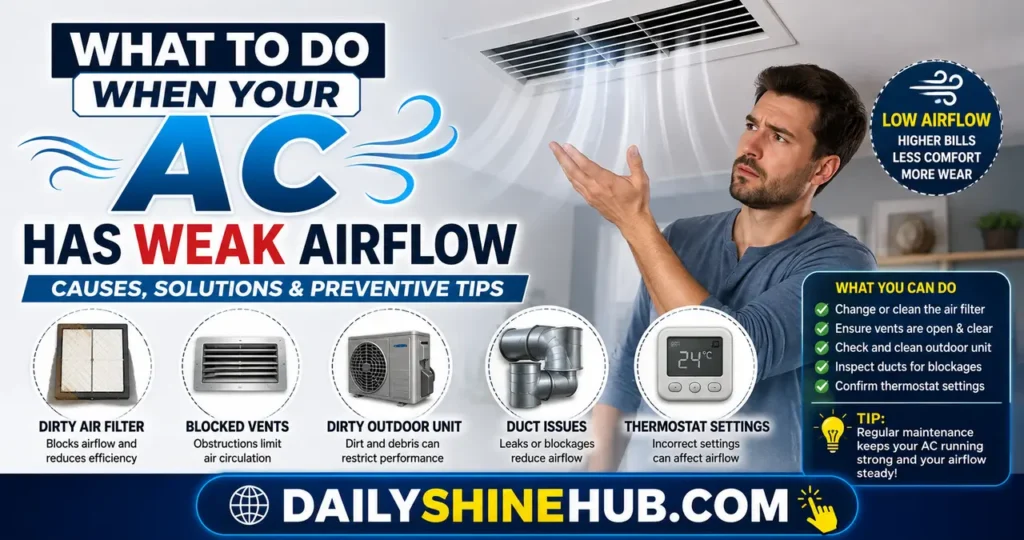
Weak airflow does not necessarily mean the air conditioner itself has failed.
Begin by checking the air filter.
Then inspect supply vents throughout the home. Make sure furniture, curtains, rugs, or other objects are not blocking them.
If only one room has weak airflow, the problem could involve a duct, vent, or airflow-balancing issue.
If airflow is weak throughout the entire house even after replacing the filter, the blower motor, evaporator coil, ductwork, or another component may need professional inspection.
Don’t Ignore Restricted Airflow
Poor airflow can make an AC work harder than necessary. Over time, this can contribute to reduced efficiency and potentially increase wear on system components.
Regular filter replacement is therefore one of the simplest forms of preventive air-conditioner maintenance.
Troubleshooting an AC That Keeps Turning On and Off
An air conditioner that repeatedly starts and stops is commonly described as short cycling.
Short cycling can have several causes.
A dirty filter may restrict airflow and cause the system to overheat or operate improperly. A thermostat problem can also cause incorrect temperature readings.
Other causes can include an oversized AC system, refrigerant problems, electrical issues, or malfunctioning components.
Start with the simple checks: thermostat settings, filter condition, and unobstructed airflow.
If the problem continues, schedule professional service rather than allowing the system to repeatedly cycle.
How to Handle Water Leaks From an Air Conditioner
Water around an indoor AC unit should not be ignored.
Air conditioners naturally produce condensation as they remove moisture from indoor air. Normally, that water travels through a condensate drain system.
A clogged condensate drain can cause water to back up and leak into the home.
Safe First Steps
Turn off the system if significant water is accumulating.
Check for obvious standing water around the indoor unit and inspect accessible drain areas for visible blockage.
Do not dismantle electrical components or attempt complicated drain repairs if you are unfamiliar with HVAC equipment.
Persistent leaks can also be caused by a frozen coil, damaged drain pan, incorrect installation, or other mechanical problems.
What Different AC Noises Can Mean
Air conditioners make some normal operating sounds, but sudden or unusual noises deserve attention.
Grinding or Screeching
Grinding or screeching can indicate a motor, bearing, or other mechanical problem.
Turn the system off and arrange for professional inspection rather than continuing to operate equipment that produces severe mechanical noises.
Rattling
Rattling may result from loose panels, screws, debris, or other components.
If you can safely identify an obviously loose exterior panel, it may be possible to secure it. However, internal components should not be handled without appropriate knowledge.
Buzzing
A persistent electrical buzzing sound can indicate an electrical or component problem.
Because air conditioners contain high-voltage electrical components, homeowners should avoid opening electrical compartments to investigate the source.
When an AC Coil Freezes
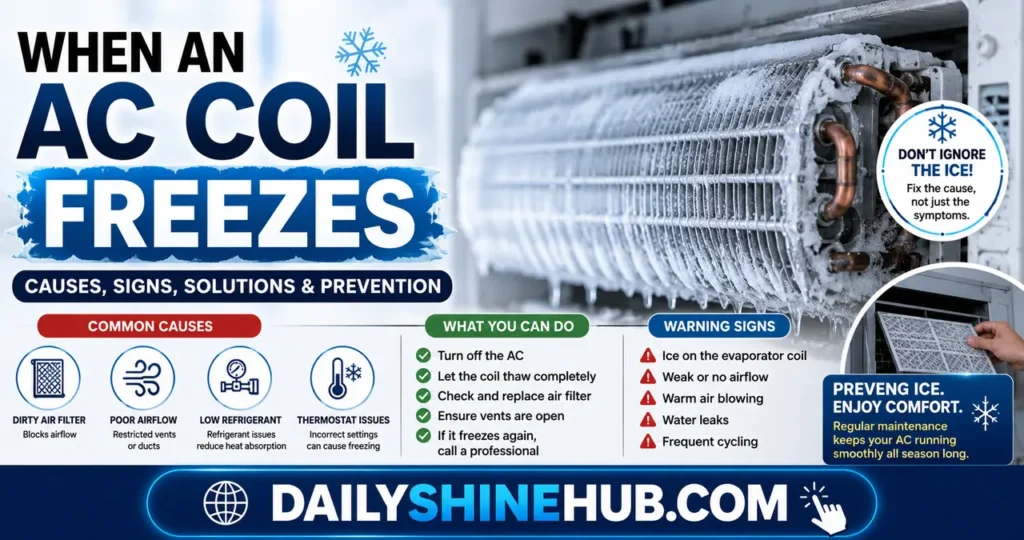
Ice on an air conditioner does not mean the system is producing extra cooling.
A frozen evaporator coil often indicates an airflow problem, refrigerant issue, or another underlying fault.
If you notice ice on the indoor coil or refrigerant lines, turn the cooling system off and allow the ice to melt.
Check the air filter and replace it if it is dirty.
If the coil freezes again after airflow has been restored, professional diagnosis is recommended.
Continuing to operate a system with a frozen coil can contribute to additional damage.
Safe DIY Repairs Homeowners Can Perform
Not every AC maintenance task requires an HVAC technician.
Homeowners can generally handle basic tasks such as:
- Replacing disposable air filters
- Cleaning accessible exterior debris
- Keeping outdoor equipment clear of vegetation
- Checking thermostat settings
- Keeping supply and return vents unobstructed
- Inspecting visible condensate areas
- Cleaning around the outdoor unit
- Monitoring unusual noises and performance changes
However, homeowners should avoid opening electrical panels, handling refrigerant, replacing capacitors, modifying wiring, or dismantling major components unless properly trained and qualified.
Cleaning the Outdoor AC Unit
The outdoor condenser needs adequate airflow to release heat.
Leaves, grass, dirt, and other debris can accumulate around the unit.
Keep vegetation trimmed away from the equipment and remove loose debris from the surrounding area.
Before performing any cleaning, switch off the system according to the manufacturer’s instructions and avoid damaging the delicate condenser fins.
Do not use excessive force or bend the fins. Damaged fins can restrict airflow and reduce efficiency.
Preventive AC Maintenance That Can Prevent Breakdowns
The easiest AC repair is often the repair you never need.
A simple maintenance routine can help identify problems before they become major failures.
Monthly Maintenance
During periods of frequent AC use, check the air filter regularly.
Inspect vents and returns to make sure they remain unobstructed.
Pay attention to changes in cooling performance, airflow, sounds, and cycling behavior.
Seasonal Maintenance
Before heavy summer use, inspect the outdoor unit and clear surrounding vegetation and debris.
Check the thermostat and replace batteries if necessary.
Consider scheduling professional HVAC maintenance before the cooling season if the system is older, heavily used, or showing warning signs.
Professional Maintenance
A professional technician can inspect electrical connections, refrigerant-related components, coils, motors, drainage systems, and other parts that are not appropriate for DIY servicing.
Professional maintenance is especially valuable for older systems or equipment that has experienced recurring problems.
Planning a Full Home Renovation? If your HVAC maintenance is part of a larger home improvement project, explore our guide on kitchen remodel for practical planning, budgeting, and design inspiration.
When Home Air Conditioner Repair Requires a Professional
Some problems should never become DIY experiments.
Call a qualified HVAC technician when you notice:
- Repeated circuit-breaker trips
- Burning smells
- Electrical buzzing or sparking
- Refrigerant leaks
- Repeated frozen coils
- Major water leaks
- Compressor problems
- Severe mechanical noises
- Persistent warm air despite basic troubleshooting
- Significant electrical faults
- AC problems that return after temporary fixes
If you smell burning or see smoke, turn the system off and address the situation as an electrical or fire-safety concern.
How to Reduce Future AC Repair Costs
Preventive maintenance is generally less expensive than emergency repairs.
Start by replacing filters regularly and keeping the outdoor unit clean and unobstructed.
Do not ignore small symptoms. A slightly unusual noise, reduced airflow, or gradually increasing electricity consumption can be an early warning sign.
It is also useful to keep records of repairs and maintenance. Note the date of filter changes, professional inspections, repairs, and recurring problems.
These records can help technicians diagnose repeated issues more quickly.
Choosing the Right HVAC Professional

When DIY troubleshooting does not solve the problem, choosing a qualified technician matters.
Look for an established HVAC service provider with appropriate licensing or certification for your area.
Ask for a clear explanation of the problem and the proposed repair.
For expensive repairs, request a written estimate before authorizing major work.
If a technician recommends replacing a major component, ask whether repair or replacement is more economical considering the system’s age, efficiency, condition, and expected remaining service life.
A trustworthy professional should be willing to explain the diagnosis rather than simply recommending parts replacement without explanation.
Final Thoughts on Home Air Conditioner Repair
Home air conditioner repair does not always begin with replacing a complicated component. In many cases, the first steps are simple: check the thermostat, inspect the filter, verify airflow, look for obvious obstructions, and observe how the system behaves.
These basic troubleshooting steps can help homeowners distinguish between a simple maintenance issue and a problem that requires professional attention.
The most important rule is to know your limits. Cleaning, filter replacement, and basic visual inspections are reasonable maintenance tasks, but electrical components, refrigerant systems, compressors, and complicated mechanical repairs should be handled by qualified professionals.
With regular maintenance and early troubleshooting, homeowners can improve comfort, reduce unnecessary energy consumption, and potentially extend the useful life of their air-conditioning system.
Frequently Asked Questions
1. What should I check first if my home AC stops working?
Start with the thermostat, power supply, and air filter. Make sure the thermostat is set to cooling, check for a tripped breaker, and inspect the filter. If these basic checks do not resolve the issue, professional diagnosis may be necessary.
2. Can I repair my home air conditioner myself?
You can safely perform basic maintenance such as replacing filters, clearing visible debris, and checking thermostat settings. Electrical repairs, refrigerant work, compressor problems, and complicated component replacements should generally be handled by qualified HVAC professionals.
3. Why is my AC running but not cooling the house?
Possible causes include a dirty filter, restricted airflow, thermostat problems, frozen coils, outdoor-unit problems, or low refrigerant. Start with the thermostat and filter before arranging professional service.
4. How often should I replace my AC filter?
The appropriate replacement interval depends on the filter type, household conditions, and manufacturer’s instructions. Check the filter regularly during heavy-use periods and replace it when it becomes dirty or clogged.
5. When should I stop troubleshooting and call an HVAC technician?
Stop DIY troubleshooting when you encounter electrical problems, burning smells, refrigerant issues, repeated breaker trips, significant leaks, frozen coils that return, severe noises, or persistent cooling problems. These situations can require specialized equipment, training, and professional repair.

Ethan Shine is a passionate content strategist, tech enthusiast, and digital media contributor at DailyShineHub. With over 5 years of experience in blogging and search engine optimization, Ethan specializes in breaking down complex topics into clear, actionable insights. When he isn’t researching the latest industry trends, he enjoys exploring global news, digital tools, and modern lifestyle concepts.