
Technology no longer belongs only in laboratories, offices, or high-end gaming rooms. Today, some of the most interesting innovations are small enough to fit in a pocket, sit on a desk, attach to a backpack, or quietly improve an ordinary morning routine. These gizmo and gadgets can turn repetitive tasks into effortless ones, make entertainment more immersive, improve productivity, and add a little fun to everyday life.
For people who enjoy discovering useful technology before everyone else, the best gadgets are not necessarily the most expensive. A genuinely great gadget solves a problem, saves time, reduces friction, or introduces a smarter way to do something familiar.
This guide explores unique tech, cool everyday tools, and smart upgrades for curious technology enthusiasts who want more from the devices they already use. Instead of focusing only on flashy electronics, we’ll look at practical innovations that can make daily routines easier, more organized, connected, and enjoyable.
What Makes a Gadget Worth Owning?
The word “gadget” often brings to mind novelty products that look impressive but eventually end up forgotten in a drawer.
Consumer electronics can range from simple everyday devices to advanced technology designed to improve convenience and functionality. A worthwhile gadget should provide at least one meaningful benefit—whether it saves several minutes every day, eliminates an annoying repetitive task, improves convenience, or makes an existing product considerably better.
Look for Practical Innovation
The most useful gadgets often address small frustrations.
For example, a compact charging station can eliminate cable clutter. A smart tracker can help locate frequently misplaced belongings. A portable monitor can transform a laptop into a more productive workstation. A smart plug can automate an ordinary appliance.
None of these ideas needs to be revolutionary. Their value comes from making something you already do easier.
Consider Frequency of Use
A gadget you use every day can provide more value than an expensive device you use twice a year.
Before buying something, ask:
- Will I use it regularly?
- Does it solve an actual problem?
- Will it save time?
- Does it replace another device or accessory?
- Is it simple enough that I will actually use it?
The answers can reveal whether you’re looking at a useful upgrade or simply an interesting novelty.
Cool Everyday Gadgets That Actually Earn Their Place
Everyday technology is where smart gadget design becomes especially noticeable. Small upgrades can improve routines involving work, travel, entertainment, cooking, organization, and personal convenience.
Smart Charging Stations
Modern households often contain smartphones, tablets, earbuds, smartwatches, laptops, and other rechargeable devices. Managing all those cables can quickly become frustrating.
A multi-device charging station can create one organized charging area instead of several scattered chargers. Some models support wireless charging, while others combine USB-C ports with dedicated spaces for different devices.
The best option depends on the devices you already own. Compatibility, charging speed, power delivery, and cable management are more important than appearance alone.
Bluetooth Trackers
A tiny Bluetooth tracker can be one of the most practical gadgets for everyday life.
Attach one to keys, bags, luggage, wallets, or other commonly misplaced items. When something disappears, a compatible smartphone app can help identify its location.
For frequent travelers, trackers can also provide an additional layer of visibility for luggage. They are inexpensive compared with the inconvenience of losing important belongings.
Compact Power Banks
A portable power bank has evolved from a basic emergency accessory into an everyday mobile tool.
Modern models can offer USB-C fast charging, multiple ports, compact designs, and enough capacity to recharge phones several times. Some are designed specifically for travel, while others are small enough to carry in a pocket.
When choosing one, pay attention to capacity, charging speed, size, weight, and whether it supports the power requirements of your devices.
Smart Desk Upgrades for Better Productivity

A desk does not have to become a complicated command center to benefit from technology. A few carefully selected upgrades can make working or studying more comfortable and efficient.
Portable Monitors
A portable monitor can turn a laptop into a dual-screen workstation almost instantly.
Extra screen space is useful for research, spreadsheets, writing, coding, editing, and video calls. Instead of switching repeatedly between windows, users can keep reference material on one display while working on another.
For remote workers and students, the portability is particularly useful. A lightweight monitor can fit into a laptop bag and create a more capable workstation almost anywhere.
USB-C Hubs
Modern laptops increasingly rely on USB-C, which can create a problem when users need HDMI, USB-A, memory cards, Ethernet, or other connections.
A USB-C hub can expand a laptop’s connectivity through one compact accessory.
However, not every hub is identical. Check the number of ports, data-transfer speeds, display support, power delivery, and compatibility before purchasing.
Ergonomic Accessories
Technology upgrades are not limited to electronics.
An adjustable laptop stand, ergonomic mouse, compact mechanical keyboard, or monitor riser can improve the physical setup of a workspace.
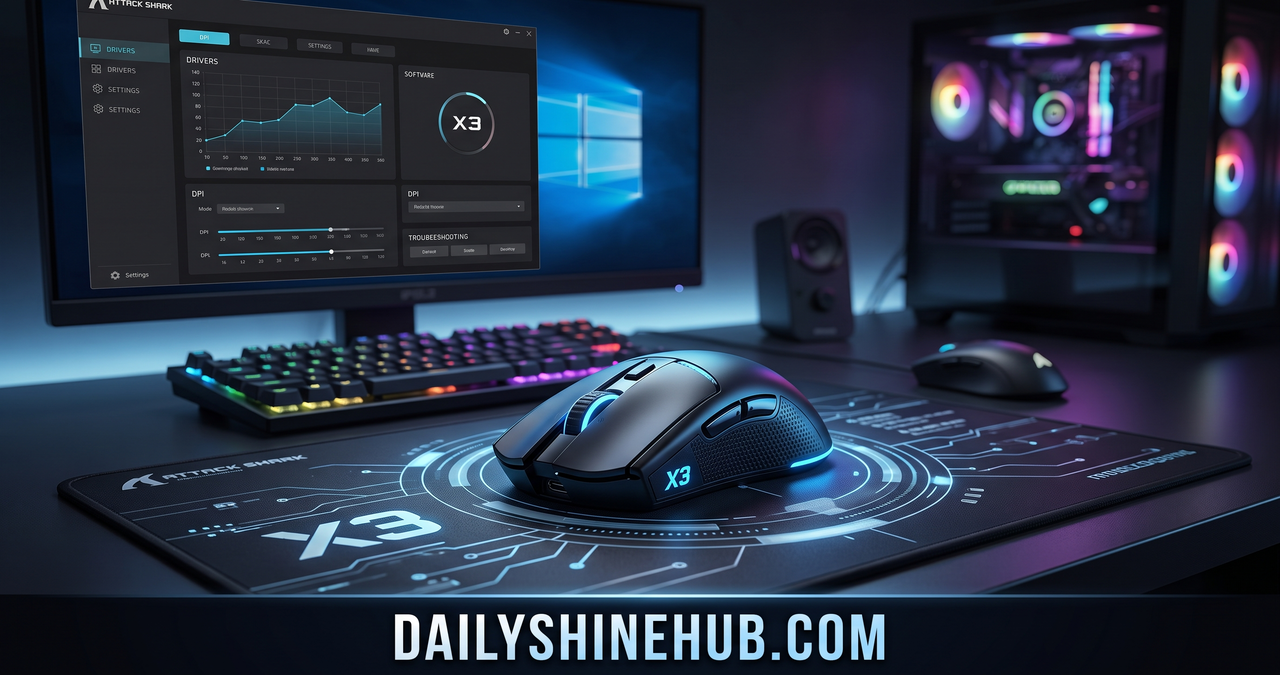
Pairing these hardware upgrades with model-specific drivers or customization utilities, such as Attack Shark software, can help users fine-tune programmable keys and DPI settings for a more efficient setup.
These accessories are particularly useful because they can enhance the devices you already own rather than requiring you to replace them.
Smart Home Gadgets for Effortless Routines
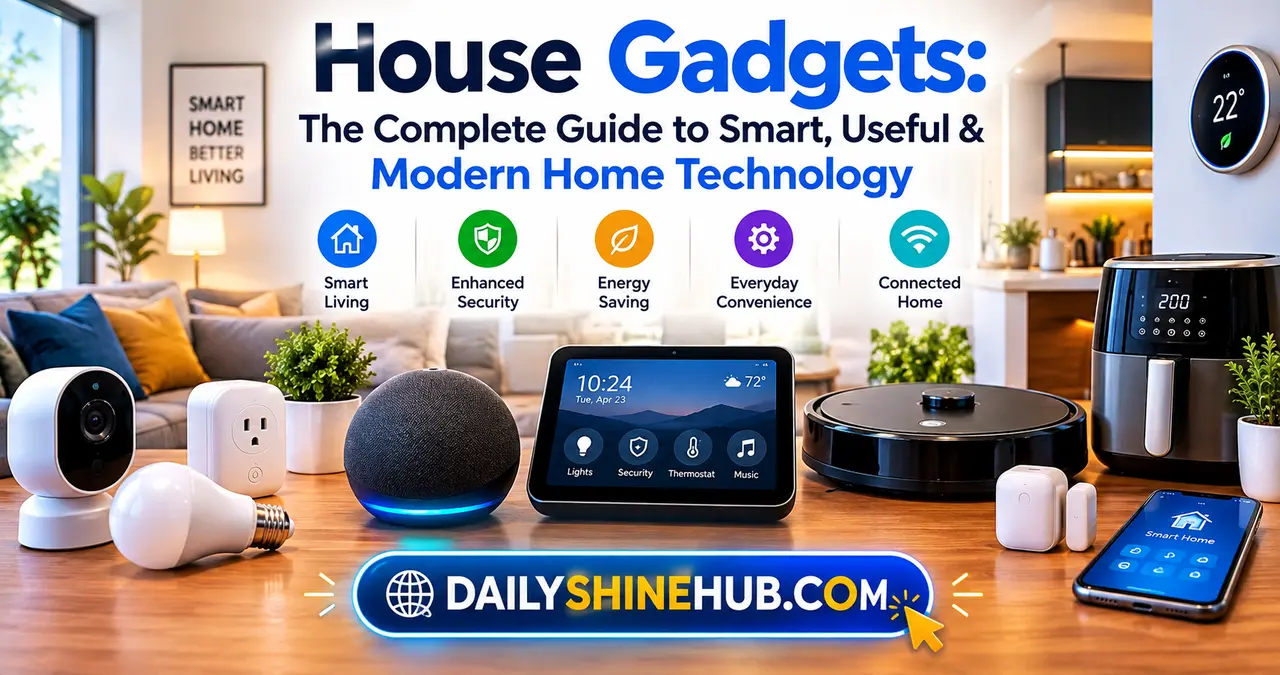
Smart-home technology has moved beyond expensive whole-house systems. Individual devices can now provide automation without requiring a complete home makeover.
Smart Plugs
A smart plug is one of the easiest ways to add basic automation to an ordinary appliance.
Depending on compatibility, users can schedule lamps, fans, chargers, and other devices to turn on or off automatically. Some systems also support remote control and voice commands.
The important consideration is whether the appliance itself is designed to safely operate through a smart plug.
Smart Lighting
Smart bulbs can provide adjustable brightness, scheduling, scenes, and sometimes color control.
Instead of manually turning lights on and off throughout the day, automation can create routines around waking, working, relaxing, or sleeping.
The smartest setup is usually the simplest one. You do not need dozens of connected bulbs to benefit from smart lighting.
Smart Sensors
Motion, temperature, humidity, and door sensors can provide useful information without requiring constant attention.
For example, a motion sensor can trigger a light, while a temperature sensor can help monitor a room. These tiny devices demonstrate an important trend in modern gadgets: technology becoming less visible while becoming more useful.
Unique Tech for Travelers and Commuters
Travel exposes the limitations of everyday technology. Fortunately, several compact gadgets can make commuting and trips more convenient.
Universal Travel Adapters
A universal travel adapter can eliminate the need to carry multiple regional adapters.
Look for models with USB-C and USB-A charging ports, built-in safety features, and compatibility with the destinations you visit.
For frequent travelers, a compact adapter with multiple charging options can simplify an entire travel bag.
Digital Luggage Scales
Overweight luggage fees can turn an otherwise smooth trip into an expensive surprise.
A small digital luggage scale allows travelers to check baggage weight before reaching the airport. Because the device is compact, it can also be packed for the return journey.
This is a classic example of a gadget that performs one simple job extremely well.
Portable Wi-Fi and Connectivity Tools
Connectivity can be essential for travelers who work remotely or need reliable internet access.
Portable hotspot devices can provide an alternative to depending entirely on public Wi-Fi. However, service availability, data plans, roaming costs, and regional compatibility should be checked before relying on one.
Gadgets for Entertainment and Relaxation

Technology is also about enjoying downtime.
Compact Bluetooth Speakers
A small Bluetooth speaker can deliver better audio than many built-in phone or laptop speakers.
For outdoor gatherings, bedrooms, kitchens, and travel, portability is often more important than maximum volume.
Look for battery life, water resistance when appropriate, connection stability, and sound quality.
Streaming Accessories
A streaming stick or media device can upgrade an older compatible television by providing access to modern streaming platforms and apps.
Instead of replacing an entire TV, a small accessory may provide the functionality you need.
Gaming Accessories
Gamers have an enormous selection of gadgets, from controllers and charging docks to portable displays and specialized keyboards.
The best upgrade depends on the type of gaming you do. A competitive PC gamer may value a low-latency mouse, while a console player might benefit more from an improved controller or headset.
Smart Upgrades for the Kitchen
The kitchen is another area where technology can eliminate repetitive work.
Smart Kitchen Timers
A dedicated digital timer remains useful even when smartphones are everywhere. Modern versions may offer large displays, multiple timers, magnetic mounting, or simple physical controls.
For cooking, simplicity is often better than unnecessary complexity.
Precision Cooking Tools
Digital thermometers can make cooking more consistent by providing accurate temperature readings.
Whether you’re preparing meat, baking, or making specialty drinks, precise measurements can reduce guesswork.
Compact Coffee Gadgets
Coffee enthusiasts can find gadgets ranging from portable brewers to precision scales and electric grinders.
The goal should not be to collect every accessory. Choose tools that improve the part of your coffee routine you care about most.
Gadget Category Comparison
| Gadget Category | Everyday Benefit | Best For | Key Feature to Check |
|---|---|---|---|
| Smart charging station | Reduces cable clutter | Homes and offices | Charging compatibility |
| Bluetooth tracker | Helps locate belongings | Travelers and busy users | Device ecosystem |
| USB-C hub | Expands connectivity | Laptop users | Ports and bandwidth |
| Portable monitor | Adds screen space | Remote workers and students | Resolution and connectivity |
| Smart plug | Automates appliances | Smart-home beginners | Power rating and compatibility |
| Universal adapter | Simplifies travel charging | Frequent travelers | Regional compatibility |
| Digital luggage scale | Prevents overweight baggage surprises | Travelers | Weight capacity |
| Bluetooth speaker | Improves portable audio | Music and entertainment | Battery life |
| Digital thermometer | Improves cooking precision | Home cooks | Accuracy and response time |
How to Choose Gadgets Without Creating More Clutter
One of the biggest problems with gadget collecting is accumulation.
A device can be inexpensive and still become wasteful if it performs a function you never needed. Instead of buying technology simply because it looks clever, build a personal system around actual needs.
Follow the One-Problem Rule
Before purchasing a gadget, identify the problem it solves.
“I want this because it looks cool” can be a perfectly valid reason for a fun purchase, but practical gadgets should have a clearer purpose.
Ask yourself what inconvenience will disappear after buying it.
Check Compatibility First
Compatibility problems are among the most common causes of gadget frustration.
Before purchasing, verify:
- Operating-system compatibility
- Charging standards
- Wireless connectivity
- Smart-home ecosystem support
- Required apps
- Power requirements
- Available ports
A feature-packed gadget is useless if it does not work properly with your existing setup.
Think About Maintenance
Some smart devices require apps, firmware updates, batteries, subscriptions, or cloud accounts.
That does not automatically make them bad products, but these requirements should be considered.
A simple gadget that works reliably may be more valuable than a sophisticated product that requires constant management.
The Rise of Modular and Upgrade-Friendly Technology

One of the most interesting trends in gadgets is modularity.
Instead of replacing an entire device when one feature becomes outdated, users increasingly have access to accessories and components that extend existing technology.
Examples include:
- External storage
- USB-C expansion hubs
- Clip-on smartphone accessories
- Replaceable batteries
- Portable displays
- Modular lighting
- Smart sensors
- Expandable desktop accessories
This approach can be more economical because the user upgrades only the part that needs improvement.
How to Build a Personal Smart-Tech Toolkit
A useful gadget collection should reflect your lifestyle.
For a remote worker, the foundation might include a USB-C hub, portable monitor, ergonomic accessories, and reliable charging equipment.
For a traveler, a universal adapter, power bank, Bluetooth tracker, and luggage scale may be more valuable.
For a smart-home enthusiast, sensors, smart lighting, plugs, and a compatible control platform could make more sense.
The key is to build around use cases rather than trends.
The Future of Cool Everyday Gadgets
The next generation of consumer technology is likely to become increasingly subtle.
Instead of adding more buttons and screens, designers are working toward technology that works in the background. Staying updated on sales tech news can also help readers understand how emerging technology is influencing the tools and products businesses adopt. Sensors can monitor environments, automation can handle routine actions, and AI-powered features can reduce the amount of manual interaction required.
Wearable devices, smart accessories, connected appliances, and portable computing tools are likely to continue becoming smaller and more capable.
The most exciting innovation may not be a giant new device. It could be a tiny accessory that saves five minutes every day.
Final Thoughts
The world of gizmo and gadgets is enormous, but the best technology is not necessarily the newest or most expensive. A great gadget earns its place by making everyday life easier, faster, more organized, or more enjoyable.
From smart charging stations and Bluetooth trackers to portable monitors, smart-home accessories, travel tools, and precision kitchen gadgets, there are countless ways to upgrade ordinary routines.
The smartest approach is to start with a problem rather than a product. Identify what frustrates you, find a technology that addresses it, and choose something compatible, reliable, and easy to use.
That is where cool technology becomes genuinely useful: when a small upgrade creates a noticeably better everyday experience.
FAQs About Gizmo and Gadgets
1. What are the most useful everyday gadgets?
Useful everyday gadgets include Bluetooth trackers, power banks, smart charging stations, USB-C hubs, portable monitors, smart plugs, and compact speakers. The best choice depends on your lifestyle and the problems you want to solve.
2. Are expensive gadgets always better?
No. Price does not automatically determine usefulness or quality. A relatively inexpensive gadget that solves a frequent problem can provide much more value than an expensive device that is rarely used.
3. How can I avoid buying unnecessary gadgets?
Start by identifying a specific problem before shopping. Check whether you already own something that performs the same function, research compatibility, and consider how frequently you will use the new device.
4. Which gadgets are best for upgrading an existing setup?
USB-C hubs, portable monitors, ergonomic accessories, smart plugs, wireless charging stations, external storage, and Bluetooth accessories are excellent upgrade options because they can add functionality without requiring you to replace your main devices.
5. What should I consider before buying a smart gadget?
Check compatibility, power requirements, connectivity, required apps, privacy features, subscriptions, update support, warranty, and long-term usefulness. A gadget should fit naturally into your existing technology ecosystem rather than create unnecessary complexity.

Ethan Shine is a passionate content strategist, tech enthusiast, and digital media contributor at DailyShineHub. With over 5 years of experience in blogging and search engine optimization, Ethan specializes in breaking down complex topics into clear, actionable insights. When he isn’t researching the latest industry trends, he enjoys exploring global news, digital tools, and modern lifestyle concepts.