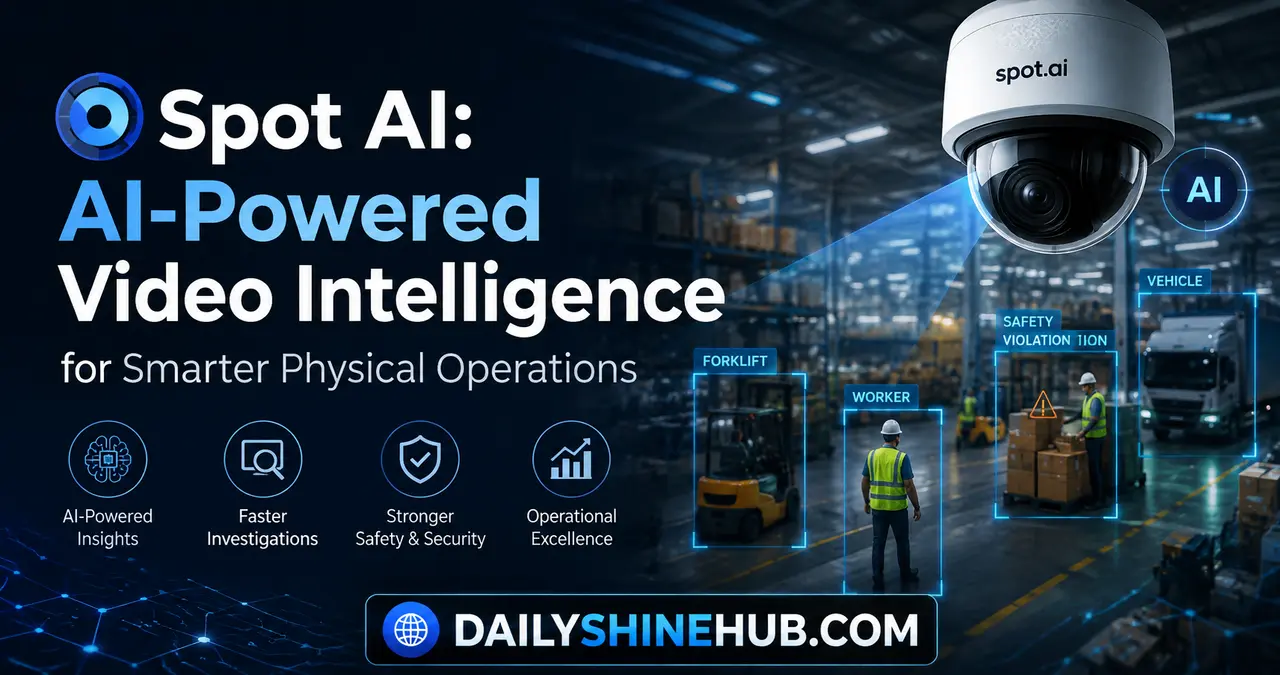
Physical operations have always generated enormous amounts of information, but much of it has traditionally remained difficult to use. Security cameras record hours of footage, supervisors walk through facilities, and frontline teams report incidents manually. The result is a familiar problem: organizations may have plenty of operational data, yet lack a practical way to turn that data into timely decisions.
Spot AI approaches this challenge through AI-powered video intelligence. Instead of treating cameras solely as security devices, the platform is designed to help organizations use existing video infrastructure as a source of operational insight. This can make video more useful for safety, security, compliance, investigations, productivity, and day-to-day facility management.
For operations leaders, the appeal goes beyond simply watching camera feeds. The bigger opportunity is to make physical environments more observable and easier to manage. AI can help teams identify relevant events, search recorded footage, understand what happened, and respond without manually reviewing hours of video.
This article examines Spot AI from the perspective of AI-powered video intelligence and physical operations optimization, with particular attention to how the technology can support safety teams, security leaders, facility managers, manufacturing organizations, logistics operations, and other businesses where physical activity directly affects performance.
What Is Spot AI?
Spot AI is an AI-powered video intelligence platform designed to help organizations extract useful information from their camera systems. Rather than relying exclusively on conventional surveillance workflows, it adds AI capabilities that allow teams to analyze and interact with video more efficiently.
Traditional video surveillance often follows a reactive model. An incident occurs, someone reports it, and a security or operations employee searches through recordings to determine what happened. If there are dozens or hundreds of cameras, finding the relevant moment can consume significant time.
Video intelligence changes that workflow by making recorded footage more searchable and actionable.
Instead of thinking of cameras as passive recording devices, organizations can view them as operational sensors. Video can provide context about activity around loading docks, manufacturing floors, warehouses, construction sites, parking areas, restricted zones, and other physical environments.
The value of this approach is particularly relevant to organizations where physical activity is closely connected to business outcomes.
Why Physical Operations Need Video Intelligence
Physical operations create a different data challenge from purely digital businesses.
A software company can monitor application logs, customer interactions, server activity, and other digital signals almost instantly. A warehouse, factory, construction site, or distribution facility depends heavily on what people, vehicles, machines, and materials are doing in the physical world.
Cameras already capture much of that activity.
The problem is that humans cannot continuously watch every camera or manually inspect every recording. Video intelligence attempts to bridge that gap.
From Surveillance to Operational Data
A conventional camera answers a basic question:
“What did the camera record?”
An intelligent video platform can help teams investigate questions such as:
- What happened near a specific loading area?
- When did a particular vehicle enter or leave?
- Was a safety procedure followed?
- Where did an incident occur?
- What happened immediately before an accident?
- Did an unauthorized person enter a restricted area?
- How frequently does a particular operational event occur?
This shift matters because operations teams are rarely interested in watching footage for its own sake. They want answers that can help them make decisions.
How Spot AI Can Improve Operational Visibility
One of the strongest use cases for AI-powered video is improving visibility across physical facilities.
Large organizations can have cameras spread across warehouses, factories, retail locations, offices, parking lots, yards, and other sites. Without intelligent tools, the sheer volume of footage can make useful information difficult to retrieve.
AI-assisted video analysis can make investigations more efficient by helping teams focus on relevant footage instead of manually reviewing everything.
Faster Incident Investigation
Consider a warehouse where an employee reports that a pallet was damaged near a loading dock.
A conventional investigation might require an employee to:
- Identify which cameras cover the area.
- Determine approximately when the event occurred.
- Open multiple recordings.
- Search backward and forward through footage.
- Identify the people or vehicles involved.
- Document what happened.
With intelligent video search, the investigation can become much more targeted.
This can reduce the amount of time spent performing repetitive video-review tasks and allow operations teams to concentrate on the actual incident.
Spot AI and Workplace Safety
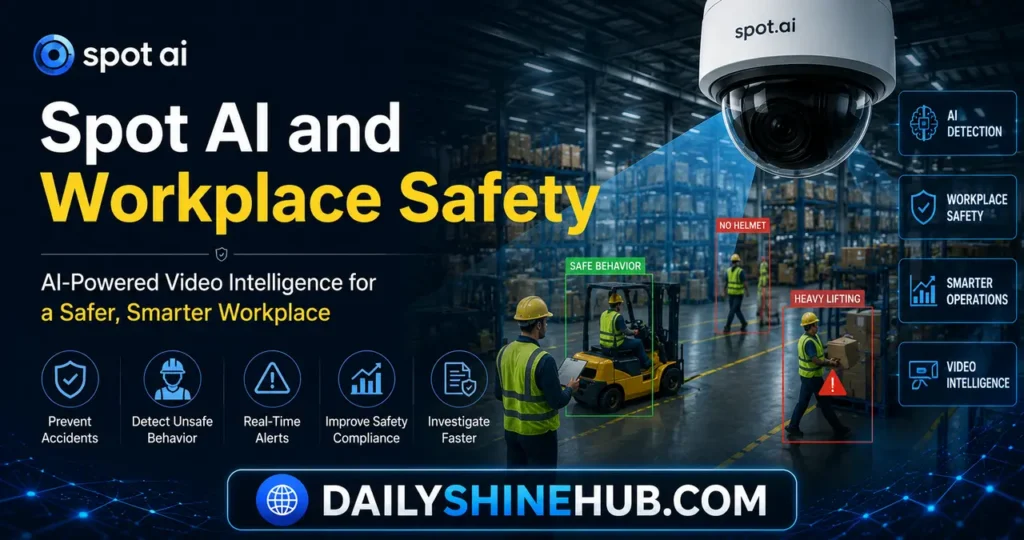
Safety is one of the most important areas where video intelligence can contribute to physical operations.
Manufacturing plants, warehouses, construction sites, distribution centers, and industrial facilities contain numerous hazards. Safety teams may need to understand whether workers are following procedures, whether hazardous areas are being entered, and what circumstances contribute to incidents.
Moving From Incident Response to Prevention
Traditional safety investigations often begin after something goes wrong.
Video intelligence creates an opportunity to examine patterns before an incident becomes a serious event.
For example, organizations may use video insights to investigate situations involving:
- Restricted-area access
- Unsafe movement around equipment
- Vehicle and pedestrian interactions
- Loading and unloading activity
- Workplace incidents
- Safety-rule compliance
- Potentially hazardous behaviors
The goal is not simply to collect footage after an accident. The broader objective is to create a clearer understanding of how physical operations actually function.
Learning From Near Misses
Near misses are particularly valuable for safety teams.
A forklift that nearly collides with a pedestrian may not result in an injury, but it can reveal a weakness in facility layout, traffic management, signage, or employee behavior.
Video can provide context that written incident reports may miss.
Instead of relying solely on memory or verbal descriptions, safety professionals can examine the physical sequence of events and use those findings to improve procedures.
AI Video Intelligence for Security Teams
Security remains an important part of any video platform, but AI can make security operations more efficient.
A security employee responsible for hundreds of cameras cannot realistically observe every feed continuously. Intelligent systems can help prioritize attention and make investigations faster.
Searching Rather Than Watching
One of the biggest operational advantages is the ability to treat video as searchable information.
Rather than spending hours scanning recordings, investigators can narrow the search around relevant events, locations, objects, or activities.
This can be especially useful when responding to:
- Theft investigations
- Unauthorized access
- Property damage
- Suspicious activity
- Vehicle incidents
- Perimeter events
- Employee or visitor disputes
- Security incidents across multiple locations
For organizations with distributed facilities, faster investigations can have significant operational value.
The Role of Video in Manufacturing Optimization
Manufacturing environments generate complex physical workflows.
Raw materials move through production lines. Employees interact with equipment. Vehicles transport components. Finished products are staged and shipped. Small disruptions can create delays that eventually affect output.
Video intelligence can provide another layer of operational visibility.
Identifying Process Bottlenecks
Suppose a production process appears to be slower than expected.
Traditional operational analysis might focus on production statistics, equipment logs, or employee reports. Video can add visual context.
Managers may be able to investigate:
- Where workers spend excessive time waiting
- How materials move between stations
- Whether equipment areas become congested
- Where handoffs slow production
- How frequently certain interruptions occur
- Whether physical layouts contribute to inefficiencies
Video does not replace operational metrics. Instead, it can complement them by explaining what is happening physically behind the numbers.
Logistics and Warehouse Applications
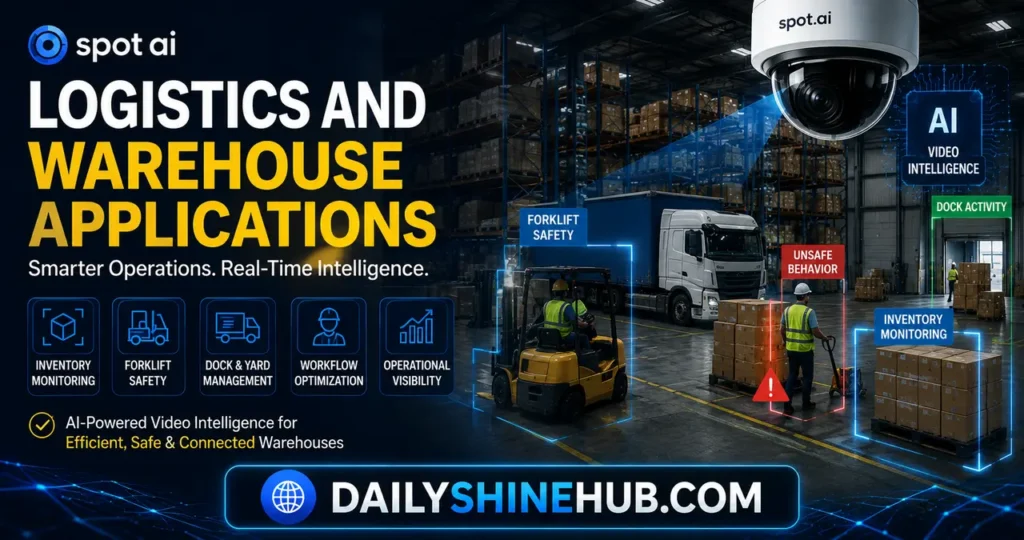
Warehouses and distribution centers are especially suited to video intelligence because they involve constant movement of people, packages, forklifts, trucks, and inventory.
Operational leaders often need to understand where delays originate.
Improving Dock and Yard Visibility
Loading docks can become operational bottlenecks.
Trucks arrive, employees load or unload materials, forklifts move inventory, and drivers depart. Delays can result from congestion, poor coordination, unexpected arrivals, or inefficient workflows.
Video can help managers investigate the physical causes of those delays.
Instead of simply seeing that a shipment departed late, teams can examine what happened around the dock during the relevant period.
Supporting Loss Prevention
Warehouse losses may involve damaged inventory, misplaced goods, unauthorized access, or other physical events.
Video intelligence can make it easier to investigate suspicious activity and establish timelines.
That can help organizations move from speculation to evidence-based operational decisions.
Spot AI for Multi-Site Operations
Organizations operating multiple physical locations face an additional challenge: consistency.
A company may have different warehouses, factories, stores, construction sites, or offices with different layouts and operational practices.
Centralized video intelligence can help corporate teams gain visibility across locations.
| Physical Operations Area | Traditional Challenge | AI-Powered Video Intelligence Opportunity |
|---|---|---|
| Workplace safety | Manual incident review | Faster investigation and behavioral context |
| Security | Monitoring many camera feeds | More efficient event investigation |
| Warehousing | Limited workflow visibility | Analyze movement and operational activity |
| Manufacturing | Difficult-to-observe bottlenecks | Visual context for process improvement |
| Logistics | Dock and yard congestion | Investigate physical causes of delays |
| Compliance | Manual evidence gathering | More accessible video-based documentation |
| Multi-site management | Inconsistent visibility | Centralized operational insight |
The benefit is not necessarily that every facility operates identically. Instead, leadership can gain a more consistent way to investigate operational questions.
Turning Cameras Into a Business Intelligence Layer
As businesses modernize their physical locations, video analytics technology has become a core part of intelligent infrastructure. Platforms like Spot AI allow organizations to turn standard surveillance cameras into active operational sensors, helping teams capture actionable insights across facilities.
The most interesting aspect of video intelligence is the possibility of treating cameras as another business data source.
Organizations already collect information from:
- Enterprise software
- Sensors
- Access-control systems
- Equipment
- GPS systems
- Warehouse management platforms
- Production systems
- Employee workflows
Video adds another dimension: visual context.
A database may show that a shipment was delayed. Video can potentially help explain what physically happened during the delay.
A safety report may say that an incident occurred. Video can provide additional context about the sequence leading to it.
A production dashboard may show reduced output. Video can help investigate whether congestion, waiting, or workflow issues contributed.
This makes video intelligence potentially valuable not just to security teams, but to operations leadership.
Who Can Benefit Most From Spot AI?
Spot AI is particularly relevant to organizations where physical environments play a major role in business performance.
Operations Managers
Operations managers can use video intelligence to investigate workflow issues and understand physical processes.
Safety Professionals
Safety teams can use video as an investigative and learning tool for incidents, near misses, and workplace conditions.
Security Leaders
Security departments can potentially reduce the time required to locate and review relevant footage.
Facility Managers
Facility teams can gain greater visibility into activity across large physical spaces.
Manufacturing Leaders
Manufacturing organizations can investigate physical bottlenecks and workflow patterns.
Logistics Executives
Distribution and transportation operations can use video to better understand activity around warehouses, yards, and loading areas.
The Difference Between Monitoring and Optimization
It is important to distinguish surveillance from optimization.
Monitoring asks whether something is happening.
Optimization asks why it is happening and what should change.
For example, monitoring might identify that a restricted area was entered. Optimization goes further by asking whether the area is poorly marked, whether access controls are effective, or whether the workflow encourages employees to take an unsafe route.
This distinction is critical when implementing AI video technology.
If organizations use intelligent cameras only for security investigations, they may capture only a fraction of the potential value.
The larger opportunity is using video insights to improve the underlying physical operation.
Implementation Considerations for Organizations
Deploying video intelligence requires more than installing software.
Organizations should first define the operational problems they want to solve.
Start With Specific Use Cases
Instead of attempting to analyze everything, organizations can begin with measurable goals such as:
- Reducing incident investigation time
- Improving safety visibility
- Investigating warehouse delays
- Understanding recurring security events
- Improving operational consistency
- Supporting compliance investigations
A focused implementation makes it easier to determine whether the technology is delivering meaningful results.
Evaluate Existing Camera Infrastructure
Organizations should also consider their existing cameras and network architecture.
The practical value of an AI video platform depends partly on the quality, positioning, coverage, and availability of camera feeds.
Poor camera placement cannot always be fixed through software.
Consider Privacy and Governance
AI-powered video analysis also raises important governance questions.
Organizations should establish clear policies around:
- Who can access footage
- How long recordings are retained
- How video searches are logged
- Which use cases are permitted
- How employees and visitors are informed
- How sensitive footage is protected
Responsible governance is particularly important when video intelligence extends beyond conventional security applications.
Measuring the ROI of Video Intelligence
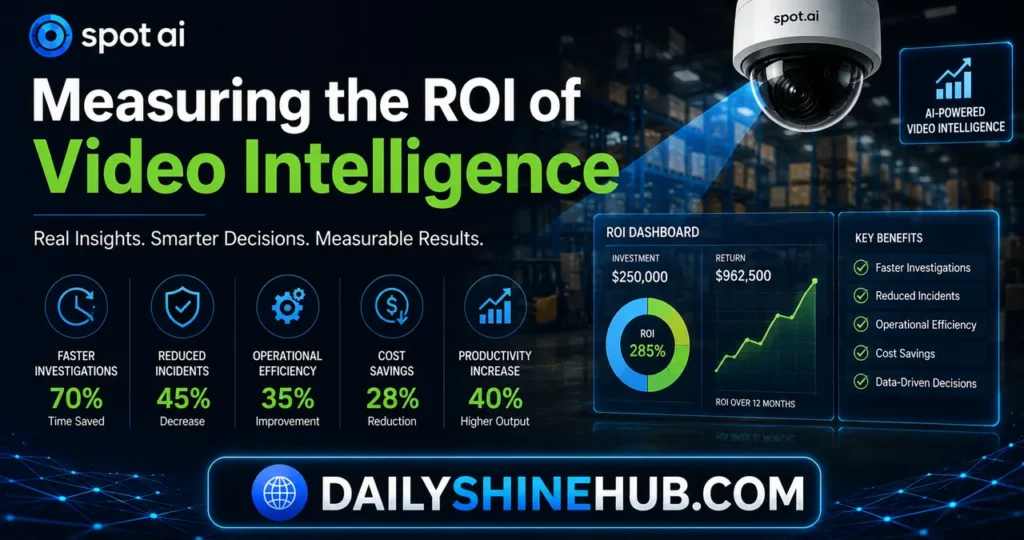
A successful implementation should produce measurable operational improvements.
Organizations can track metrics such as:
Investigation time: How long does it take to locate relevant footage?
Incident resolution: How quickly can teams understand and document events?
Safety performance: Are recurring hazards or near misses being identified earlier?
Operational efficiency: Can video insights reveal workflow bottlenecks?
Security productivity: Can teams investigate more incidents with the same resources?
Multi-site visibility: Can central teams better understand operations across facilities?
ROI should not be measured solely by how many cameras are connected. The more meaningful question is whether the organization can make faster, better-informed physical operations decisions.
The Future of AI-Powered Physical Operations
The evolution of AI video technology points toward a broader change in how organizations manage physical environments.
Historically, companies have had sophisticated analytics for digital activity but relatively limited intelligence about what happens in physical spaces.
That gap is narrowing.
As computer vision and AI capabilities become more practical, cameras can potentially become part of an organization’s operational intelligence infrastructure.
The long-term opportunity is not simply to record more video. It is to make physical environments more measurable, searchable, understandable, and responsive.
For operations leaders, this could mean a future in which video is integrated with other business systems to provide richer context around safety, productivity, logistics, security, and facility performance.
Final Thoughts
Spot AI represents an important shift in the role of workplace cameras. Instead of viewing video solely as a security archive, organizations can explore its potential as a source of operational intelligence.
For physical businesses, that distinction matters.
Factories, warehouses, construction sites, logistics facilities, and other environments generate enormous amounts of visual information every day. AI-powered video intelligence can help teams find relevant events faster, investigate incidents more efficiently, understand physical workflows, and identify opportunities for improvement.
The strongest business case comes when organizations connect video intelligence to concrete operational goals. Faster investigations, better safety analysis, improved facility visibility, and more informed process decisions can turn existing camera infrastructure into a much more useful operational resource.
Ultimately, the value of Spot AI is not simply about seeing what happened. The bigger opportunity is helping organizations understand what happened, why it happened, and how physical operations can work better next time.
Frequently Asked Questions
1. What is Spot AI used for?
Spot AI is used for AI-powered video intelligence across physical environments. Organizations can use it to improve video search and investigation while supporting areas such as security, workplace safety, facility management, and operational analysis.
2. How can Spot AI improve physical operations?
It can help teams extract useful information from camera footage, investigate incidents faster, understand physical workflows, identify operational patterns, and gain better visibility across facilities.
3. Can Spot AI support workplace safety?
Yes. Video intelligence can support safety investigations by providing visual context around incidents and near misses. It can also help organizations examine recurring situations that may indicate opportunities for safety improvements.
4. Is Spot AI useful outside traditional security?
Yes. While security is an important application, AI-powered video intelligence can also support manufacturing, logistics, warehouse management, safety, compliance, and broader operational optimization.
5. What should companies consider before implementing AI video intelligence?
Companies should define specific use cases, evaluate their existing camera infrastructure, establish privacy and access policies, and determine measurable success metrics. The strongest implementations connect video intelligence to clear operational objectives rather than simply adding more surveillance capabilities.
If you want to explore more about emerging platforms and modern corporate solutions, check out our related article on sales and technology news.

Ethan Shine is a passionate content strategist, tech enthusiast, and digital media contributor at DailyShineHub. With over 5 years of experience in blogging and search engine optimization, Ethan specializes in breaking down complex topics into clear, actionable insights. When he isn’t researching the latest industry trends, he enjoys exploring global news, digital tools, and modern lifestyle concepts.