
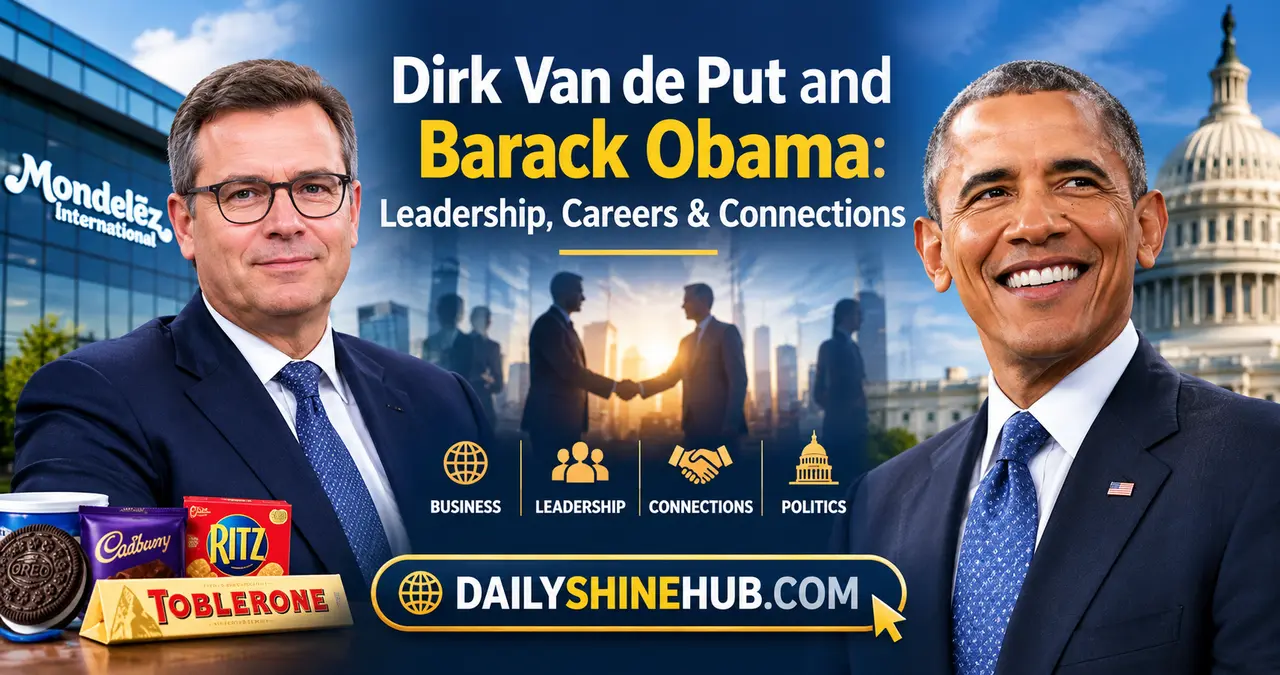
Dirk Van de Put and Barack Obama represent two different forms of leadership that have influenced the modern world. Dirk Van de Put is a global business executive known for leading Mondelēz International, the company behind popular brands such as Oreo, Cadbury, Ritz, and Toblerone. Barack Obama, meanwhile, served as the 44th president of the United States from 2009 to 2017 and became a prominent figure in American politics and international affairs.
Interest in Dirk Van de Put and Barack Obama raises an important question: are these two influential figures directly connected, or are people comparing them because of their leadership positions and public profiles? Their careers offer an interesting opportunity to examine corporate leadership, political decision-making, organizational strategy, and the different ways influential people shape society. However, it is essential to distinguish documented facts from assumptions about their personal or professional relationship.
Key Facts About Dirk Van de Put and Barack Obama
| Category | Dirk Van de Put | Barack Obama |
|---|---|---|
| Primary field | Global business and consumer goods | Politics and public service |
| Best-known role | Chair and CEO of Mondelēz International | 44th U.S. president |
| Major leadership focus | Corporate growth, brands, operations, and strategy | Public policy, governance, and international relations |
| Major organization | Mondelēz International | U.S. federal government |
| Leadership background | Consumer products, food, and healthcare | Community organizing, law, and elected office |
| Key area of influence | Global consumer markets | American government and international affairs |
These facts provide a useful foundation for understanding the two figures. Van de Put’s career centers on managing global businesses, while Obama’s career centers on public leadership and government.
Who Is Dirk Van de Put?

Dirk Van de Put is a Belgian business executive who has built an international career in the consumer goods industry. His professional experience spans food manufacturing, beverages, dairy products, and consumer healthcare, giving him a broad understanding of how multinational organizations operate across different markets.
According to the official Mondelēz International leadership biography, Van de Put became the company’s chief executive officer in November 2017 and assumed the chair position in April 2018. Under his leadership, the company has pursued growth, brand development, and sustainability initiatives across its international business.
Dirk Van de Put’s Career Journey
Van de Put’s career developed through several major international companies before he joined Mondelēz.
- Mars: He held sales, marketing, and management positions during the early part of his career.
- The Coca-Cola Company: He worked in leadership roles in Latin America and the Caribbean.
- Groupe Danone: He gained experience in dairy, water, and nutrition businesses.
- Novartis: He led the company’s global over-the-counter consumer health division.
- McCain Foods: He served as president and CEO from 2011 to 2017.
- Mondelēz International: He became CEO in November 2017 and chair in April 2018.
These positions helped him develop expertise in commercial operations, consumer behavior, international expansion, and organizational management.
Why Dirk Van de Put Matters in Global Business
Van de Put’s importance comes from his role in managing a multinational company with products sold across numerous markets. The snack food industry requires businesses to balance consumer preferences, product innovation, supply chains, manufacturing expenses, and competition.
His responsibilities include overseeing priorities such as:
- Strengthening established brands while developing new opportunities.
- Managing international operations and distribution networks.
- Responding to changing consumer preferences.
- Supporting responsible sourcing and sustainability initiatives.
- Balancing long-term investment with financial performance.
For readers researching Dirk Van de Put and Barack Obama, his career illustrates how executive leadership differs from political office. Corporate leaders generally operate within commercial objectives and shareholder responsibilities, whereas elected leaders must navigate public expectations, legislation, and competing political interests.
Who Is Barack Obama?

Barack Obama is an American political leader, lawyer, and author who served as the 44th president of the United States from January 2009 to January 2017. His election in November 2008 marked a historic milestone: he became the first African American elected to the presidency.
Before becoming president, Obama worked as a community organizer in Chicago, studied law at Harvard Law School, taught constitutional law, and served in the Illinois State Senate and the U.S. Senate. His background combined legal training, grassroots organizing, political campaigning, and public service.
Barack Obama’s Leadership Experience
Obama’s leadership journey involved several stages that shaped his approach to government and public communication.
- Community organizing: He worked with local communities in Chicago, focusing on civic participation and neighborhood challenges.
- Legal education: His studies at Harvard Law School strengthened his understanding of constitutional law and legal institutions.
- State politics: His service in the Illinois Senate provided experience in legislation and government administration.
- National politics: As a U.S. senator, he developed a broader public profile and participated in national policy debates.
- The presidency: From 2009 to 2017, he led the federal executive branch and represented the United States internationally.
His administration addressed issues including healthcare reform, economic recovery, financial regulation, and foreign policy. The results and legacy of individual policies remain subjects of political debate, but his presidency was a significant period in contemporary American history.
Why Barack Obama’s Leadership Remains Relevant
Obama’s public influence extends beyond his time in office. His speeches, books, public appearances, and civic initiatives continue to contribute to discussions about democracy, leadership, education, and social change.
His leadership approach is often examined through several themes:
- Communication: Explaining complicated issues to a broad audience.
- Coalition building: Working with different groups to advance political objectives.
- Public accountability: Operating within constitutional, electoral, and institutional constraints.
- International diplomacy: Representing national interests in discussions with foreign governments.
- Long-term influence: Shaping public conversations after leaving the presidency.
These themes make Obama a useful comparison point for studying leadership outside the corporate environment.
Dirk Van de Put and Barack Obama: Is There a Direct Connection?
The central question surrounding Dirk Van de Put and Barack Obama is whether they have a documented personal, business, or professional relationship.
The available official biographies establish their respective leadership backgrounds, but they do not, by themselves, establish a direct relationship between the two men. A reliable account should not claim that they met, collaborated, maintained a friendship, or participated in a joint initiative without credible supporting evidence.
This distinction is important because search results sometimes place two prominent names together even when the connection is indirect or simply based on shared interests.
What the Available Information Establishes
The evidence supports several straightforward conclusions:
- Van de Put is a senior executive in the global food and snack industry.
- Obama is a former U.S. president whose career developed through law, community organizing, and politics.
- Both have held positions involving significant organizational responsibility.
- Their public careers provide useful material for comparing different leadership models.
- The existence of a shared search topic does not establish a personal relationship.
For anyone investigating Dirk Van de Put and Barack Obama, the best approach is to prioritize official biographies, company announcements, credible reporting, and verifiable records over speculation.
One potentially relevant institutional connection is Ertharin Cousin, who joined the Mondelēz International board in 2021 and previously served as the U.S. ambassador and permanent representative to United Nations agencies dealing with food and agriculture during Obama’s administration. This represents an indirect link between the company’s leadership environment and the Obama administration, not proof of a direct relationship between Van de Put and Obama.
Dirk Van de Put and Barack Obama: Comparing Leadership Styles
Although their professions are different, comparing Dirk Van de Put and Barack Obama helps explain how leadership changes according to an organization’s purpose, responsibilities, and stakeholders.
1. Corporate Strategy Versus Public Policy
Van de Put’s work involves setting business priorities, allocating resources, supporting product development, and maintaining the competitiveness of a multinational organization.
Obama’s presidential responsibilities involved implementing laws, directing federal agencies, responding to national challenges, and working with Congress and foreign governments.
The main distinction is the objective each leader must pursue:
- A corporate executive works to sustain the business, meet strategic goals, and create value within legal and ethical boundaries.
- A president must exercise executive authority under the Constitution and applicable laws while addressing public needs and political constraints.
Both roles require strategic planning, but their definitions of success differ.
2. Decision-Making Under Pressure
Business executives and political leaders must make decisions with incomplete information and potentially significant consequences.
For Van de Put, decisions can involve changing market conditions, rising ingredient costs, consumer demand, manufacturing capacity, and supply chain disruptions.
For Obama, difficult decisions included economic policy, healthcare legislation, national security, and international relations.
Their circumstances demonstrate several common leadership principles:
- Evaluate evidence before committing resources.
- Consider both immediate results and longer-term consequences.
- Communicate decisions clearly to stakeholders.
- Prepare for unexpected challenges.
- Review outcomes and adjust strategies when necessary.
These principles can help business owners, managers, and public administrators improve their own decision-making.
3. Communication and Public Influence
Communication is essential in both corporate and political leadership, although the audiences differ.
Van de Put must communicate with employees, investors, business partners, retailers, and consumers. Clear communication helps establish corporate priorities and explain strategic changes.
Obama’s audiences included voters, lawmakers, government employees, international partners, and the wider public. Presidential communication also carries political and diplomatic implications.
A useful lesson from studying Dirk Van de Put and Barack Obama is that effective communication requires more than a confident public image. Leaders need to understand their audiences, explain complex decisions, respond to criticism, and maintain consistency between their messages and their actions.
Lessons Businesses Can Learn From Dirk Van de Put and Barack Obama
The comparison offers practical lessons for entrepreneurs, managers, and people interested in leadership development. These lessons do not require the two men to have worked together; they emerge from examining the different responsibilities associated with their careers.
Key Leadership Lessons
- Establish clear objectives. Organizations perform better when leaders define priorities and explain how success will be measured.
- Understand the people affected by decisions. Businesses must listen to customers and employees, while public leaders must consider citizens and communities.
- Adapt to changing conditions. Economic shifts, technological developments, and changing expectations require flexible thinking.
- Build effective teams. Large organizations depend on capable people, clear responsibilities, and cooperation across departments.
- Balance short-term and long-term goals. Immediate performance matters, but sustainable progress also requires investment in future capabilities.
- Maintain accountability. Leaders need transparent processes for evaluating performance and correcting mistakes.
Applying These Lessons to Modern Business
Business owners can translate these principles into everyday management practices.
- Review performance indicators regularly rather than relying on assumptions.
- Seek feedback from customers and employees before making major changes.
- Establish measurable goals for each department.
- Develop contingency plans for financial and operational risks.
- Explain important decisions honestly and consistently.
- Assess whether growth strategies remain financially and operationally sustainable.
Examining Dirk Van de Put and Barack Obama through this practical lens makes the topic relevant to readers interested in management, entrepreneurship, organizational behavior, and leadership strategy.
The Role of Reputation, Responsibility, and Public Trust
Reputation is an important asset for both corporate executives and political leaders. However, it develops differently depending on the position a person holds and the expectations attached to that role.
For a business executive, reputation can influence investor confidence, employee engagement, business partnerships, and customer perceptions. For a former president, reputation is shaped by policy decisions, political debates, public communication, historical assessments, and the long-term effects of government actions.
The comparison of Dirk Van de Put and Barack Obama highlights three important considerations:
- Transparency: Stakeholders need accurate information to assess leadership decisions.
- Consistency: A leader’s actions should align with stated objectives and organizational values.
- Accountability: Leaders should be prepared to explain decisions and respond to legitimate criticism.
These principles apply to companies, government institutions, nonprofit organizations, and smaller businesses. They also explain why credible information matters when evaluating public figures.
For further background on Van de Put’s professional career, readers can consult the official Mondelēz International leadership profile. For historical information about Obama’s presidency, the Barack Obama Presidential Library provides an authoritative reference.
Why Are People Searching for Dirk Van de Put and Barack Obama?
Search interest in two prominent individuals does not necessarily mean that they have an established relationship. People may search for both names because they are researching leadership, investigating a possible connection, or comparing influential figures from different professional backgrounds.
Several factors can explain this type of search:
- Leadership research: Readers want to understand how executives and political leaders make decisions.
- Professional biographies: People may be researching the careers and achievements of well-known public figures.
- Business and government: Corporate operations and public policy sometimes intersect through regulation, trade, employment, and economic conditions.
- Relationship verification: Searchers may want to establish whether two individuals have met or collaborated.
- General curiosity: Readers often investigate unfamiliar combinations of prominent names.
When researching Dirk Van de Put and Barack Obama, the most reliable method is to identify the specific question behind the search and verify any claimed relationship against trustworthy sources. This avoids confusing professional comparisons with documented personal connections.
Conclusion: Dirk Van de Put and Barack Obama
Dirk Van de Put and Barack Obama represent two distinct approaches to leadership. Van de Put built an international career in consumer goods and became chair and CEO of Mondelēz International, while Obama progressed from community organizing and legal work to the presidency of the United States.
Their professional experiences offer useful lessons about strategic thinking, communication, accountability, organizational management, and public influence. However, a comparison of their careers should not be mistaken for evidence that they have a direct personal or professional relationship.
For readers interested in business leadership and political influence, Dirk Van de Put and Barack Obama provide a valuable starting point for examining how leaders operate in different environments. The most meaningful conclusions come from documented achievements, reliable sources, and a clear distinction between verified facts and speculation.
Related: Read our detailed guide on 1st Phorm Founder: Who Is Andy Frisella? His Story & Success
Frequently Asked Questions (FAQs)
1. Who is Dirk Van de Put?
Dirk Van de Put is a Belgian business executive who became CEO of Mondelēz International in November 2017 and chair in April 2018. He previously held leadership positions at McCain Foods, Novartis, Danone, Coca-Cola, and Mars.
2. Who is Barack Obama?
Barack Obama is the 44th president of the United States. He served two terms, from 2009 to 2017, and was the first African American elected to the presidency. Before entering the White House, he worked as a community organizer, lawyer, and politician.
3. Are Dirk Van de Put and Barack Obama friends?
There is no reliable evidence in the official biographical sources cited here establishing a personal friendship between them. It would be inaccurate to describe them as friends without credible documentation.
4. Have Dirk Van de Put and Barack Obama worked together?
The available sources do not establish that they directly worked together on a business project, political initiative, or joint organization. Any specific claim of collaboration should be checked against credible reporting or official records.
5. What can business leaders learn from comparing Dirk Van de Put and Barack Obama?
Business leaders can learn about strategic planning, communication, adaptability, team building, and accountability. Comparing a corporate executive with a former president also demonstrates that effective leadership must respond to the goals, responsibilities, and stakeholders of each organization.
6. Where can readers find reliable information about Dirk Van de Put and Barack Obama?
The official Mondelēz International website provides Van de Put’s professional biography, while the Barack Obama Presidential Library offers historical information about Obama’s life and presidency. These sources are useful starting points for verifying biographical details and avoiding unsupported claims.
7. Why is the topic Dirk Van de Put and Barack Obama relevant to business readers?
The topic provides an opportunity to compare corporate management with political leadership. It can help readers understand how decision-making, communication, accountability, and long-term strategy apply across different professional environments.
Further Reading
For more business profiles, leadership discussions, and informative articles, visit DailyShineHub.
DailyShineHub

Ethan Shine is a passionate content strategist, tech enthusiast, and digital media contributor at DailyShineHub. With over 5 years of experience in blogging and search engine optimization, Ethan specializes in breaking down complex topics into clear, actionable insights. When he isn’t researching the latest industry trends, he enjoys exploring global news, digital tools, and modern lifestyle concepts.