
For startups and small-to-medium-sized enterprises (SMEs), growth can be exciting—but uncontrolled growth can quickly create operational complexity, cash-flow pressure, inefficient processes, and difficult management decisions.
This is where Pedrovazpaulo Business Consultant enters the conversation as a strategic consulting approach centered on business clarity, operational improvement, measurable performance, and scalable growth. The consultancy’s published materials emphasize customized strategies, business diagnostics, operational analysis, performance tracking, and execution support rather than relying on generic business advice.
For founders and SME leaders, the real value of a data-driven consulting model is not simply having more numbers. It is knowing which numbers matter, what they reveal about the business, and how to turn those insights into practical decisions.
This guide explores how a Pedrovazpaulo-style consulting framework can help startups and SMEs build a structured growth engine—from initial business diagnosis to scalable systems, revenue optimization, market expansion, and long-term performance management.
What Is Pedrovazpaulo Business Consultant?
Pedrovazpaulo Business Consultant is positioned as a business advisory service designed to help founders, executives, and growing organizations solve operational and strategic challenges.
Its published consulting process includes strategic discovery, deeper analysis of operations and financials, customized strategy design, and execution with ongoing refinement.
The central idea is straightforward:
Strategy should be connected to measurable business performance.
Instead of developing a strategy in isolation, a data-driven consultant looks at the relationship between:
- Revenue
- Customer acquisition
- Profitability
- Operating costs
- Employee productivity
- Customer retention
- Cash flow
- Market opportunities
- Sales conversion
- Business capacity
This creates a more practical framework for decision-making.
For a startup, that may mean determining whether its current business model can support expansion.
For an SME, it may mean identifying why revenue has plateaued despite having an established customer base.
Why Startups and SMEs Need a Data-Driven Growth Strategy
Many founders make important decisions based on instinct.
Experience and intuition certainly have value, but they become increasingly risky as a business becomes larger.
A founder might believe that sales are weak because marketing needs more investment. However, data may reveal that the real problem is a low conversion rate after qualified leads enter the sales pipeline.
Similarly, an SME might assume that profitability will improve by increasing prices when the bigger issue is excessive operating costs or inefficient delivery processes.
A data-driven approach helps separate symptoms from root causes.
The goal is not to turn every business decision into a complicated analytics exercise. The goal is to establish enough visibility to answer critical questions:
- Where is revenue actually coming from?
- Which customers are most profitable?
- Which products or services generate the strongest margins?
- How much does it cost to acquire a customer?
- How long does it take to recover acquisition costs?
- Where are operational bottlenecks occurring?
- Which activities consume resources without producing meaningful returns?
- What must change before the company can scale?
These answers form the foundation of sustainable growth.
The Pedrovazpaulo Data-Driven Growth Blueprint
A practical growth blueprint can be divided into several connected stages.
Stage 1: Diagnose the Current Business
Before recommending expansion, a consultant needs to understand the existing business.
Pedrovazpaulo’s published approach begins with discovery and business analysis, examining what is working, what is not, and where opportunities exist.
A startup or SME assessment can examine:
- Business model
- Revenue streams
- Customer segments
- Sales funnel
- Marketing channels
- Operating costs
- Cash flow
- Team structure
- Technology
- Internal workflows
- Competitive positioning
The objective is to create a business baseline.
Without a baseline, it becomes difficult to determine whether a new strategy is actually improving performance.
Stage 2: Identify the Highest-Impact Growth Levers
Not every business problem deserves equal attention.
A common mistake is trying to improve everything simultaneously.
A stronger approach is to identify the few variables that can create the largest business impact.
For example, a SaaS startup may discover that improving customer retention would produce more value than increasing advertising expenditure.
An e-commerce company may find that increasing average order value is more efficient than acquiring significantly more customers.
An established service business may discover that employee utilization is limiting profitability.
The consultant’s role is therefore not simply to provide more ideas but to help prioritize high-impact opportunities.
The Most Important Metrics for Scalable Business Growth
A data-driven growth strategy should establish a focused performance dashboard.
| Business Area | Key Metrics | Strategic Question |
|---|---|---|
| Revenue | Revenue growth, average order value, recurring revenue | Is revenue growing sustainably? |
| Marketing | CAC, leads, conversion rate, ROAS | Are acquisition channels efficient? |
| Customers | Retention, churn, repeat purchase rate, LTV | Are customers creating long-term value? |
| Finance | Gross margin, operating margin, cash flow | Is growth financially healthy? |
| Operations | Productivity, delivery time, utilization | Can the business handle additional demand? |
| Sales | Pipeline value, win rate, sales cycle | Is the sales engine predictable? |
| Team | Output, capacity, employee turnover | Is the organization ready to scale? |
The important point is that metrics should lead to decisions.
A dashboard containing dozens of numbers is not automatically useful.
The better question is:
What action should management take if this metric moves up or down?
Building a Scalable Revenue Engine
Revenue growth is often the first objective founders associate with scaling.
However, increasing revenue alone does not necessarily create a stronger company.
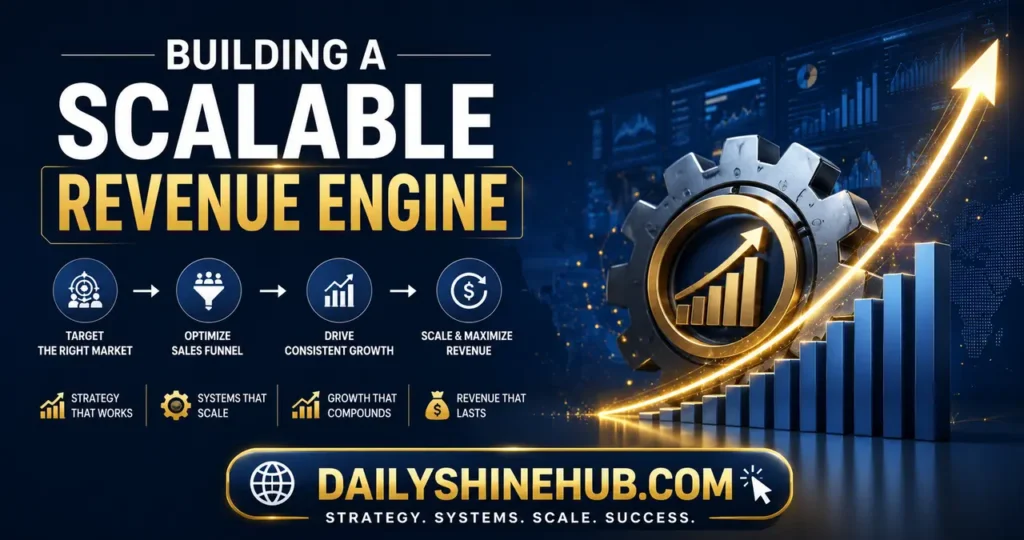
A scalable revenue engine should ideally combine:
Customer acquisition + conversion + retention + expansion.
Improving Customer Acquisition
The first step is understanding where customers originate.
Potential acquisition channels include:
- Organic search
- Paid advertising
- Referrals
- Partnerships
- Social media
- Email marketing
- Direct sales
- Content marketing
- Industry events
The goal is to identify channels that produce customers at sustainable economics.
If one channel generates a high volume of leads but very few profitable customers, increasing investment in that channel may actually make the business weaker.
Improving Conversion
Once qualified prospects are entering the funnel, the next question is how effectively they become customers.
Useful measurements include:
- Lead-to-opportunity rate
- Opportunity-to-customer rate
- Sales cycle length
- Proposal acceptance rate
- Customer acquisition cost
Improving conversion can sometimes produce substantial growth without requiring proportional increases in marketing spending.
Increasing Customer Lifetime Value
Retention is another major scaling lever.
A company that continually replaces lost customers must spend more money simply to maintain its existing revenue base.
Consulting strategies may therefore focus on:
- Customer onboarding
- Product quality
- Support
- Loyalty programs
- Subscription models
- Cross-selling
- Upselling
- Customer success processes
The objective is to turn one-time transactions into longer-term relationships.
As businesses strengthen customer retention and prepare for sustainable growth, they also need to evaluate how future expansion will be financed. Founders comparing self-funded growth with raising outside capital may find our guide on bootstrapped startup fundraising strategies useful for exploring funding options that align with long-term business goals.
Operational Scaling: Growing Without Creating Chaos
One of the biggest challenges for SMEs is that the systems that worked with 10 employees may fail at 50.
A founder may previously have handled approvals personally.
At a larger scale, that becomes a bottleneck.
A consultant can help identify processes that should be standardized, automated, delegated, or redesigned.
Published Pedrovazpaulo materials specifically emphasize scalable systems, operational audits, productivity improvements, workflows, and standard operating procedures as part of the consulting approach.
Create Repeatable Processes
A scalable company should not depend on one person remembering how everything works.
Documented processes can cover:
- Sales qualification
- Customer onboarding
- Order fulfillment
- Service delivery
- Hiring
- Employee onboarding
- Reporting
- Financial approvals
- Customer support
Standard operating procedures create consistency while making delegation easier.
Remove Operational Bottlenecks
A bottleneck is any part of the business that restricts the performance of the wider system.
Examples include:
- One manager approving every decision
- Manual data entry
- Slow customer onboarding
- Limited production capacity
- Poor inventory planning
- Fragmented software systems
- Unclear employee responsibilities
Scaling requires identifying these constraints before adding significant demand.
Financial Intelligence as a Scaling Foundation
Growth without financial visibility can be dangerous.
A company may report strong revenue growth while simultaneously experiencing declining margins and increasing cash-flow pressure.
For this reason, founders should monitor more than sales.
A stronger financial framework examines:
- Gross profit
- Gross margin
- Operating expenses
- Net profit
- Cash conversion
- Accounts receivable
- Accounts payable
- Customer acquisition costs
- Contribution margin
- Cash runway
This allows leaders to determine whether growth is actually creating economic value.
Scenario Planning for Founders
One valuable use of financial data is scenario modeling. Startups that build reliable forecasts before seeking growth are often better prepared to manage cash flow and investment decisions. Our guide on startup bootstrapped financial modeling explains how founders can create practical financial projections that support long-term scaling.
A startup might create three scenarios:
Conservative: slower customer acquisition and controlled expenses.
Base: expected growth based on current performance.
Aggressive: faster expansion requiring additional hiring and marketing investment.
Comparing these scenarios allows management to understand how decisions could affect cash requirements, profitability, and operational capacity.
Turning Data Into Strategic Decisions
Data has limited value when it simply produces reports.
The real advantage appears when information changes decisions.
A practical management cycle can look like this:
Measure → Analyze → Prioritize → Execute → Monitor → Improve
This creates a continuous feedback loop.
For example, if customer acquisition costs increase significantly, management can investigate the cause.
Perhaps advertising costs increased.
Perhaps conversion rates declined.
Perhaps the company changed its target market.
Perhaps competitors entered the market.
The data identifies the signal.
Strategic analysis identifies the cause.
Execution addresses the problem.
Market Expansion Without Losing Control

For SMEs that have established a strong domestic position, expansion into new markets can create significant opportunities.
However, international growth requires more than translating a website or launching advertising campaigns.
A market-entry analysis should consider:
- Customer demand
- Competition
- Pricing
- Regulations
- Distribution
- Cultural expectations
- Local partnerships
- Hiring requirements
- Currency considerations
- Operating costs
Some published Pedro Vaz Paulo materials specifically highlight market entry and Southeast Asian expansion as areas of focus.
A data-driven expansion strategy therefore starts with market validation before substantial capital is committed.
Leadership Alignment During Business Growth
Scaling is not only a financial or operational challenge.
It is also a leadership challenge.
As companies grow, founders increasingly need to transition from doing everything themselves to building systems through other people.
That requires:
- Clear responsibilities
- Defined decision-making authority
- Measurable objectives
- Leadership development
- Performance reviews
- Cross-functional communication
- Accountability
Pedrovazpaulo’s published consulting materials also describe executive coaching and leadership support as components of its broader consulting offering.
The objective is to build a leadership structure that can operate effectively without every decision returning to the founder.
A 90-Day Strategic Growth Roadmap
For startups and SMEs, a practical consulting engagement can be organized into a 90-day framework.
Days 1–30: Diagnose
Focus on:
- Business model analysis
- Financial review
- Customer analysis
- Sales funnel review
- Operational assessment
- Team structure
- Competitor analysis
The result should be a clear picture of the company’s current position.
Days 31–60: Design
Next, leadership can define:
- Growth priorities
- Revenue targets
- Key performance indicators
- Cost-control initiatives
- Process improvements
- Customer retention strategies
- Technology requirements
- Market opportunities
The objective is to transform analysis into an actionable strategy.
Days 61–90: Execute and Optimize
The final stage focuses on implementation.
This may involve:
- Launching new processes
- Improving sales systems
- Adjusting pricing
- Automating repetitive tasks
- Building dashboards
- Training employees
- Testing new acquisition channels
- Reviewing performance weekly
The strategy should remain flexible enough to change when new data provides better information.
Who Can Benefit Most From Pedrovazpaulo Business Consultant?
The approach is particularly relevant to businesses experiencing one or more of these situations:
Startups Seeking Product-Market and Revenue Clarity
Early-stage founders may need help determining which customers to target, which revenue model to prioritize, and which growth channels deserve investment.
SMEs Facing a Growth Plateau
Established companies may have strong products but struggle to move beyond a certain revenue level.
Operational inefficiency, weak positioning, limited management capacity, or inconsistent sales systems may be holding them back.
Businesses Preparing for Expansion
Companies entering new markets can benefit from structured market analysis and financial scenario planning.
Founder-Led Companies Preparing to Scale
When too many decisions depend on the owner, professional systems become increasingly important.
The goal is to build a company that can grow without multiplying complexity at the same rate as revenue.
What Makes a Data-Driven Consulting Model Different?
Traditional consulting can sometimes end with a strategy document.
A more execution-focused model connects strategy with implementation and measurement.
Pedrovazpaulo’s published business consulting process emphasizes analysis, tailored strategy, execution, performance tracking, and scalable growth systems.
That distinction matters.
A 50-page strategy document is not valuable if nobody implements it.
A smaller strategy with clear priorities, responsible owners, deadlines, KPIs, and review mechanisms can create considerably more practical value.
How to Evaluate Whether a Consultant Is Right for Your Business
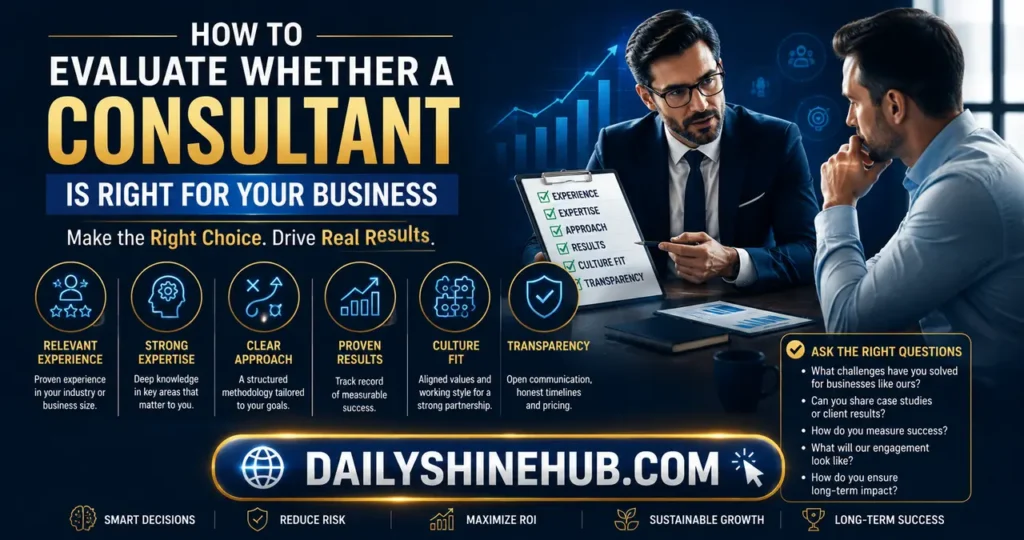
Before hiring any business consultant, founders should ask several questions.
Does the consultant understand my industry and growth stage?
Will the strategy be customized to my business?
Which KPIs will be used to measure progress?
How involved will the consultant be during implementation?
What data will be required?
How frequently will performance be reviewed?
What happens if the initial strategy does not produce the expected results?
These questions help separate actionable consulting from generic advice.
Businesses should also independently verify credentials, experience, references, case studies, and commercial terms before entering an engagement. The U.S. Small Business Administration (SBA) also recommends evaluating advisors carefully and building a business strategy based on realistic planning and measurable goals rather than assumptions.
The Long-Term Goal: Build a Business That Can Scale
The ultimate purpose of consulting should not be to make a business dependent on a consultant.
It should be to help the company develop stronger internal capabilities.
That means creating:
- Better management systems
- Reliable performance dashboards
- Repeatable processes
- Stronger financial controls
- Clear accountability
- Predictable sales systems
- Effective leadership
- Data-informed decision-making
Once these foundations are established, growth becomes less dependent on improvisation.
Final Thoughts on Pedrovazpaulo Business Consultant
Pedrovazpaulo Business Consultant represents a strategic approach centered on combining business analysis, operational improvement, measurable KPIs, and execution-focused growth planning.
For startups and SMEs, this approach can be especially useful because scaling introduces challenges that cannot be solved by revenue growth alone.
The strongest growth strategy connects data, people, processes, finance, customers, and leadership into one operating system.
Whether the immediate priority is improving profitability, increasing sales, reducing operational friction, entering a new market, or preparing the organization for expansion, the fundamental principle remains the same:
Measure what matters, identify the highest-impact opportunities, execute systematically, and continuously improve based on evidence.
For ambitious founders and SME leaders, that is the foundation of sustainable scaling—not simply growing bigger, but building a business capable of handling growth intelligently.
FAQs About Pedrovazpaulo Business Consultant
1. What does Pedrovazpaulo Business Consultant focus on?
Pedrovazpaulo Business Consultant focuses on strategic planning, business analysis, operational improvement, performance tracking, scalable systems, and execution support for growing businesses. Its published materials describe customized consulting designed around the client’s business situation and growth objectives.
2. Can Pedrovazpaulo Business Consultant help startups scale?
The consultancy’s published services specifically mention support for startups and entrepreneurs, including business strategy, operational improvements, scalable systems, and growth planning.
3. What data should an SME prepare before consulting?
An SME can prepare revenue reports, expenses, cash-flow information, customer data, sales pipeline figures, marketing performance, employee information, operational metrics, and historical financial statements. The exact information required depends on the business and consulting objective.
4. Is data-driven consulting only useful for large companies?
No. Data-driven decision-making can be particularly useful for small businesses because limited resources make prioritization important. A startup or SME does not need a massive analytics department; it needs a focused set of reliable metrics connected to important decisions.
5. What is the biggest benefit of a strategic growth blueprint?
The biggest benefit is clarity. Instead of pursuing multiple growth initiatives simultaneously, a structured blueprint helps management identify priorities, establish measurable targets, assign responsibility, monitor performance, and adjust strategy based on actual results.

Ethan Shine is a passionate content strategist, tech enthusiast, and digital media contributor at DailyShineHub. With over 5 years of experience in blogging and search engine optimization, Ethan specializes in breaking down complex topics into clear, actionable insights. When he isn’t researching the latest industry trends, he enjoys exploring global news, digital tools, and modern lifestyle concepts.