
Introduction: The New Era of Gadgets Investing
For decades, consumer gadgets were viewed primarily as products people bought, used, and replaced. Smartphones, laptops, gaming consoles, smartwatches, and home electronics were considered part of everyday life rather than investment themes. However, the rapid evolution of artificial intelligence (AI), connected devices, and intelligent hardware has transformed the consumer technology landscape.
Today, gadgets investing is becoming a specialized investment strategy focused on companies building the next generation of consumer hardware and AI-powered smart devices. Investors are no longer looking only at traditional electronics manufacturers. They are analyzing semiconductor companies, device ecosystems, robotics startups, wearable technology firms, AI hardware developers, and exchange-traded funds (ETFs) positioned around technological innovation.
This investment approach appeals to a new class of investors: technology enthusiasts, growth investors, venture capital participants, and retail investors who want exposure to the companies shaping how people interact with technology.
The opportunity is expanding because modern gadgets are becoming more than physical objects. A smartphone is now an AI assistant. A smartwatch monitors health data. Smart glasses combine computing, cameras, and artificial intelligence. Home devices are becoming autonomous systems. Robots are moving from factories into households.
For investors, the question is no longer simply “Which gadget will sell the most?” Instead, the focus has shifted to:
- Which companies control the technology behind intelligent devices?
- Which businesses can build profitable ecosystems?
- Which startups are creating the next major consumer hardware category?
- Which stocks and ETFs provide exposure to long-term gadget innovation?
Understanding the Consumer Tech Hardware Investment Landscape
Why Consumer Gadgets Have Become an Investment Theme
Consumer technology has historically followed a predictable cycle:
- A new device category emerges.
- Consumers adopt the technology.
- Companies compete for market share.
- Successful companies create ecosystems and recurring revenue.
Examples include personal computers, smartphones, tablets, and wearable devices.
The current cycle is different because AI is becoming embedded directly into hardware. Instead of gadgets simply processing commands, they are becoming capable of understanding user behavior, making recommendations, and performing tasks independently.
AI-powered gadgets include:
- Smart home assistants
- AI-enabled smartphones
- Wearable health devices
- Smart glasses
- Personal robots
- AI laptops
- Autonomous entertainment systems
- Connected automotive technology
This creates investment opportunities across multiple layers of the technology supply chain.
The Major Segments Driving Gadgets Investing
1. AI-Powered Smartphones and Mobile Devices
The smartphone market remains one of the largest consumer technology markets globally. However, future growth is increasingly tied to artificial intelligence.
Modern smartphones are evolving into AI computing platforms with features such as:
- Real-time language translation
- Generative AI assistants
- Advanced photography processing
- Personalized recommendations
- Predictive user experiences
Companies competing in this space are investing heavily in AI chips, operating systems, cloud integration, and software ecosystems.
Investors often analyze:
- Smartphone market share
- AI chip capabilities
- Software ecosystem strength
- Services revenue
- Customer loyalty
The most valuable companies may not necessarily be those selling the most devices. They may be those controlling the ecosystem surrounding the devices.
2. Wearable Technology and Smart Health Devices
Wearables represent one of the most attractive areas within gadgets investing because they combine consumer electronics with health technology.
Smartwatches, fitness trackers, smart rings, and health monitoring devices are becoming increasingly sophisticated.
Important investment themes include:
- Continuous health monitoring
- Artificial intelligence-based health insights
- Personalized fitness recommendations
- Preventive healthcare technology
Future wearable devices may detect health changes before symptoms appear, creating opportunities for companies that successfully combine hardware, sensors, AI models, and healthcare partnerships.
Investors should examine whether a wearable company has:
- Strong user adoption
- Reliable data capabilities
- Subscription revenue opportunities
- Regulatory advantages
3. Smart Home Devices and Connected Ecosystems
The smart home market is expanding beyond simple voice assistants.
The next generation of smart home technology includes:
- AI-powered security systems
- Intelligent appliances
- Automated energy management
- Robotic cleaning systems
- Smart entertainment devices
The biggest opportunity may come from companies that build complete ecosystems rather than individual products.
A smart speaker alone may have limited value, but a connected network of cameras, lighting, appliances, and AI services creates stronger customer relationships.
Investors should evaluate:
- Ecosystem strength
- Hardware margins
- Data advantages
- Subscription opportunities
- Compatibility with other platforms
AI Hardware: The Foundation Behind Future Gadgets
Why Semiconductor Companies Matter in Gadgets Investing
Every intelligent gadget requires computing power.
AI-powered devices depend on:
- Advanced processors
- Neural processing units
- Memory technology
- Sensors
- Connectivity chips
Because of this, semiconductor companies often represent a critical investment category.
A consumer device company may sell millions of products, but the companies supplying essential components can benefit from growth across multiple markets.
Key areas include:
AI Chips
AI chips allow devices to process information locally instead of relying entirely on cloud servers.
Benefits include:
- Faster responses
- Better privacy
- Lower energy consumption
- Offline AI capabilities
Advanced Sensors
Smart devices depend on sensors that collect information from the environment.
Examples include:
- Cameras
- Motion sensors
- Health monitoring sensors
- Environmental sensors
Connectivity Technology
The growth of connected devices requires:
- Faster wireless communication
- Better Bluetooth technology
- Advanced networking components
Stocks Investors Watch in the Consumer Tech Hardware Space
Investors interested in gadgets investing often analyze companies across several categories.
| Investment Category | Example Companies | Investment Focus |
|---|---|---|
| Consumer Electronics | Apple, Samsung Electronics, Sony | Device ecosystems, hardware sales, services |
| AI Chips & Semiconductors | NVIDIA, Qualcomm, AMD | AI processing power and hardware infrastructure |
| Wearables & Smart Devices | Apple, Garmin, Fitbit-related businesses | Health technology and connected devices |
| Robotics & Automation | Tesla, robotics startups | Personal robots and intelligent machines |
| Technology ETFs | QQQ, semiconductor-focused ETFs | Broad exposure to innovation trends |
(Examples are for educational purposes and not investment recommendations.)
The Role of ETFs in Gadgets Investing
Why ETFs Can Be Attractive for Technology Investors
Picking individual technology companies can be challenging because innovation is unpredictable. A company that dominates today may lose relevance tomorrow.
Technology-focused ETFs allow investors to gain exposure to multiple companies involved in:
- Hardware development
- Artificial intelligence
- Semiconductors
- Robotics
- Consumer electronics
Advantages include:
Diversification
Instead of depending on one company’s success, investors gain exposure to an entire sector.
Reduced Company-Specific Risk
A disappointing product launch from one company may have less impact on the overall investment.
Exposure to Emerging Trends
Many ETFs include companies involved in future technology themes before they become mainstream.
Startup Opportunities in AI Gadget Investing
Why Venture Investors Are Watching AI Hardware Startups
While public companies dominate current consumer technology markets, startups are attempting to create entirely new device categories.
Areas attracting startup investment include:
AI Personal Assistants
New companies are developing devices designed to replace traditional interfaces such as smartphone apps.
Potential innovations include:
- Voice-first computing
- AI wearable assistants
- Context-aware devices
Smart Glasses and Spatial Computing
Smart glasses are attracting attention because they combine:
- Cameras
- AI assistants
- Augmented reality
- Hands-free computing
Potential applications include:
- Navigation
- Communication
- Workplace assistance
- Entertainment
Consumer Robotics
Personal robots represent one of the most ambitious areas of gadget innovation.
Possible applications include:
- Household assistance
- Education
- Security
- Elder care support
However, investors must recognize that hardware startups face significant challenges:
- Manufacturing costs
- Supply chain issues
- Consumer adoption barriers
- Competition from established companies
Before launching or scaling a hardware business, founders must carefully manage corporate compliance, negotiate vendor contracts, and sometimes consult a finance lawyer to navigate complex debt financing or early-stage capital agreements.
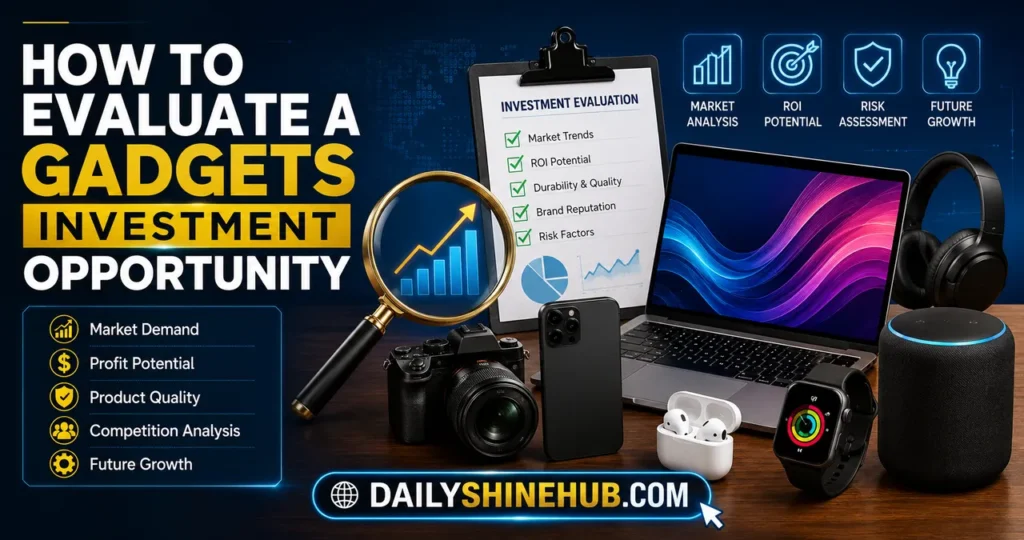
How to Evaluate a Gadgets Investment Opportunity
Look Beyond Product Hype
One of the biggest mistakes in technology investing is investing based only on excitement around a new gadget.
A popular product does not automatically create a successful business.
Investors should examine:
Market Size
Is the product targeting a large consumer need?
Competitive Advantage
Does the company have:
- Proprietary technology?
- Strong patents?
- Brand loyalty?
- Manufacturing expertise?
Revenue Model
Successful technology companies increasingly combine hardware sales with:
- Subscriptions
- Cloud services
- Software platforms
- Accessories
Supply Chain Strength
Hardware businesses depend heavily on:
- Manufacturing partners
- Component availability
- Production efficiency
Sales Technology: Explore how modern software is transforming commerce in our latest update on Sales Tech News.
Risks Associated With Gadgets Investing
Rapid Technology Changes
Consumer technology evolves quickly. A company leading today may struggle tomorrow.
Examples of risks:
- New competitors entering the market
- Changing consumer preferences
- Faster innovation cycles
Hardware Profit Margins
Hardware is often more difficult to scale profitably compared with software.
Challenges include:
- Manufacturing costs
- Inventory management
- Component shortages
Consumer Adoption Risk
Many innovative gadgets fail because consumers do not see enough value.
A technically impressive product does not guarantee commercial success.
Regulatory and Privacy Concerns
AI-powered devices collect large amounts of user data.
Potential issues include:
- Privacy regulations
- Data security
- Consumer trust
Building a Long-Term Gadgets Investing Strategy
Focus on Technology Platforms, Not Just Products
Successful investors often look beyond individual gadgets.
A company selling one device may have limited growth potential.
A company building an ecosystem may create stronger long-term value.
Examples of ecosystem advantages:
- Integrated hardware and software
- Customer loyalty
- Recurring revenue
- Developer communities
Combine Established Companies With Emerging Innovators
A balanced approach may include:
- Large technology companies with proven revenue
- Semiconductor leaders powering AI growth
- ETFs for diversification
- Carefully selected startups with disruptive ideas
This approach can provide exposure to both stability and innovation.
The Future of Gadgets Investing
The next decade could redefine consumer technology.
Future gadgets may include:
- AI companions
- Advanced wearable health devices
- Household robots
- Intelligent vehicles
- Augmented reality systems
- Personalized AI computing devices
The companies that succeed will likely combine hardware excellence with artificial intelligence, software ecosystems, and user-focused design.
For investors, gadgets investing is no longer about predicting which device becomes popular. It is about identifying the companies building the infrastructure, platforms, and technologies that make intelligent devices possible.
To stay updated on how major market shifts and emerging hardware categories are shaping consumer tech portfolios, industry analysts frequently review comprehensive insights and trackers available on platforms like Forbes.
FAQs About Gadgets Investing in AI-Powered Consumer Technology
1. What is gadgets investing?
Gadgets investing refers to investing in companies involved in consumer technology hardware, including smartphones, wearables, smart home devices, AI-powered electronics, robotics, and the semiconductor technologies that support them.
2. Are AI gadgets a good investment opportunity?
AI gadgets represent a growing technology trend, but investment success depends on factors such as company valuation, competition, profitability, product adoption, and long-term market demand.
3. Which industries benefit most from AI-powered gadgets?
Industries that may benefit include semiconductor manufacturing, consumer electronics, wearable technology, robotics, cloud computing, artificial intelligence software, and connected device platforms.
4. Should investors choose individual gadget stocks or technology ETFs?
Individual stocks may offer higher growth potential but carry greater risk. Technology ETFs provide broader exposure and can reduce dependence on one company’s performance.
5. What should investors look for in AI hardware startups?
Investors should evaluate the startup’s technology advantage, market demand, manufacturing capability, leadership team, funding position, competitive landscape, and ability to generate recurring revenue.

Ethan Shine is a passionate content strategist, tech enthusiast, and digital media contributor at DailyShineHub. With over 5 years of experience in blogging and search engine optimization, Ethan specializes in breaking down complex topics into clear, actionable insights. When he isn’t researching the latest industry trends, he enjoys exploring global news, digital tools, and modern lifestyle concepts.