

Introduction: Why Crane Finance Matters for Heavy Equipment Buyers
The construction, infrastructure, logistics, and industrial sectors depend heavily on cranes to complete large-scale projects safely and efficiently. From tower cranes used in high-rise development to mobile cranes supporting road construction and industrial maintenance, these machines represent a major investment. For many contractors and construction companies, purchasing a crane outright can place significant pressure on cash flow. This is where crane finance becomes an essential financial solution, helping businesses preserve working capital while acquiring the equipment needed for major projects.
Crane finance allows businesses to acquire new or used cranes without paying the entire purchase price upfront. Instead, companies can spread the cost through structured financing options that match their project timelines, revenue cycles, and operational needs. For contractors, equipment rental companies, and industrial operators, financing a crane can help expand capabilities while preserving working capital for labor, materials, and daily operations.
Unlike traditional business loans, heavy equipment financing is designed specifically around machinery purchases. Lenders understand the value, lifespan, resale potential, and income-generating ability of equipment such as cranes. This makes crane financing a practical choice for businesses looking to grow their fleets and compete for larger contracts.
Understanding Crane Finance in the Heavy Equipment Industry
Crane finance refers to specialized funding solutions used to purchase, lease, or upgrade cranes and related lifting equipment. These financing programs are created for businesses that require expensive machinery but prefer not to use large amounts of cash for equipment acquisition.
Because equipment financing involves contracts, collateral, repayment terms, and business obligations, companies may also benefit from understanding the role of a finance lawyer when reviewing complex commercial financing agreements.
A modern crane can cost anywhere from tens of thousands to several million dollars depending on its size, lifting capacity, technology, brand, and condition. Because of this wide price range, financing structures can vary significantly based on the type of crane and the borrower’s financial position.
Heavy equipment lenders typically evaluate several factors before approving financing, including:
- Business revenue and profitability
- Credit history
- Equipment type and value
- Expected project income
- Down payment availability
- Industry experience
- Repayment capacity
For construction companies, crane finance is not simply about buying machinery. It is a strategic investment that can increase project capacity, reduce rental expenses, and create new revenue opportunities.
Types of Cranes Commonly Financed by Businesses
Different industries require different types of cranes, and financing providers generally support a wide range of equipment categories.
Mobile Crane Financing
Mobile cranes are among the most popular choices for contractors because they provide flexibility across multiple job sites. These cranes can be transported easily and are commonly used in road construction, commercial building projects, and industrial applications.
Financing a mobile crane allows contractors to take on more projects without committing a large amount of upfront capital.
Tower Crane Financing
Tower cranes are essential for large construction developments, especially high-rise buildings and major infrastructure projects. Due to their size and complexity, tower cranes require significant investment.
Businesses often choose financing or leasing options because tower cranes may only be needed during specific project phases.
Crawler Crane Financing
Crawler cranes are designed for heavy lifting in challenging environments. Industries such as energy, shipbuilding, and infrastructure development frequently rely on these machines.
Because crawler cranes have high purchase costs, financing helps companies access advanced equipment while maintaining liquidity.
Rough Terrain Crane Financing
Rough terrain cranes are commonly used in oil fields, construction zones, and locations with uneven ground conditions. Their specialized design makes them valuable assets for contractors working in demanding environments.
Used Crane Financing
Many businesses choose used cranes because they offer lower acquisition costs compared with new models. Financing providers often support used equipment purchases if the machinery has strong resale value and reliable operating history.
Key Crane Finance Options for Construction Companies
Businesses have several financing methods available depending on their goals and financial situation.
| Financing Option | Best For | Main Advantage | Consideration |
|---|---|---|---|
| Equipment Loan | Companies wanting ownership | Builds long-term asset value | Requires regular repayments |
| Equipment Lease | Businesses needing flexibility | Lower upfront costs | May not provide immediate ownership |
| Finance Lease | Companies planning eventual ownership | Combines leasing and purchasing benefits | Contract terms vary |
| Operating Lease | Short-term equipment needs | Easier equipment upgrades | No ownership at the end |
| Vendor Financing | Buyers working with equipment dealers | Faster approval process | Limited to participating suppliers |
Benefits of Financing a Crane Instead of Buying with Cash
Protecting Business Cash Flow
Large equipment purchases can significantly reduce available working capital. By financing a crane, companies can keep cash available for payroll, fuel, maintenance, insurance, and unexpected expenses.
For businesses evaluating different funding structures and long-term financial strategies, professional guidance such as a business consultant can also help align equipment investments with broader growth objectives.
For construction businesses, maintaining liquidity is especially important because project payments are often delayed or released in stages.
Expanding Project Opportunities
Having access to the right equipment allows contractors to bid on larger projects. A company that owns specialized lifting equipment may qualify for contracts that would otherwise require expensive rentals.
Crane finance enables businesses to increase operational capacity without waiting years to save enough money for a purchase.
Managing Equipment Costs More Predictably
Financing creates structured monthly payments, making budgeting easier. Instead of facing a large one-time expense, businesses can plan equipment costs alongside expected project revenue.
Taking Advantage of Modern Equipment Technology
Newer cranes often include improved safety systems, fuel efficiency, automation features, and better lifting capabilities. Financing allows companies to upgrade equipment without exhausting their financial resources. Modern connected equipment increasingly relies on sensors, data collection, and intelligent monitoring, making broader developments in technology and gadgets relevant when businesses evaluate the capabilities of next-generation heavy machinery.
How Crane Finance Works: Step-by-Step Process
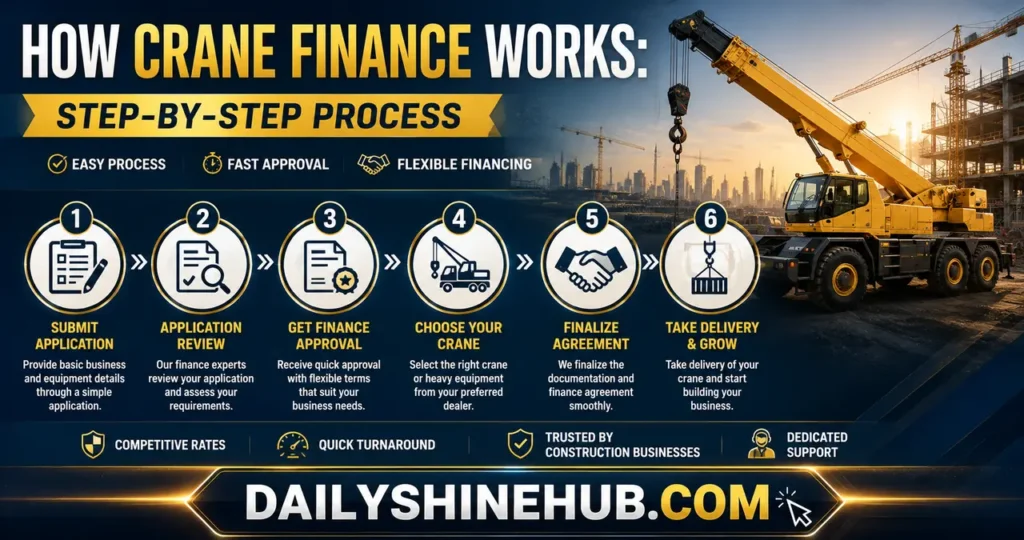
Step 1: Determine Equipment Requirements
Before applying for financing, businesses should identify the exact crane needed for their operations. Important considerations include:
- Maximum lifting capacity
- Work environment
- Transportation requirements
- Project duration
- New or used equipment preference
Choosing the right machine helps prevent unnecessary costs.
Step 2: Compare Financing Providers
Different lenders offer different terms, interest rates, and approval requirements. Companies should compare options based on:
- Repayment periods
- Interest costs
- Fees
- Ownership structure
- Early repayment conditions
Specialized equipment finance companies often provide more suitable solutions than general lenders because they understand machinery values.
Step 3: Submit Financial Information
Most lenders require documentation such as:
- Business registration details
- Financial statements
- Tax records
- Bank statements
- Equipment quotation
- Proof of experience
Strong documentation can improve approval chances and financing terms.
Step 4: Equipment Evaluation and Approval
The lender reviews the borrower’s financial position and evaluates the crane’s value. Since the equipment usually acts as collateral, its market value is an important part of the approval process.
Step 5: Purchase or Lease Completion
Once approved, funds are provided to purchase the crane or finalize the lease agreement. The company can then use the equipment while making scheduled payments.
Factors That Influence Crane Finance Approval
Credit Profile of the Business
A strong credit history can help businesses secure better interest rates and repayment conditions. However, many equipment lenders consider additional factors beyond credit scores.
Industry Experience
Companies with a proven track record in construction or heavy equipment operations may have an advantage because lenders view experienced operators as lower risk.
Equipment Condition and Value
The age, brand, maintenance history, and resale value of the crane influence financing decisions. Newer equipment generally receives more favorable terms.
Revenue Stability
Lenders want confidence that the business can manage monthly payments. Consistent contracts and predictable income can strengthen an application.
New vs. Used Crane Financing: Which Is Better?
Choosing between new and used equipment depends on the company’s operational needs and budget.
New cranes provide:
- Latest technology
- Manufacturer warranties
- Improved efficiency
- Longer operating lifespan
However, they require larger financing amounts.
Used cranes provide:
- Lower purchase prices
- Reduced depreciation
- Faster return on investment
- Access to premium equipment at lower costs
For many small and medium contractors, used crane financing offers a practical way to expand their equipment fleet without excessive debt.
The Role of Crane Finance in Business Growth
Heavy equipment is not simply an expense; it is a revenue-producing asset. A properly financed crane can generate income through multiple projects over many years.
For example, a construction company that purchases a crane may reduce rental costs, complete projects faster, and accept contracts requiring specialized lifting capabilities. Equipment ownership can also improve the company’s reputation when bidding for major projects.
Crane finance supports growth by allowing businesses to invest ahead of demand rather than waiting until they have enough cash available.
Common Mistakes to Avoid When Financing Heavy Equipment
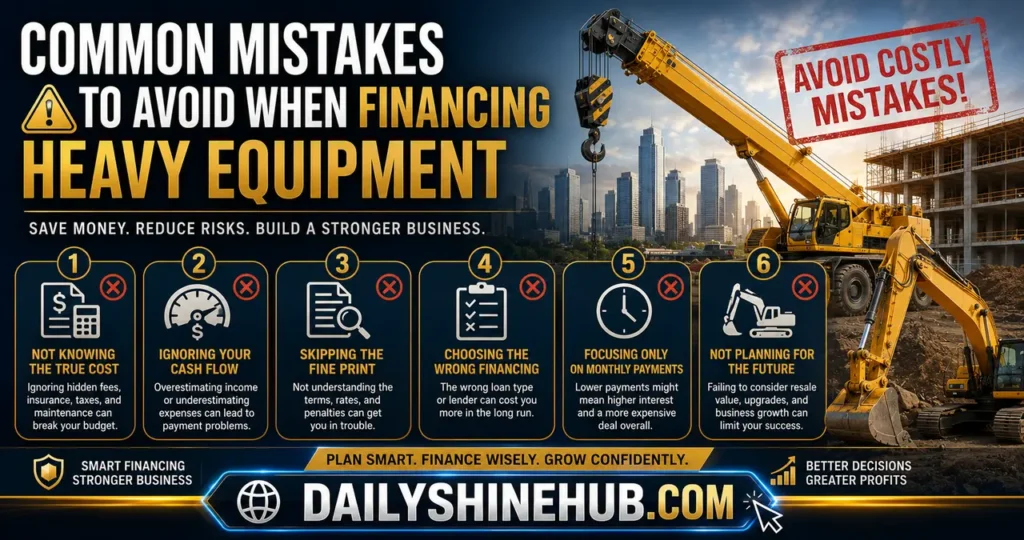
Choosing the Wrong Equipment
Buying a crane that does not match business requirements can create unnecessary expenses. Companies should analyze workload, project types, and future needs before committing.
Ignoring Total Ownership Costs
The purchase price is only one part of crane ownership. Businesses should also consider:
- Maintenance
- Insurance
- Storage
- Transportation
- Operator training
- Repairs
Selecting Unsuitable Financing Terms
A lower monthly payment may seem attractive, but longer repayment periods can increase total costs. Businesses should evaluate the complete financial impact.
Failing to Plan for Equipment Downtime
Unexpected repairs can affect revenue. Companies should maintain emergency funds and proper maintenance schedules.
Future Trends in Crane Financing and Heavy Equipment Investment
The heavy equipment financing market is changing as construction companies adopt smarter technologies and environmentally efficient machinery.
Electric and hybrid cranes are becoming more common as industries focus on reducing emissions. Digital monitoring systems, automation, and telematics are also influencing equipment decisions. These connected technologies reflect the wider shift toward intelligent machines and data-driven operations, similar to the technology discussed in IBM’s overview of the Internet of Things (IoT).
Financing providers are adapting by creating flexible solutions for advanced machinery. Businesses investing in modern cranes may benefit from improved productivity and compliance with future industry standards.
How to Choose the Right Crane Finance Partner
A suitable financing partner should understand the construction and heavy equipment industries. Companies should look for lenders that offer flexible repayment options, experience with crane financing, competitive rates, fast approval processes, and support for new and used equipment. Businesses should also consider how equipment financing fits into their overall financial strategy, particularly when planning multiple investments or expanding into new markets. For companies balancing several financial decisions at once, understanding broader auto and equipment finance options can provide useful context when comparing financing structures.
- Flexible repayment options
- Experience with crane financing
- Competitive rates
- Fast approval processes
- Support for new and used equipment
Working with a specialized lender can simplify the financing process and ensure the agreement matches the company’s operational goals.
Conclusion: Building Construction Capacity Through Smart Crane Financing
Crane finance provides construction companies and industrial operators with a practical way to acquire expensive machinery while protecting cash flow. Whether purchasing a mobile crane, tower crane, crawler crane, or used lifting equipment, financing allows businesses to access the tools required for growth.
For companies competing in demanding industries, owning the right equipment can create a major advantage. A well-structured crane finance plan can transform a costly purchase into a strategic investment that improves productivity, expands project opportunities, and strengthens long-term business performance.
FAQs About Crane Finance for Heavy Equipment Buyers
1. What is crane finance and how does it work?
Crane finance is a funding solution that helps businesses purchase or lease cranes through structured payments instead of paying the entire equipment cost upfront. The lender provides funds while the company repays according to agreed terms.
2. Can small construction companies qualify for crane financing?
Yes, many small construction businesses can qualify for crane financing. Approval depends on factors such as revenue, credit history, business experience, and the value of the crane being financed.
3. Is it better to finance a new crane or a used crane?
The best option depends on business needs. New cranes provide advanced features and longer lifespan, while used cranes offer lower costs and faster returns on investment.
4. How long are typical crane financing terms?
Crane financing terms vary depending on the lender, equipment type, and borrower profile. Many agreements range from several years to longer repayment periods designed around equipment lifespan.
5. Can crane financing help a company grow its construction business?
Yes. Financing allows businesses to acquire equipment needed for larger projects, reduce rental expenses, improve productivity, and increase their ability to compete for higher-value contracts.

Ethan Shine is a passionate content strategist, tech enthusiast, and digital media contributor at DailyShineHub. With over 5 years of experience in blogging and search engine optimization, Ethan specializes in breaking down complex topics into clear, actionable insights. When he isn’t researching the latest industry trends, he enjoys exploring global news, digital tools, and modern lifestyle concepts.