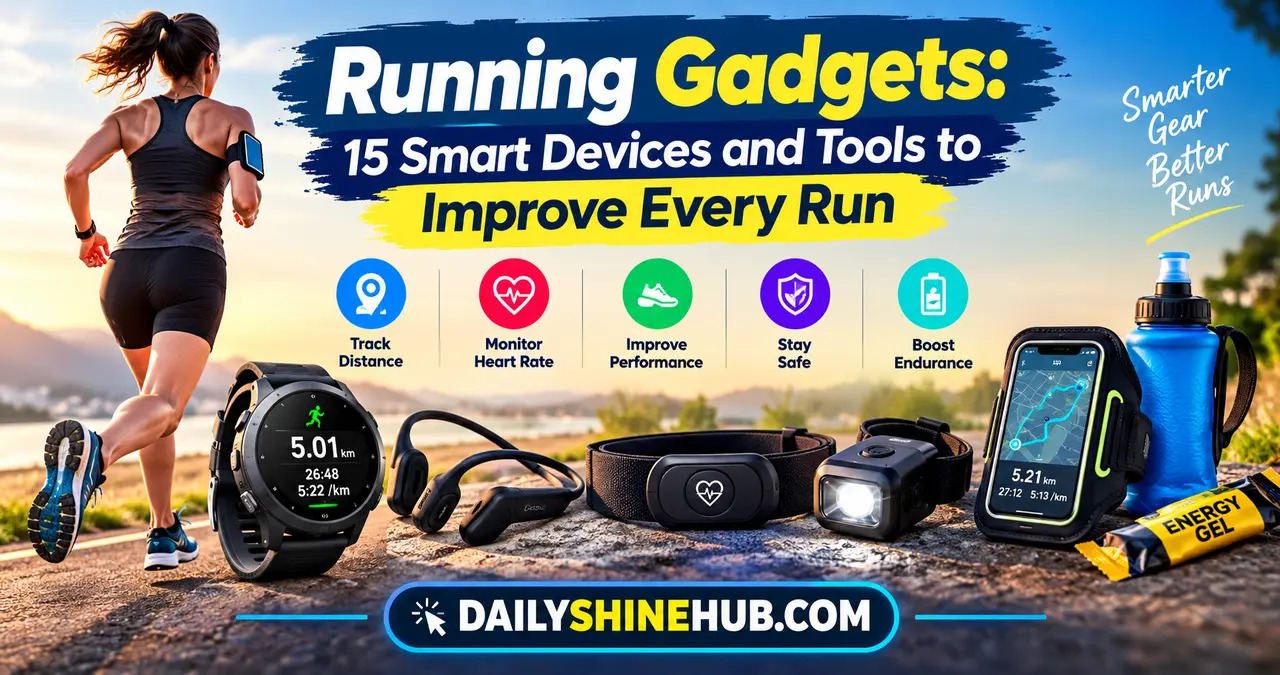
Running is one of the simplest ways to stay active, but modern technology can make every mile more informed, safer, and more enjoyable. The right running gadgets can help you track distance, monitor heart rate, improve pacing, listen to audio, stay visible in low light, and understand your recovery after demanding workouts. Whether you are training for your first 5K, preparing for a marathon, or simply enjoying regular morning runs, choosing useful technology can add practical value without making your routine unnecessarily complicated.
Today’s running gadgets range from simple phone accessories to advanced GPS sports watches and wearable sensors. The best choice depends on your goals, budget, training environment, and the information you actually plan to use.
| Gadget Type | Main Purpose | Best For | Key Features to Consider |
|---|---|---|---|
| GPS running watch | Tracks pace and distance | Most regular runners | GPS accuracy, battery life, training metrics |
| Heart rate monitor | Measures exercise intensity | Structured training | Accuracy, comfort, connectivity |
| Wireless headphones | Audio and motivation | Music and podcast listeners | Secure fit, sweat resistance |
| Running light | Improves visibility | Night and early-morning runners | Brightness, battery, comfort |
| Smart ring or tracker | Tracks recovery and sleep | Recovery-focused runners | Sleep data, readiness trends |
| Phone armband/belt | Carries essentials | Casual runners | Stability, storage, weather resistance |
| Running sensor | Provides advanced movement data | Performance-focused runners | Cadence and running dynamics |
| Hydration tracker | Supports fluid planning | Long-distance runners | Capacity, weight, easy access |
Why Running Gadgets Have Become So Popular
Technology gives runners access to information that previously required specialized equipment or laboratory testing. While data alone does not make someone a better runner, it can help identify patterns and support more informed training decisions.
Common reasons people use running gadgets include:
- Tracking pace, distance, and route information
- Monitoring heart rate during easy and hard sessions
- Measuring cadence and other running metrics
- Improving safety during dark or isolated runs
- Carrying a phone, keys, nutrition, and hydration comfortably
- Listening to music, podcasts, or coaching instructions
- Reviewing sleep and recovery patterns
- Following structured workouts and training plans
The key is choosing technology that supports your habits rather than distracting you from them. A beginner may need only reliable GPS tracking, while an experienced athlete might benefit from more detailed training data.
1. GPS Smartwatches: Essential Running Gadgets for Tracking Performance
A GPS smartwatch is one of the most useful running gadgets for people who want to monitor outdoor workouts without constantly holding a smartphone. These devices can record distance, pace, elapsed time, route, and other workout metrics.
Depending on the model, a running watch may also provide:
- Heart rate monitoring
- Cadence tracking
- Interval workout support
- Elevation information
- Recovery estimates
- Training history
- Navigation features
- Emergency or safety functions
Popular sports technology companies include Garmin, COROS, and Polar, each offering devices aimed at different types of athletes.
When selecting a watch, focus on GPS reliability, comfort, battery life, and whether the training information matches your needs. Paying for dozens of advanced metrics makes little sense if you only want to know how far and how fast you ran.
What to Look for in a GPS Running Watch
Before buying, compare:
- Battery performance for your typical run length
- GPS and route-tracking capabilities
- Display visibility outdoors
- Compatibility with your phone and preferred apps
- Workout and interval features
- Comfort during long runs
2. Heart Rate Monitors for Smarter Training
Heart rate monitoring is another popular category of running gadgets, particularly for runners following structured training plans. Your heart rate can provide one additional way to understand exercise intensity alongside pace and perceived effort.
Wrist-based sensors are convenient, while chest straps are often preferred when runners want more direct beat-to-beat measurement during demanding exercise. Neither type eliminates the need to pay attention to how your body feels.
Heart rate data can be useful for:
- Keeping easy runs genuinely easy
- Monitoring effort during hills
- Reviewing changes over time
- Following heart-rate-based workouts
- Comparing effort across similar sessions
For a broader explanation of how running and aerobic exercise affect the body, the World Health Organization’s physical activity guidance provides evidence-based information on recommended physical activity.
3. Bone-Conduction and Secure-Fit Headphones
Music can make repetitive training sessions more enjoyable, and headphones remain among the most widely used running gadgets. However, a good running pair needs more than strong sound quality.
Look for practical features such as:
- A stable fit that does not shift with movement
- Sweat and water resistance
- Useful battery life
- Easy physical controls
- Awareness of your surroundings when needed
- Comfortable use during longer workouts
Open-ear and bone-conduction designs may appeal to runners who prefer to hear environmental sounds. The right option depends heavily on where you run and local safety considerations.
4. Safety Lights and Reflective Wearables
For runners training before sunrise or after sunset, visibility-focused running gadgets can be extremely useful. Small clip-on lights, chest lights, headlamps, and illuminated armbands can help make a runner easier to notice.
A practical night-running setup may include:
- A front-facing light for seeing the path
- Rear visibility lighting
- Reflective clothing or accessories
- Bright, visible outer layers
- A charged phone for communication
Remember that being able to see clearly and being visible to drivers are two different safety needs. A strong headlamp may illuminate the road while reflective or rear-facing equipment helps others detect your presence.
5. Smart Rings and Recovery Trackers
Not every useful running device is worn during a run. Recovery-focused wearables can collect information about sleep and overnight trends, helping runners look at training within the context of rest.
These running gadgets may track information such as:
- Sleep duration
- Resting heart rate trends
- Overnight movement
- Temperature trends on supported devices
- General activity patterns
Recovery scores should be treated as estimates rather than absolute instructions. A wearable cannot fully understand your stress, soreness, nutrition, work schedule, or other personal factors.
6. Running Belts and Phone-Carrying Accessories
A phone can be useful for navigation, communication, payments, and emergency contact, but carrying it in your hand throughout a run is inconvenient. A stable running belt is a simple solution.
Useful storage features include:
- A secure phone compartment
- Separate key storage
- Space for gels or small snacks
- Water-resistant materials
- Minimal bounce
- Adjustable sizing
For many runners, these simple running gadgets provide more day-to-day usefulness than expensive electronics.
7. Foot Pods and Running Sensors
Advanced runners sometimes use wearable sensors to capture movement-related data beyond basic GPS pace. Depending on the device and platform, metrics may include cadence and additional running dynamics.
These tools can be useful when:
- Comparing structured training sessions
- Tracking cadence trends
- Working with a coach
- Analyzing consistent movement patterns
- Training on routes where GPS data is less reliable
However, runners should avoid obsessing over a single metric. Changes in terrain, fatigue, speed, footwear, and training conditions can affect running data.
8. Smart Insoles and Connected Footwear Technology
Smart insoles and sensor-based footwear represent a more specialized area of running gadgets. Some systems are designed to capture information about foot movement, balance, pressure, or stride patterns.
Potential uses include:
- Gait monitoring
- Training analysis
- Left-to-right movement comparisons
- Workout-specific data collection
These products can be interesting for data-focused athletes, but usefulness varies significantly by device and the quality of the software that interprets the information. More data is not automatically more actionable.
9. Hydration Gadgets for Long Runs
Hydration becomes increasingly important to plan during longer training sessions, particularly in warm conditions. Handheld bottles, hydration belts, and vests are not always electronic, but they are still valuable running gadgets for endurance training.
Consider:
- How much fluid your route requires
- Access to refill locations
- Weather conditions
- Duration and intensity
- Storage for nutrition
- Comfort and movement
For shorter runs, carrying extra equipment may not be necessary. The goal is to match your hydration setup to the actual demands of the session.
10. Running Power Meters
Some advanced training systems estimate running power, offering another metric alongside pace and heart rate. Power is often discussed in cycling, but some modern running platforms also provide estimates for runners.
Potential applications include:
- Comparing effort across changing terrain
- Reviewing hill workouts
- Structuring certain intensity sessions
- Monitoring trends over time
Running power calculations differ between platforms, so numbers may not be directly interchangeable. If you use this metric, consistency within the same ecosystem is generally more useful than comparing values across unrelated devices.
11. GPS Trackers and Emergency Features
Safety-oriented running gadgets can provide peace of mind for runners who train alone or travel long distances. Depending on the device and service, features may include location sharing, emergency alerts, or incident-detection tools.
Before relying on these features:
- Test the system before an important run.
- Keep emergency contacts updated.
- Check battery levels.
- Understand whether cellular service is required.
- Learn how to manually activate emergency functions.
Technology should support sensible preparation, not replace it. Tell someone where you are going when appropriate and consider route, weather, traffic, and local conditions.
12. Smart Scales and Body Data Tracking
Some runners use connected scales to monitor long-term body trends. These are best viewed as broad tracking tools rather than precise measurements of athletic performance.
If you use one, focus on:
- Long-term trends instead of daily fluctuations
- Consistent measurement conditions
- Training performance and recovery
- Overall habits rather than one number
Avoid letting a single device reading dictate your training decisions.
13. Portable Massage and Recovery Devices
Portable recovery tools have also become popular among athletes. These include massage devices designed for use before or after training.
Potential practical benefits may include:
- Short-term relaxation
- A warm-up or cool-down routine
- Temporary relief from feelings of muscle tightness
They should not be treated as substitutes for appropriate rest, training management, or professional medical advice when an injury is suspected.
14. Smart Glasses and Heads-Up Technology
Connected eyewear is an emerging category within running gadgets. Some products aim to provide navigation, audio, communication, or workout information in a hands-free format.
Before using this type of technology, consider whether it genuinely improves your run. Important factors include:
- Weight and comfort
- Battery life
- Weather resistance
- Display readability
- Potential distraction
- Compatibility with other devices
For some athletes, minimal technology is preferable. A watch and awareness of effort may be enough.
15. Running Apps That Work With Your Gadgets
Many devices become more useful when paired with a training platform. Running apps can organize workout history, display trends, provide coaching plans, and connect data from multiple devices.
Common app features include:
- GPS route records
- Pace charts
- Interval planning
- Social challenges
- Training calendars
- Goal tracking
Compatibility matters. Before buying expensive running gadgets, check whether they work with the phone, operating system, watch, or fitness platform you already use.
How to Choose the Best Running Gadgets for Your Needs
There is no single perfect gadget setup for every runner. Start with your actual problem instead of buying technology simply because it offers impressive specifications.
For Beginners
Prioritize:
- Easy pace and distance tracking
- Comfortable audio options if desired
- Secure phone storage
- Basic visibility equipment
For Marathon and Long-Distance Training
Consider:
- Long battery life
- Reliable GPS
- Heart rate monitoring
- Hydration storage
- Safety features
- Route navigation
For Data-Focused Runners
You may want:
- Advanced sports watch metrics
- Chest-strap heart rate monitoring
- Running sensors
- Recovery tracking
- Structured training software
For Night Runners
Focus on:
- Headlamp or chest light
- Rear visibility
- Reflective accessories
- Phone access
- Reliable emergency features
Common Mistakes When Buying Running Gadgets
The growing number of running gadgets makes it easy to spend money on features you never use. Avoid these common mistakes:
- Buying the most expensive device instead of the most suitable one
- Tracking too many metrics at once
- Ignoring battery requirements
- Forgetting about comfort
- Assuming every metric is perfectly accurate
- Relying entirely on technology instead of perceived effort
- Failing to check app and device compatibility
A good approach is to add technology gradually. Start with the equipment that solves your biggest need, use it consistently, and then decide whether additional features would actually improve your training.
Are Expensive Running Gadgets Worth It?
Expensive equipment can offer advanced features, but value depends on how often and how effectively you use those features. A runner training for a competitive event may benefit from detailed workout tools, while someone running twice a week may be perfectly satisfied with a basic GPS watch.
Ask yourself:
- What information do I currently lack?
- Will this gadget change how I train?
- Is the device comfortable enough to use consistently?
- Does it work with my existing technology?
- Can I understand and act on the data it provides?
If the answer to the last question is no, a simpler option may be more useful.
Conclusion: Choosing Running Gadgets That Actually Help
The best running gadgets are not necessarily the newest or most expensive devices. The most useful tools are the ones that match your goals and become a natural part of your routine. GPS watches can simplify performance tracking, heart rate monitors can add intensity data, lights can improve visibility, and practical accessories can make long or everyday runs more comfortable.
When choosing running gadgets, focus on usefulness, comfort, reliability, and compatibility. Start with your biggest training need, avoid unnecessary data overload, and remember that technology works best as a supporting tool alongside sensible training, recovery, and attention to how your body feels.
Related: Read our detailed guide on Science Gadgets
Frequently Asked Questions About Running Gadgets
1. What are the most useful running gadgets for beginners?
A GPS smartwatch, comfortable phone-carrying belt, and visibility equipment for low-light running are among the most practical options. Beginners generally do not need advanced sensors until they know what training data they actually want to use.
2. Do I need a smartwatch to track my running?
No. A smartphone can track many basic metrics, including distance, time, and route. However, a dedicated GPS watch can be more convenient because it keeps workout information accessible without requiring you to hold or frequently check your phone.
3. Which running gadgets are best for marathon training?
Useful options include a GPS watch with strong battery life, a heart rate monitor, hydration equipment, secure storage, and appropriate safety tools. Your ideal setup will depend on your route, expected running time, and training plan.
4. Are heart rate monitors more useful than GPS watches?
They serve different purposes. GPS tracking focuses primarily on distance, pace, and route, while heart rate monitoring provides information about exercise intensity. Many runners use both through a compatible sports watch and sensor system.
5. Can running gadgets make me a faster runner?
A gadget does not directly make someone faster. It can provide useful information that may help you organize training, monitor effort, and review patterns. Improvements still depend on appropriate training, recovery, consistency, and individual circumstances.
DailyShineHUb

Ethan Shine is a passionate content strategist, tech enthusiast, and digital media contributor at DailyShineHub. With over 5 years of experience in blogging and search engine optimization, Ethan specializes in breaking down complex topics into clear, actionable insights. When he isn’t researching the latest industry trends, he enjoys exploring global news, digital tools, and modern lifestyle concepts.