
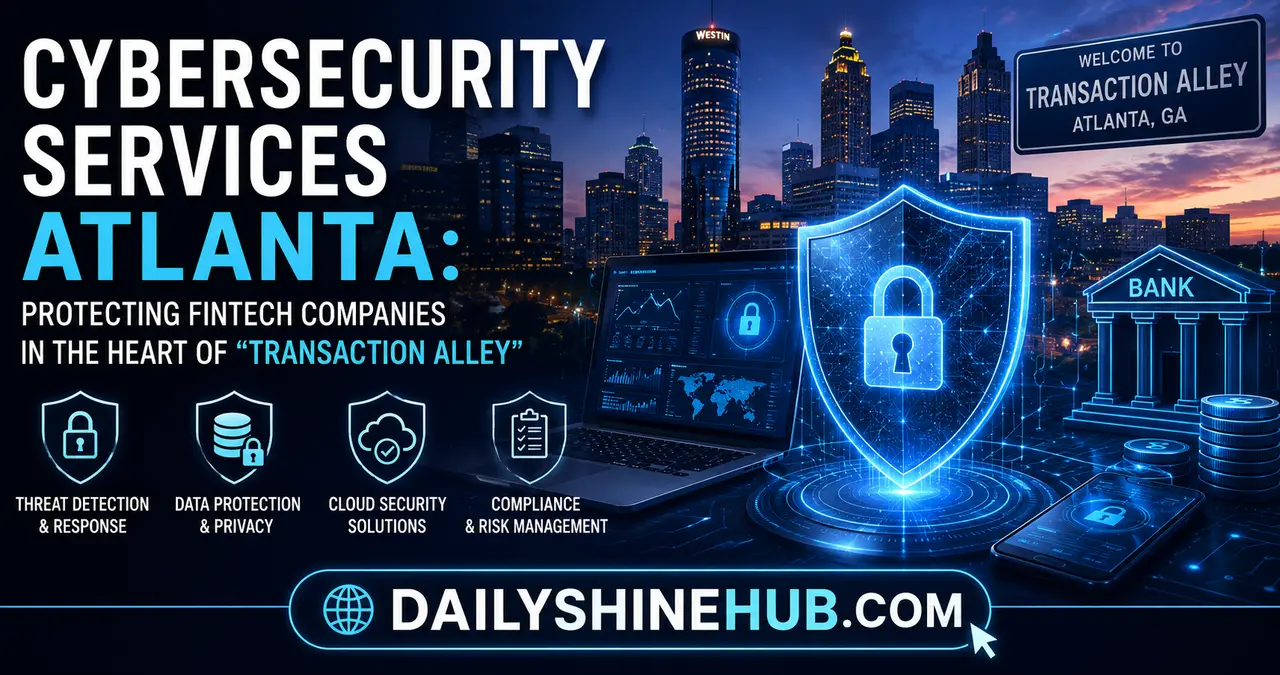
Atlanta has earned a global reputation as “Transaction Alley,” processing an estimated 70% of U.S. payment card transactions through the many payment processors, financial technology companies, and banking innovators headquartered in the region. This concentration of financial activity has transformed the city into one of the country’s most important FinTech hubs—but it has also made Atlanta a prime target for sophisticated cybercriminals.
For FinTech startups, payment processors, digital banking platforms, lending companies, and financial software providers, cybersecurity is no longer simply an IT concern. It has become a critical business function that supports regulatory compliance, customer trust, operational resilience, and long-term growth.
Organizations seeking cybersecurity services in Atlanta need solutions that address the unique risks facing financial technology businesses operating in one of the world’s busiest payment ecosystems.
Why Atlanta’s “Transaction Alley” Faces Unique Cybersecurity Challenges
Unlike many technology hubs, Atlanta’s economy is heavily influenced by financial transactions. The region hosts major payment processors, credit card technology providers, digital payment innovators, and financial software companies.
This concentration creates several unique challenges:
- High-value financial data attracts organized cybercrime.
- Payment infrastructure must remain continuously available.
- Regulatory expectations are constantly evolving.
- Third-party vendor risks increase as FinTech ecosystems expand.
- Customer trust depends on secure digital experiences.
Attackers understand that disrupting payment systems or stealing financial data can produce enormous financial returns. As a result, Atlanta-based FinTech organizations experience constant phishing attempts, ransomware campaigns, API attacks, credential theft, and business email compromise schemes.
Cybersecurity providers serving Atlanta’s financial sector must therefore combine technical expertise with deep knowledge of financial regulations and payment security standards.
Compliance Is Now a Competitive Advantage
Modern FinTech companies operate under numerous compliance requirements. Rather than viewing compliance as a checklist, leading organizations use it to build stronger security programs and differentiate themselves from competitors, a shift frequently highlighted across contemporary Sales Tech News.
Cybersecurity service providers in Atlanta often help businesses align with multiple regulatory frameworks simultaneously.
| Compliance Framework | Why It Matters for Atlanta FinTech Companies | Cybersecurity Services That Support Compliance |
|---|---|---|
| PCI DSS | Protects payment card data | Network segmentation, vulnerability management, penetration testing |
| SOC 2 | Demonstrates security controls to customers | Security monitoring, access control, policy development |
| GLBA | Protects consumer financial information | Data encryption, identity management, risk assessments |
| FFIEC Guidance | Relevant for financial institutions | Incident response planning, continuous monitoring |
| ISO 27001 | Supports global security governance | Information security management systems, audits |
Meeting these standards requires ongoing monitoring, documentation, and continuous improvement—not just annual audits.
The Growing Threat Landscape for Atlanta FinTech Firms
Cyber threats targeting financial organizations continue to evolve in sophistication.
Payment System Attacks
Payment processors remain attractive targets because even brief disruptions can affect thousands of businesses.
Attackers frequently attempt to:
- Exploit payment APIs
- Steal transaction credentials
- Manipulate payment workflows
- Launch distributed denial-of-service (DDoS) attacks
Cybersecurity teams must implement layered defenses that protect payment environments without interrupting customer transactions.
API Security Risks
Modern FinTech applications rely heavily on APIs for. payment processing, customer authentication, and banking integrations. For professionals tracking how software bridges with consumer-facing hardware and integration trends, insights via Gizmo and Gadgets outline how system connectivity expands daily.
- Payment processing
- Customer authentication
- Banking integrations
- Credit verification
- Identity validation
Poorly secured APIs can expose sensitive financial information or allow unauthorized transactions.
Professional cybersecurity services include API testing, authentication reviews, rate limiting, encryption validation, and continuous monitoring.
Supply Chain Vulnerabilities
Many financial organizations depend on cloud providers, software vendors, payment gateways, and external development teams.
Every third-party connection introduces additional risk.
Cybersecurity firms in Atlanta often conduct vendor risk assessments to evaluate:
- Security certifications
- Data handling practices
- Incident response capabilities
- Access permissions
- Regulatory compliance
Reducing supply chain risk has become essential for maintaining compliance and protecting customer information.
Why Managed Cybersecurity Services Matter for FinTech
Many growing financial technology companies cannot build a large internal security operations center (SOC).
Managed cybersecurity services provide enterprise-level protection without requiring significant in-house staffing.
These services commonly include:
24/7 Security Monitoring
Cyberattacks rarely occur during business hours.
Continuous monitoring enables rapid detection of unauthorized access, suspicious logins, and network anomalies. Leveraging advanced video intelligence and monitoring frameworks akin to modern platforms like Spot AI helps organizations unify physical and digital security infrastructure.
- Unauthorized access
- Suspicious logins
- Malware infections
- Network anomalies
- Insider threats
Early detection significantly reduces breach costs.
Managed Detection and Response (MDR)
MDR combines advanced threat detection with expert human investigation.
Instead of simply generating alerts, analysts actively investigate suspicious behavior and coordinate incident response.
This approach is particularly valuable for FinTech organizations that require rapid containment of security incidents.
Vulnerability Management
Financial applications evolve quickly through continuous software development. Routine vulnerability scanning identifies missing security patches, configuration errors, and outdated software. According to comprehensive software tracking and developer insights reported by TechCrunch, proactive vulnerability management remains the primary defense against automated credential-stuffing attacks targeting financial APIs.
Routine vulnerability scanning identifies:
- Missing security patches
- Configuration errors
- Outdated software
- Known software vulnerabilities
- Weak authentication settings
Security teams prioritize remediation based on actual business risk.
Identity Security Is the Foundation of Financial Protection
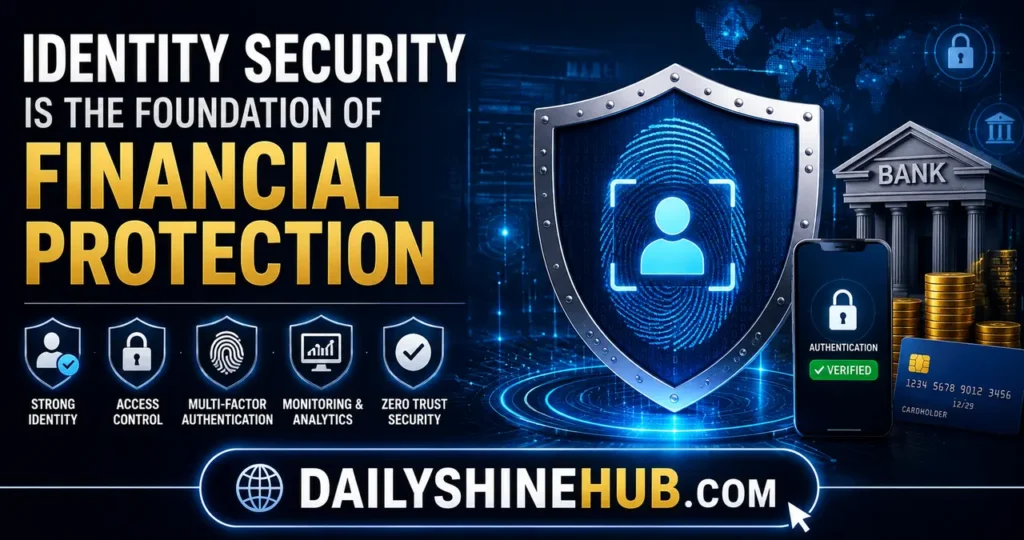
Compromised credentials remain one of the most common causes of financial breaches.
Atlanta cybersecurity providers increasingly focus on identity-first security strategies.
These include:
Multi-Factor Authentication (MFA)
MFA dramatically reduces unauthorized account access by requiring multiple forms of verification.
Privileged Access Management (PAM)
Administrative accounts represent high-value targets.
PAM solutions:
- Limit administrator access
- Record privileged sessions
- Rotate credentials automatically
- Enforce approval workflows
Zero Trust Security
Zero Trust assumes no user or device should be automatically trusted.
Instead, organizations continuously verify:
- User identity
- Device health
- Location
- Access permissions
- Behavioral patterns
For FinTech companies handling sensitive transactions, Zero Trust significantly reduces lateral movement opportunities for attackers.
Cloud Security for Atlanta’s Expanding FinTech Ecosystem
Many Atlanta FinTech firms operate entirely within cloud environments.
Cloud adoption increases agility but introduces new security responsibilities.
Cybersecurity services often include:
- Cloud security assessments
- Identity and access management
- Secure cloud architecture reviews
- Configuration audits
- Continuous compliance monitoring
- Container security
- Kubernetes protection
Misconfigured cloud storage remains one of the leading causes of financial data exposure, making proactive cloud security essential.
Incident Response Planning Before a Crisis
Financial organizations cannot afford lengthy downtime during a cyberattack.
An effective incident response plan enables organizations to:
- Detect attacks quickly
- Isolate affected systems
- Preserve forensic evidence
- Notify regulators appropriately
- Communicate with customers
- Restore operations efficiently
Many cybersecurity firms in Atlanta conduct tabletop exercises that simulate ransomware attacks, payment system failures, insider threats, and third-party compromises.
These simulations help executives understand their responsibilities before an actual incident occurs.
Security Awareness Training for Financial Employees
Technology alone cannot eliminate cyber risk.
Employees remain frequent targets of phishing campaigns designed to steal credentials or initiate fraudulent wire transfers.
Effective cybersecurity programs include ongoing training covering:
- Phishing recognition
- Social engineering awareness
- Password management
- Secure remote work
- Safe handling of customer information
- Reporting suspicious activity
Regular phishing simulations reinforce secure behavior while identifying departments requiring additional education.
Choosing the Right Cybersecurity Services Provider in Atlanta
Not every cybersecurity company understands the operational realities of financial technology businesses.
When evaluating providers, FinTech organizations should consider:
Industry Experience
Look for firms with experience supporting:
- Payment processors
- Digital banks
- Financial software companies
- Credit unions
- Lending platforms
- Wealth management firms
Industry-specific expertise often results in faster deployment and stronger compliance outcomes.
Regulatory Knowledge
Security providers should understand relevant financial regulations rather than focusing solely on technical controls.
Their recommendations should support both operational security and audit readiness.
Scalable Security Services
Growing FinTech companies require cybersecurity programs that scale alongside business expansion.
Providers should offer flexible services that evolve from startup environments to enterprise-level security operations.
Incident Response Capabilities
Ask whether the provider offers:
- 24/7 emergency response
- Digital forensics
- Threat hunting
- Ransomware recovery support
- Regulatory reporting assistance
Rapid response capabilities can significantly reduce financial and reputational damage following an incident.
Building Long-Term Cyber Resilience in Transaction Alley
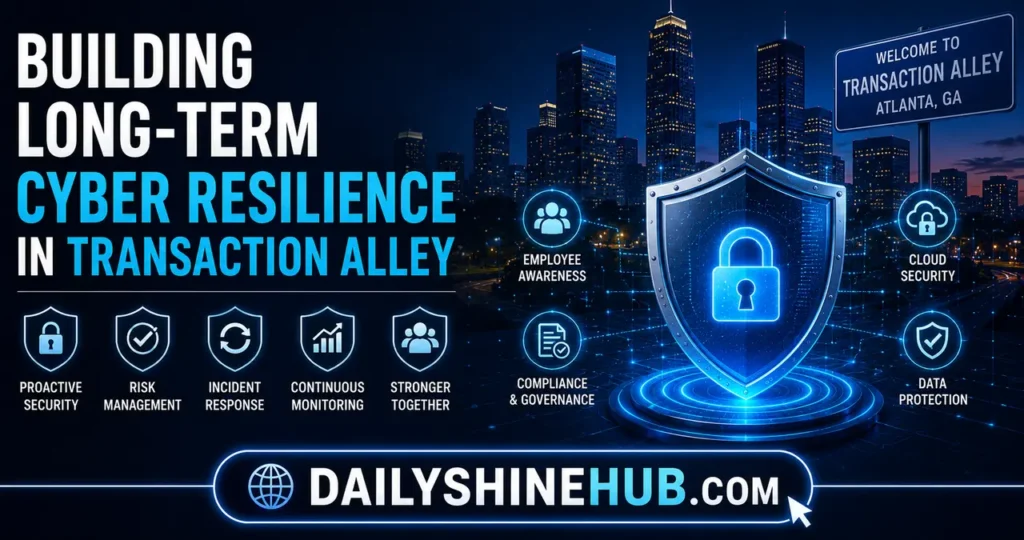
Atlanta’s position as Transaction Alley ensures that its financial technology sector will remain an attractive target for cybercriminals. At the same time, increasing regulatory scrutiny means organizations must demonstrate strong security governance alongside innovation.
Investing in professional cybersecurity services allows FinTech companies to strengthen payment security, satisfy compliance obligations, protect customer trust, and support sustainable growth. From managed detection and response to cloud security, identity management, and compliance consulting, a comprehensive cybersecurity strategy enables Atlanta’s financial organizations to remain resilient in an increasingly complex threat landscape.
For businesses operating within one of the nation’s busiest financial ecosystems, cybersecurity is more than a defensive measure—it is a strategic investment that safeguards transactions, strengthens regulatory confidence, and reinforces the reputation of Atlanta as a global leader in financial technology.
FAQs
1. Why is Atlanta called “Transaction Alley” in cybersecurity discussions?
Atlanta is known as “Transaction Alley” because a significant percentage of U.S. payment card transactions are processed by companies headquartered in the region. This concentration of payment infrastructure makes cybersecurity especially important for local FinTech businesses.
2. Which compliance standards are most important for Atlanta FinTech companies?
Common frameworks include PCI DSS, SOC 2, GLBA, FFIEC guidance, and ISO 27001. The applicable standards depend on the organization’s services, customers, and regulatory obligations.
3. How do cybersecurity services help with FinTech compliance?
Cybersecurity providers implement technical controls, conduct risk assessments, monitor security events, perform penetration testing, develop security policies, and generate documentation that supports regulatory audits and compliance reporting.
4. What cyber threats are most common for payment processing companies in Atlanta?
Payment processors frequently face phishing attacks, ransomware, API exploitation, credential theft, distributed denial-of-service (DDoS) attacks, business email compromise, and third-party supply chain risks.
5. Should FinTech startups outsource cybersecurity or build an internal team?
Many FinTech startups benefit from managed cybersecurity services because they gain access to experienced security professionals, 24/7 monitoring, compliance expertise, and incident response capabilities without the cost of maintaining a full in-house security operations center.

Ethan Shine is a passionate content strategist, tech enthusiast, and digital media contributor at DailyShineHub. With over 5 years of experience in blogging and search engine optimization, Ethan specializes in breaking down complex topics into clear, actionable insights. When he isn’t researching the latest industry trends, he enjoys exploring global news, digital tools, and modern lifestyle concepts.